SRINAGAR: In a dramatic shift in US foreign policy, President Donald Trump announced the lifting of long-standing American sanctions on Syria, signalling the beginning of a new diplomatic chapter for a country shattered by over a decade of civil war and international isolation, reports in the international media suggest.
The announcement was made in Riyadh during Trump’s address at an investment forum, the first major public engagement of his second term abroad. The forum, attended by business leaders and dignitaries from across the Middle East, erupted in applause as Trump declared the end of economic sanctions against Syria. “There is a new government that will hopefully succeed in stabilising the country and keeping peace,” he said. “I will be ordering the cessation of sanctions against Syria to give them a chance at greatness.”
This move comes just five months after the fall of Bashar al-Assad, Syria’s longtime ruler, whose government was ousted in December following a rebel-led transition. The new Syrian President, Ahmed al-Sharaa, once head of the armed group Hayat Tahrir al-Sham, has since sought to reposition Syria on the world stage as a legitimate state actor rather than a pariah.
The shift in US policy is widely seen as an endorsement of the new leadership in Damascus, which has taken steps to distance itself from its militant roots. The group al-Sharaa once led had been designated a Foreign Terrorist Organisation due to its historical links with al-Qaeda, and al-Sharaa himself had previously carried a US bounty of US $10 million for his capture. Both the designation and the bounty have since been withdrawn, reflecting Washington’s evolving position.
In remarks reported by The New York Times, Trump emphasised the magnitude of the moment: “In Syria, which has seen so much misery and death, there is a new government that will hopefully succeed in stabilising the country and keeping peace. That’s what we want to see in Syria.”
The lifting of sanctions represents not just a symbolic gesture but a tangible shift with wide-reaching implications for Syria’s economy. The sanctions, which date back as far as 1979 when Syria was labelled a “State Sponsor of Terrorism”, were intensified in 2004 and again after the outbreak of civil war in 2011. They had included a ban on US investment, restrictions on petroleum imports, and a freeze on government-held assets abroad.
According to Al Jazeera, sanctions imposed during the Assad era became particularly harsh after regime forces began violently cracking down on anti-government protests in 2011. Subsequent US policies sought to isolate Assad, punish human rights abuses, and choke off Syria’s ability to engage economically with the West.
With Assad’s departure, the US decision appears to be the culmination of months of behind-the-scenes diplomacy involving regional allies. Trump credited discussions with Saudi Crown Prince Mohammed bin Salman and Turkish President Recep Tayyip Erdoğan for influencing his decision. “Oh, what I do for the crown prince!” he quipped during his address.
According to Al Jazeera and Reuters, Syria’s new leadership has been actively courting international legitimacy. Al-Sharaa has made overtures to Israel, expressing willingness to engage in indirect talks in hopes of reducing tensions with America’s closest ally in the region. His administration has also promised greater inclusivity, respect for minority rights, and cooperation on global counterterrorism efforts.
On Wednesday, Trump is expected to meet al-Sharaa in Riyadh, a move likely to underscore Washington’s acceptance of the new Syrian government and to pave the way for formal diplomatic relations.
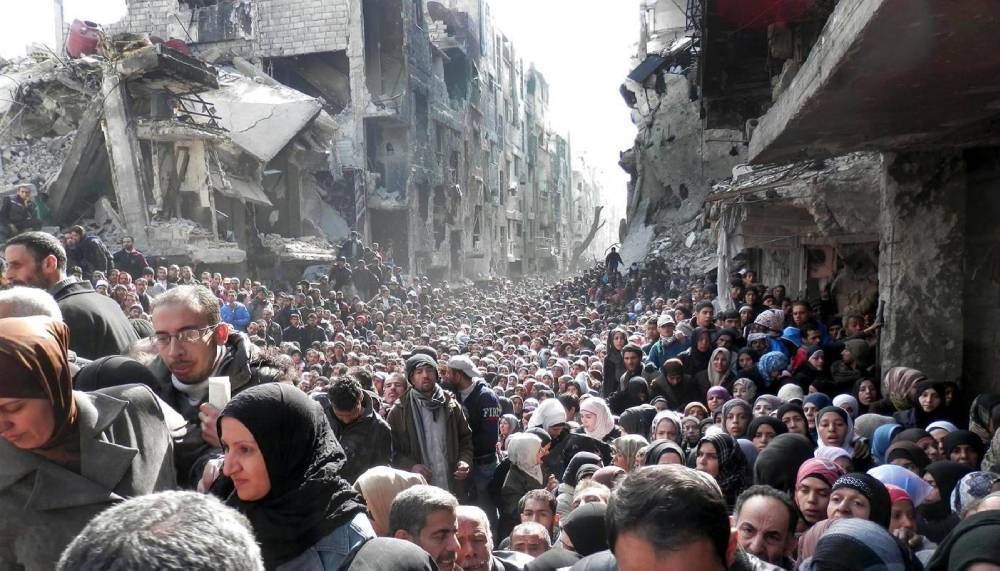
Inside Syria, the reaction has been jubilant. Al Jazeera reported celebrations breaking out in the capital Damascus and other cities, with citizens expressing cautious hope that economic recovery might finally follow years of war, international embargo, and internal dislocation. Syria still faces enormous challenges: unemployment is widespread, poverty is severe, and basic services remain fragile.
While it is not yet clear whether the United States itself will invest directly in Syria, Trump’s signal is expected to unlock potential Arab and Turkish investment — a move likely welcomed by Damascus and regional partners alike. Already, rumours have emerged about possible US-Syria business ventures, including talk of a Trump Tower in Damascus, though officials have not confirmed any concrete plans.
The announcement caps a whirlwind re-entry into international affairs for Trump, whose ongoing tour includes stops in Qatar and the UAE. While the visit is largely focused on economic diplomacy, the Syria decision may become the defining geopolitical moment of the trip — and possibly, of Trump’s second term.