NEW YORK: The world has formally entered an “era of Global Water Bankruptcy,” with many of its most critical freshwater systems pushed beyond recovery, according to a major report released at the United Nations Headquarters on Tuesday.

The report, Global Water Bankruptcy: Living Beyond Our Hydrological Means in the Post-Crisis Era, has been issued by the United Nations University’s Institute for Water, Environment and Health (UNU-INWEH). It states that familiar terms such as “water stress” and “water crisis” are no longer adequate to describe the present global reality, as many river basins, aquifers, lakes, wetlands and glaciers have crossed tipping points that make a return to historical conditions unrealistic.
Lead author Kaveh Madani, Director of UNU-INWEH, said the report delivers what he described as an uncomfortable truth: that many societies are living beyond their hydrological means and that critical water systems are already “bankrupt.” Expressed in financial terms, the study argues that countries have not only overspent their annual renewable “income” of water from rivers, soils and snowpack, but have also depleted long-term “savings” stored in aquifers, glaciers and wetlands. The consequence, it notes, is compacted aquifers, sinking land in coastal and delta cities, disappearing lakes and wetlands, and permanent biodiversity loss.
The report formally defines water bankruptcy as a persistent condition in which long-term withdrawals of surface and groundwater exceed renewable inflows and safe depletion limits, resulting in irreversible or prohibitively costly loss of water-related natural capital. Unlike water stress, which describes high but reversible pressure, or water crises, which refer to acute shocks that can be overcome, water bankruptcy is characterised as a post-crisis state where the system’s capacity to recover has been fundamentally undermined.
Drawing on peer-reviewed research and global datasets, the study presents a stark assessment of the scale of change. It states that more than half of the world’s large lakes have lost water since the early 1990s, affecting roughly a quarter of the global population that depends on them directly. Around seventy per cent of major aquifers show long-term decline, while nearly 410 million hectares of natural wetlands—an area comparable to the size of the European Union—have been lost over the past five decades. In several parts of the world, more than thirty per cent of glacier mass has disappeared since 1970, with some mountain ranges projected to lose functional glaciers within decades.
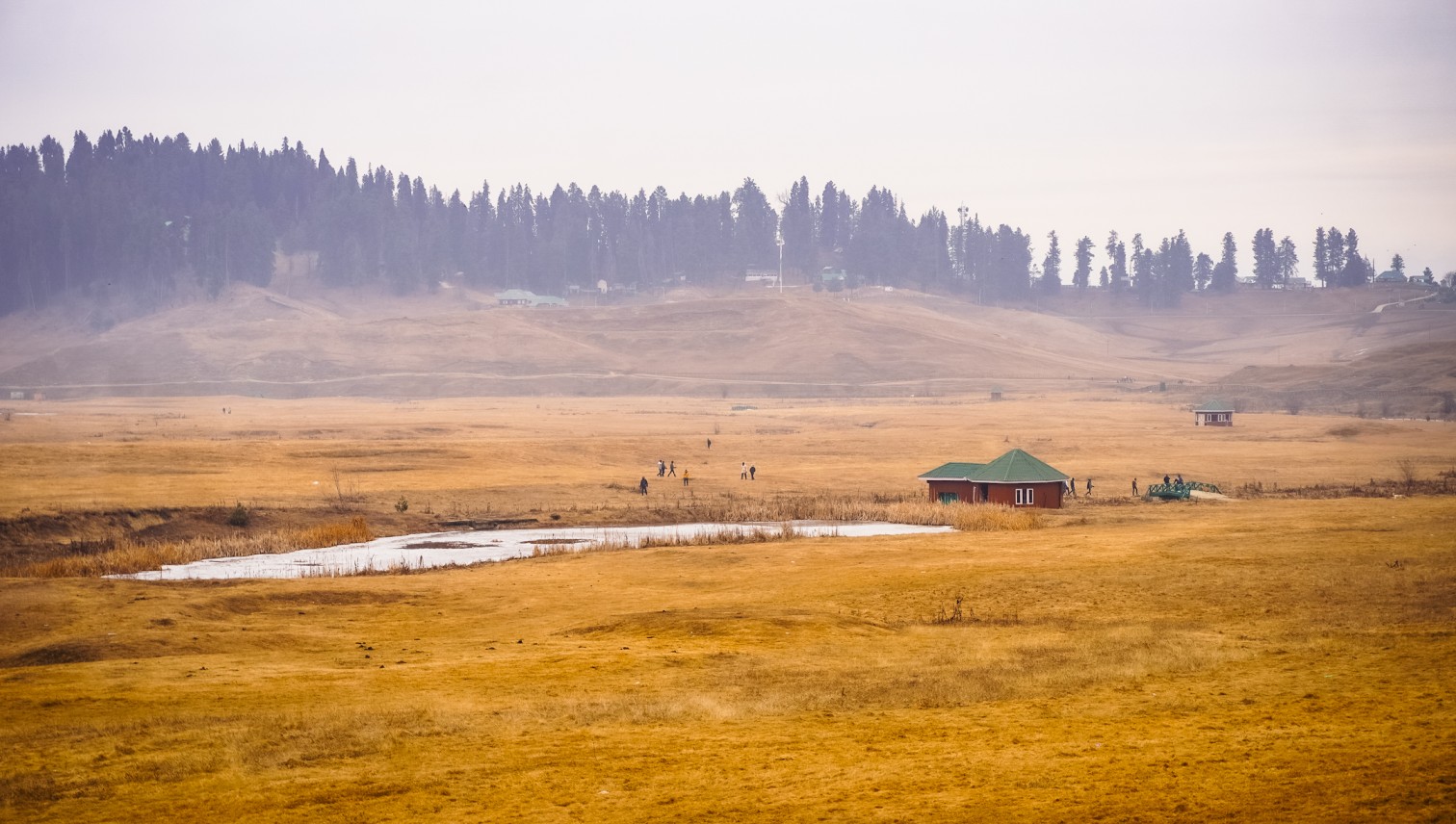
The report links these trends directly to human activity, including chronic groundwater over-extraction, over-allocation of river flows, land and soil degradation, deforestation, pollution and global heating. It emphasises that water bankruptcy is not determined by whether a region appears wet or dry in a given year. A basin can experience flooding and still be water-bankrupt if long-term withdrawals continue to exceed replenishment. In this sense, the report frames the issue as one of accounting and balance rather than short-term variability.
The human consequences, it states, are already widespread. Nearly four billion people face severe water scarcity at least one month each year. Around 2.2 billion people lack safely managed drinking water, and 3.5 billion lack safely managed sanitation. Approximately three-quarters of the global population live in countries classified as water-insecure or critically water-insecure. Agriculture, which accounts for the majority of global freshwater withdrawals, is identified as particularly exposed, with irrigation in many regions increasingly dependent on aquifers that are being depleted faster than they can recharge. The annual global cost of drought is estimated at US$307 billion, while the value of ecosystem services lost through wetland degradation is placed at US$5.1 trillion per year.
The report further argues that the global water cycle has moved beyond its safe planetary boundary and that freshwater systems, together with climate, biodiversity and land systems, have been pushed outside their safe operating space. It warns that continued reliance on a narrow global agenda focused primarily on drinking water, sanitation and incremental efficiency improvements will not be sufficient to address escalating risks.
Instead, the authors call for a fundamental reset of the global water agenda. They urge governments to formally recognise the condition of water bankruptcy, prevent further irreversible damage such as destructive groundwater depletion and wetland loss, and rebalance water rights and expectations in line with degraded carrying capacities. The report stresses the need for just transitions for communities whose livelihoods must change, particularly smallholder farmers, Indigenous Peoples and low-income urban residents, who it says disproportionately bear the costs of overuse while more powerful actors have often accrued the benefits.
Tshilidzi Marwala, UN Under-Secretary-General and Rector of the United Nations University, said water bankruptcy is increasingly becoming a driver of fragility, displacement and conflict. He noted that managing it fairly, with attention to equity and social cohesion, is central to maintaining peace and stability.
The report is being released ahead of preparatory meetings in Dakar for the 2026 UN Water Conference, which is to be co-hosted by the United Arab Emirates and Senegal in December. Upcoming milestones, including the 2028 conclusion of the Water Action Decade and the 2030 Sustainable Development Goal deadline, are described as critical opportunities to reframe global water governance.
Despite its stark assessment, Madani said the declaration of water bankruptcy should not be interpreted as an admission of defeat. Acknowledging the reality, he argued, is a necessary step toward redesigning institutions and development models to live within new hydrological limits. “Declaring bankruptcy is not about giving up,” he said. “It is about starting fresh. The longer we delay, the deeper the deficit grows.”