SRINAGAR: The United Nations Relief and Works Agency for Palestine Refugees (UNRWA) has reaffirmed its commitment to supporting millions of Palestinians across the Occupied Palestinian Territory (OPT), even as a ban on its operations by the Israeli government officially took effect. The agency, the largest UN body operating in the region, announced on Friday that it continues to provide crucial aid to Gaza and the West Bank, including East Jerusalem, despite mounting challenges, UN News reported.
The Israeli parliament, the Knesset, passed two laws last October ordering the cessation of UNRWA’s operations in Israeli-controlled areas, including occupied East Jerusalem, by January 30. However, the agency has not received official communication from Israeli authorities on how the ban will be enforced. UNRWA’s Director of Communications, Juliette Touma, emphasised that any disruption to the agency’s work would have “catastrophic consequences” for Palestine refugees, who rely on UNRWA for healthcare, education, and other essential services.
Touma noted that UNRWA health centres in East Jerusalem and the West Bank remained operational on Thursday, and schools were scheduled to reopen on Sunday after a scheduled break. The agency serves approximately 50,000 students in the West Bank, including East Jerusalem. “Our teams continue to serve, even though they themselves have been impacted, forced to flee their homes,” she stated, reaffirming UNRWA’s commitment to staying and delivering aid across the OPT.
The ban follows Israeli allegations that some UNRWA employees were involved in the Hamas-led attacks on 7 October, which triggered the ongoing war in Gaza. Following an internal UN investigation, nine staff members were dismissed over possible involvement.
Meanwhile, amid the worsening humanitarian crisis in Gaza, an estimated 462,000 people have moved north since Monday through the Salah ad Din and Al Rashid roads. UN agencies and humanitarian partners assist those on the move with water, high-energy biscuits, and medical aid. Upon arrival, displaced Gazans have been seen clearing rubble and erecting makeshift shelters where their homes once stood.
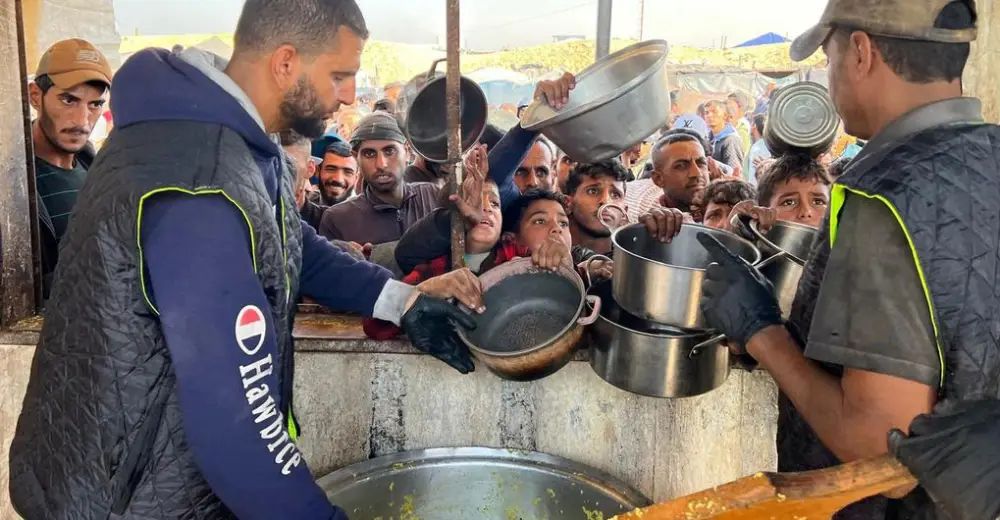
The World Food Programme (WFP) announced plans to expand food distribution in northern Gaza, where all its bakeries have resumed operations. Since the ceasefire on January 19, UNRWA and WFP have distributed food parcels to 350,000 people and provided 20,000 hot meals daily in Beit Lahia.
The healthcare situation remains dire, with the World Health Organisation (WHO) reporting that only 18 of Gaza’s 36 hospitals are partially functional. WHO’s representative in the OPT, Dr Rik Peeperkorn, highlighted the urgent need for medical evacuations, stating that at least 2,500 children are at imminent risk of death, and 12,000 to 14,000 patients require specialized treatment outside Gaza. He urged the restoration of referral pathways to hospitals in the West Bank and East Jerusalem.
The ban on UNRWA’s operations in East Jerusalem has raised widespread concern over its potential impact on millions of Palestinians dependent on its services. Palestinians sheltering in UNRWA-run schools, such as Iman Hillis, fear devastating consequences. “We will have nothing to eat or drink, and this will affect us greatly. All the people will be destroyed and will not have food, water, or flour,” she told UN News.
Since its establishment in 1950, UNRWA has provided aid to Palestinian refugees in Jordan, Lebanon, Syria, Gaza, and the West Bank. The latest developments threaten to upend the agency’s critical relief efforts, with the UN repeatedly warning of the severe humanitarian consequences of Israel’s decision.
Meanwhile, the UN News reported that in the wake of a temporary ceasefire across the Gaza Strip, an estimated 500,000 people have returned to Gaza City, the United Nations Children’s Fund (UNICEF) reported on Thursday. However, those making the journey back are met with a grim reality—destroyed homes, dangerous conditions, and a severe lack of basic necessities.
Tess Ingram, Communications Manager for UNICEF Middle East and North Africa, described scenes of returnees moving through the streets on donkeys, in cars, or by bicycle. “There’s a lot of people with shovels trying to remove rubble, and of course, you can see people setting up makeshift shelters or tents on what I’m guessing used to be their homes,” she told UN News.
While many returnees initially felt joy and relief at finally coming back after more than 15 months of displacement, their optimism quickly turned to sorrow. “They were hoping to return to a home that is not there or to a loved one who has been killed,” Ingram said, adding that the realization of their losses is beginning to weigh heavily on them.
The conditions remain dire, with thousands seeking shelter in overcrowded schools. Many, including a mother with five children Ingram met, are in desperate need of food, clothing, and shelter, as their homes no longer exist.
The return to Gaza City has been fraught with challenges. Families have endured long and treacherous journeys, with some taking up to 36 hours to reach their destinations. Ingram noted that the risk is immense, as unexploded ordnance buried under rubble has reportedly claimed lives along the way.
UNICEF is working to provide vital assistance, including nutrition and medical supplies, fuel for bakeries and hospitals, and clean water. On Wednesday, the agency and other UN bodies delivered 16 trucks of fuel to help restore essential services.
Additionally, UNICEF is prioritizing mental health support for children who have endured immense trauma. Nutritional screening and immunization services are also being set up.
Hundreds of children have been separated from their families during the journey north. To address this, UNICEF is providing identification bracelets with names and contact information to help reunite lost children with their families.
The ceasefire has facilitated large-scale movement, with over 462,000 people crossing from the south to northern Gaza since the opening of the Salah ad Din and Al Rashid roads on Monday. Humanitarian workers are offering food, water, and medical assistance along these routes.
Meanwhile, displaced Palestinians continue to move from north to south, though in smaller numbers, with about 1,400 people making the journey on Thursday.
Efforts to rebuild civilian infrastructure and restore essential services are underway, with the World Food Programme (WFP) delivering more than 10,000 metric tonnes of food since the ceasefire began. On Thursday alone, 750 aid trucks entered Gaza, carrying supplies coordinated through the UN and Israeli authorities.
In the North Gaza governorate, UNICEF distributed 135 cubic metres of water to communities that had been under siege for over three months. Additionally, 35,000 litres of fuel were sent to sustain water, sanitation, and hygiene facilities, while water trucking in Rafah has been expanded.
Humanitarian partners are also working with the Gaza Electricity Distribution Company to repair power lines serving the South Gaza desalination plant, which currently relies on fuel.
Meanwhile, violence continues in the occupied West Bank. Israeli military operations have expanded beyond Jenin and Tulkarm into the Tubas governorate. On Wednesday, an Israeli air strike in the village of Tammun reportedly killed ten Palestinians, bringing the total death toll from recent Israeli operations in the northern West Bank to 30, including two children.
More than 3,200 families have been displaced from the Jenin refugee camp since December due to Israeli and Palestinian Authority military actions, according to local authorities. Humanitarian partners are providing food, baby supplies, hygiene kits, medicines, and other essential aid to affected families.
As the ceasefire in Gaza holds, returnees face the challenge of rebuilding their lives amid destruction, while humanitarian agencies struggle to meet growing needs. In both Gaza and the West Bank, the humanitarian crisis shows no signs of easing.