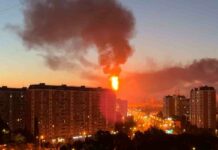
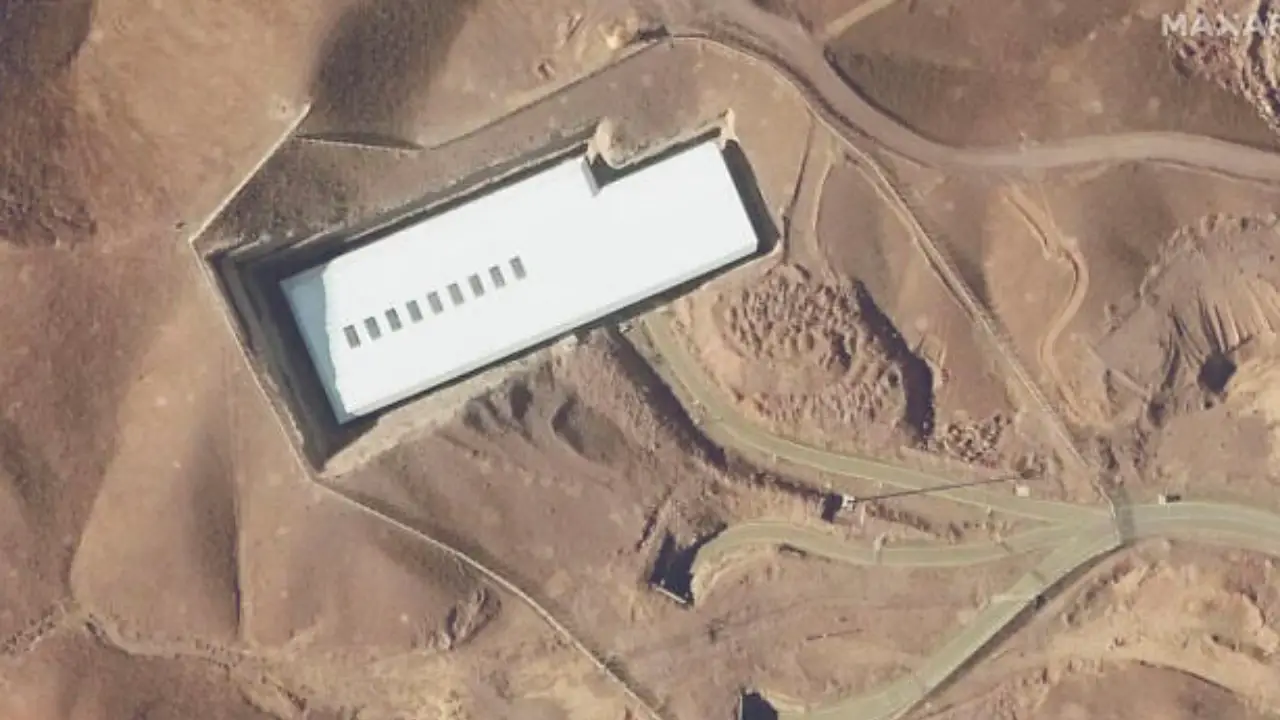
SRINAGAR: In a dramatic escalation of the conflict in West Asia, US President Donald Trump on Sunday announced that American forces had joined Israel in carrying out a coordinated aerial attack on three of Iran’s key nuclear sites—Fordo, Natanz, and Esfahan—marking a critical turn in the region’s already volatile situation.
The announcement came while foreign ministers from the Organisation of Islamic Cooperation (OIC) were meeting in Istanbul, with the Palestinian cause and regional stability at the heart of discussions. The timing of the strike—during the 51st session of the OIC Council of Foreign Ministers—has raised immediate diplomatic alarm across Muslim-majority nations.
Speaking on his social media platform Truth Social, Trump declared, “We have completed our very successful attack on the three nuclear sites in Iran, including Fordow, Natanz, and Esfahan. A full payload of BOMBS was dropped on the primary site, Fordow.” He is set to address the nation at 0200 GMT (7.30 a.m. IST) to elaborate on the strikes, which come just two days after he had stated a two-week window for diplomacy had opened.
The Israeli Defence Forces are believed to have carried out the first phase of the operation on June 20, and US involvement now signals the formal entry of Washington into direct military confrontation with Tehran over its nuclear programme. Israeli Prime Minister Benjamin Netanyahu said the operation would continue “for as long as it takes” and welcomed Trump’s participation, calling it a “bold decision” that would “change history.”
In Geneva, meanwhile, a high-stakes diplomatic effort was underway with European leaders meeting Iranian Foreign Minister Abbas Araghchi. However, those talks ended after four hours with no breakthrough. Araghchi said Iran would return to diplomacy only if Israeli “aggression” ceased.
The United Nations strongly criticised the US-Israel strikes. UN Secretary-General António Guterres called it a “dangerous escalation” and warned of “catastrophic consequences for civilians, the region, and the world.” He urged all parties to avoid a “spiral of chaos,” insisting that “there is no military solution” and only diplomacy could offer hope.
Iran’s Atomic Energy Organisation (AEOI) condemned the assault, describing it as a “savage” attack on sovereign infrastructure. It also lashed out at the International Atomic Energy Agency (IAEA) for what it called “indifference and even complicity.” The AEOI vowed to continue its nuclear programme and said it would take legal action in response to the bombing.
Amid fears of further escalation, Trump issued a warning to Iran against any retaliation. “Any retaliation by Iran against the United States of America will be met with force far greater than what was witnessed tonight,” he said.
US domestic political reactions were swift. Democratic leaders condemned the strikes, saying Trump had bypassed congressional approval. House Minority Leader Hakeem Jeffries accused Trump of misleading the nation and taking unilateral action. Senator Bernie Sanders called the strikes “grossly unconstitutional,” stressing that only Congress has the authority to declare war.
Iranian state media sought to downplay the fallout. The provincial administration in Qom, near the Fordo site, stated there was “no danger” to residents following the bombing.
As leaders gathered in Istanbul under the banner of the OIC, the dual flashpoints of Palestine and Iran dominated the agenda. Now, with the skies above Iran lit by firepower and diplomacy pushed further to the edge, the question remains whether the international community can prevent this conflict from spiralling into a full-scale regional war.