SRINAGAR: A major escalation in the ongoing conflict unfolded on March 21 as the United States and Israel struck Iran’s key nuclear installation at the Natanz Nuclear Facility, prompting a swift Iranian retaliatory strike toward Israel’s nuclear-linked site near Dimona, reports appearing in media said.
Iran’s Atomic Energy Organisation confirmed that the Shahid Ahmadi Roshan enrichment complex at Natanz, one of the country’s most critical uranium enrichment sites, was targeted in the attack. “Following the criminal attacks by the United States and the usurping Zionist regime… the Natanz enrichment complex was targeted this morning,” the organisation said in a statement carried by Tasnim News Agency. It added that “no leakage of radioactive materials” had been detected and that there was no danger to nearby populations.
This account was reinforced by international monitoring. The International Atomic Energy Agency said Iran had informed it of the strike and that there was “no increase in off-site radiation levels.” The agency added that it was assessing the situation, while its chief Rafael Grossi renewed his call for “military restraint to avoid any risk of a nuclear accident.”
Reporting from Tehran, Al Jazeera described the strike as “expected,” noting that dismantling Iran’s nuclear capability has been a stated objective of Donald Trump. He added that, according to available assessments, Iran possesses roughly 400 kilograms of highly enriched uranium, a stockpile that Western countries believe could potentially be used for weapons development.
The Natanz facility has been repeatedly targeted in recent conflicts, including during the Iran–Israel 12-day war and earlier in the current war, when satellite imagery showed damage to multiple structures.
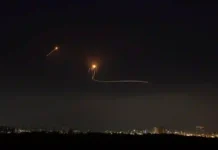
Within hours of the strike, Iran launched a retaliatory ballistic missile attack toward Dimona, a city associated with Israel’s undeclared nuclear programme and home to the Shimon Peres Negev Nuclear Research Centre.
Israeli emergency services reported that a missile struck a building in the city. Initial reports indicated more than 20 injuries. However, according to Ynetnews, about 34 people were wounded, including a 10-year-old child in critical condition, with multiple impact sites recorded across the city. Other reports cited injuries caused by shrapnel, falling debris, and panic during the attack.
Iranian media described the strike as a direct response to the attack on Natanz, signalling an escalation toward targeting strategic infrastructure. While Israel does not officially confirm possessing nuclear weapons, the Dimona complex is widely regarded by international analysts as central to its nuclear capability.
The conflict has also expanded far beyond the immediate battlefield, with Iran demonstrating a significant shift in its strike capabilities. According to CBC News, Tehran launched missiles toward the joint US-UK base at Diego Garcia, located roughly 4,000 kilometres from Iran. Separate reporting cited by Reuters indicated that two intermediate-range ballistic missiles were fired, though neither hit the base, one failed mid-flight while another was engaged by a US naval interceptor .
The attempt itself, however, marked a notable development. Analysts and officials cited in international reporting said the strike suggests Iran possesses or is testing missiles capable of travelling significantly farther than previously acknowledged, extending the potential reach of its arsenal beyond the Middle East. The targeting of Diego Garcia, a strategic hub for US long-range bombers and naval assets, indicates an expansion of both the geographic scope of the war and the operational range Iran is willing to demonstrate.
Despite repeated strikes on nuclear-linked facilities, there has so far been no confirmed radiological fallout. However, the direct targeting of such sites on both sides marks a dangerous shift. As the International Atomic Energy Agency has warned, continued military action around nuclear infrastructure raises the risk of a serious accident, even in the absence of deliberate escalation.
With both sides now striking at the core of each other’s strategic capabilities, the conflict shows no immediate signs of de-escalation.