SRINAGAR: The world of Urdu literature lost one of its most beloved and influential voices on Thursday as celebrated poet Bashir Badr passed away in Bhopal at the age of 91 after a prolonged illness. With his death, generations of readers, listeners and admirers bid farewell to a poet whose verses transcended literary circles to become part of everyday emotional expression across South Asia.
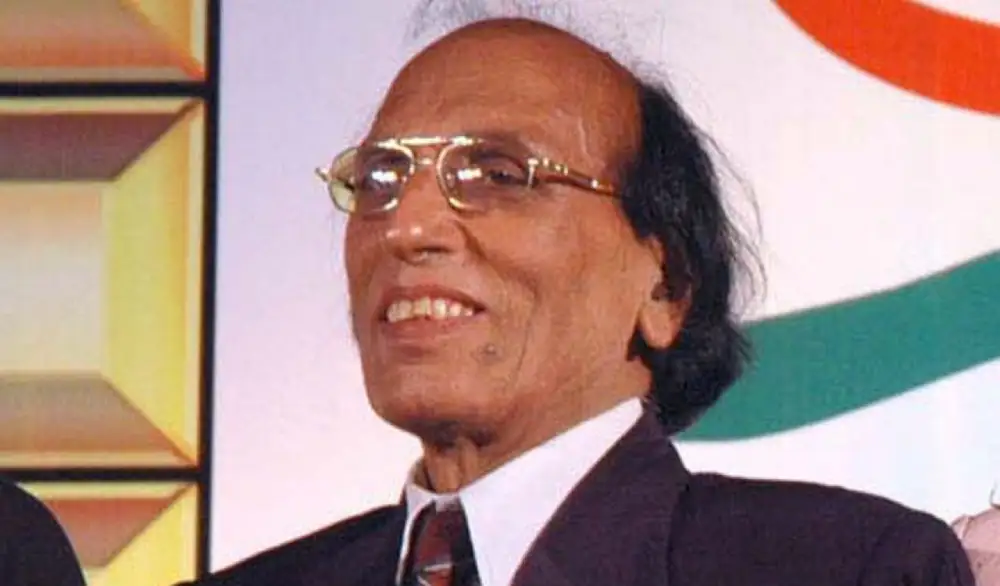
Family members confirmed that the Padma Shri awardee breathed his last at around 12:15 pm at his residence in Bhopal. He had reportedly been suffering from dementia and other age-related illnesses for several years, and his health had deteriorated significantly in recent months. His final rites were performed later in the evening at Bada Bagh Cemetery in Bhopal.
Born as Syed Mohammad Bashir on February 15, 1935, in Ayodhya, Bashir Badr emerged as one of the defining voices of post-Independence Urdu poetry. At a time when Urdu literature was grappling with the aftermath of Partition and shrinking cultural spaces, Badr succeeded in taking the ghazal beyond elite literary gatherings and into the lives of ordinary people.
Educated at Aligarh Muslim University, where he later completed his doctoral studies, Badr combined literary sophistication with uncommon accessibility. His poetry avoided excessive ornamentation and difficult Persianised vocabulary, instead embracing a conversational Hindustani idiom that resonated across linguistic and social boundaries.
His couplets became widely quoted not only in mushairas and literary circles but also in films, political speeches, newspaper columns and eventually across social media platforms. Many of his verses evolved into cultural expressions remembered even by those unfamiliar with formal Urdu literature.
Among his most enduring couplets remains:
“Log toot jaate hain ek ghar banane mein
Tum taras nahin khate bastiyan jalane mein”
The sher, often invoked during moments of communal tension and violence, reflected the moral clarity and humanism that defined his poetry. Equally admired were his deeply introspective verses on love, loneliness, memory, dignity and coexistence.
Another widely remembered couplet read:
“Dushmani jam kar karo lekin ye gunjaish rahe
Jab kabhi hum dost ho jaayein to sharminda na hon”
Literary critics frequently noted that Bashir Badr restored emotional immediacy to the modern ghazal. His poetry carried philosophical depth while remaining deceptively simple in expression. Through themes of fragile relationships, urban alienation, heartbreak and survival, he spoke directly to lived human experience.
Badr’s personal life was marked by profound tragedy. During communal violence in Meerut in 1987, his house and personal library were reportedly destroyed in a fire, resulting in the loss of manuscripts and years of literary work. The experience deeply shaped his later poetry, intensifying themes of exile, remembrance and vulnerability. Yet his writing rarely turned bitter; instead, it retained a quiet compassion and reflective humanity.
His famous lines:
“Ujaale apni yaadon ke hamaare saath rehne do
Na jaane kis gali mein zindagi ki shaam ho jaaye”
came to symbolise the emotional tenderness that distinguished his work.
Over the course of his career, Bashir Badr published several acclaimed collections, including Ikai, Aamad, Aahat, Image, Aas and Kulliyat-e-Bashir Badr. His collection Aas earned him the Sahitya Akademi Award in Urdu in 1999. The same year, he was honoured with the Padma Shri for his contribution to literature.
He also served as a lecturer and later Head of the Urdu Department at Meerut College for nearly 17 years, mentoring students while simultaneously shaping contemporary Urdu poetry.
Tributes poured in from across literary and political circles following news of his death. Veteran lyricist and poet Javed Akhtar wrote on social media that “our language Urdu has become a little poorer” with Badr’s passing, describing him as “an extremely melodious poet” whose work would live on forever.
Alongside poets such as Nida Fazli and Rahat Indori, Bashir Badr helped redefine the public life of Urdu poetry in modern India. His ghazals reached audiences far beyond conventional literary spaces and played a significant role in keeping Urdu culturally vibrant despite political and linguistic marginalisation.
An anecdote from his student years at Aligarh Muslim University resurfaced widely after his death. According to his son Tayeb Badr, the young poet once failed a viva examination because an examiner disagreed with his interpretation of a couplet, unaware that Bashir Badr himself had actually written the lines. The episode later became part of Urdu literary folklore, reflecting both the poet’s humility and the originality of his thought.
Even in the digital age, Bashir Badr’s legacy continued to grow. His poetry remains among the most quoted Urdu verse online, circulating endlessly through social media posts, greeting cards, captions and public speeches.
Born on February 15, 1935, in Ayodhya, Bashir Badr emerged as one of the most influential voices of modern Urdu poetry, known for bringing the ghazal closer to ordinary readers through simple yet emotionally powerful language. Educated at Aligarh Muslim University, where he later taught Urdu, Badr wrote extensively on love, loneliness, memory and communal harmony, while his celebrated couplets frequently entered public discourse and political speeches. His famous 1972 couplet Dushmani jam kar karo… became associated with ideas of coexistence in the aftermath of the Shimla Agreement.
A major turning point came during the 1987 Meerut communal riots when his house, books and many unpublished manuscripts were destroyed, after which he shifted permanently to Bhopal. Honoured with the Padma Shri and the Sahitya Akademi Award in 1999, Bashir Badr remained one of the most quoted Urdu poets in Indian popular culture until his death on May 28, 2026, at the age of 91. He was suffering from dementia.
With his passing, Urdu literature loses not merely a celebrated poet but a rare cultural figure who transformed poetry into shared public memory. Yet the simplicity, compassion and emotional truth of Bashir Badr’s ghazals ensure that his voice will continue to echo across generations.