by Sri Varshith Kumar Reddy E
Seven years apart, an idea born in Jammu and Kashmir’s state policy circles quietly matured into national labour reform, illustrating how sound thinking travels through Indian federalism without recognition.
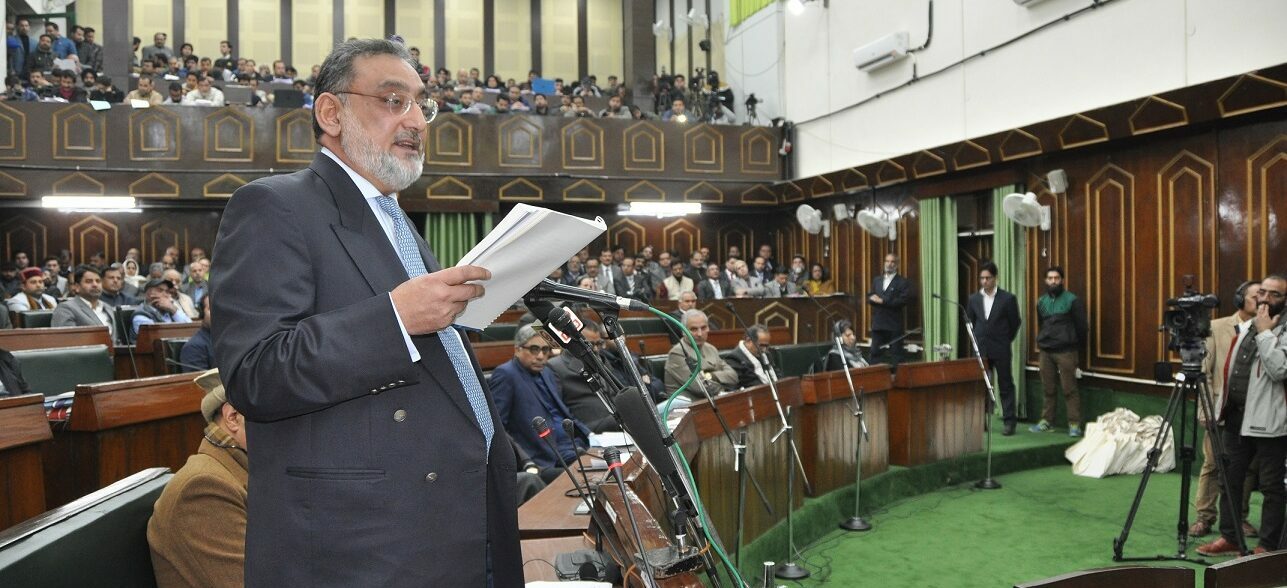
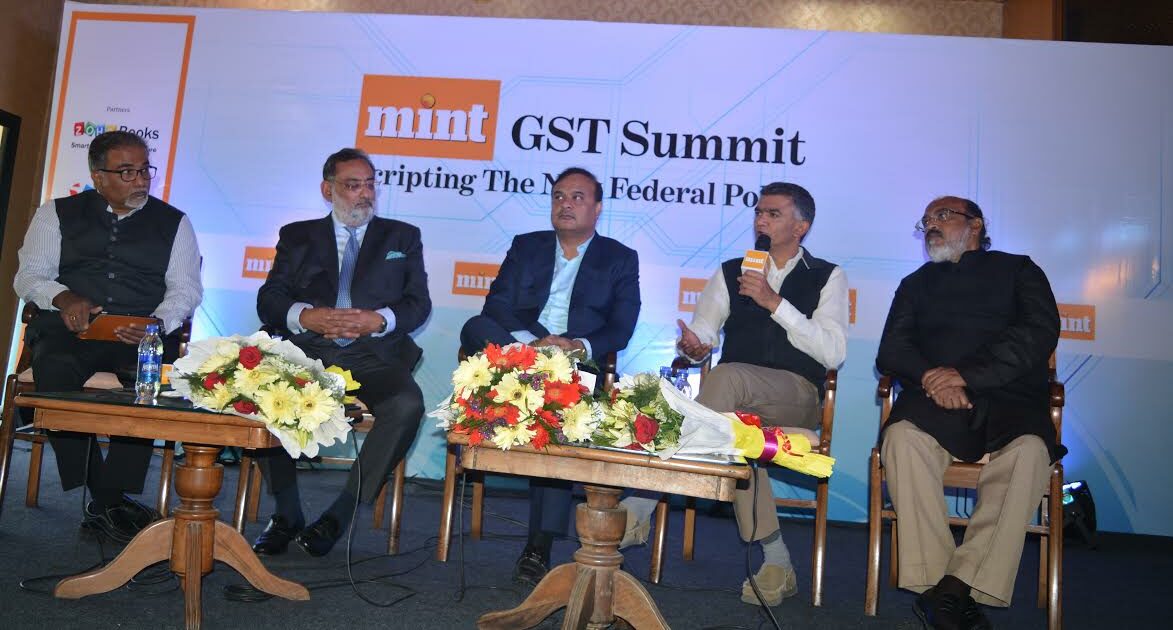
The implementation of India’s Four Labour Codes in November 2025 would have elicited quiet satisfaction from Dr Haseeb Drabu, the former Finance Minister of Jammu and Kashmir, who articulated this vision seven years earlier. Drabu’s 2018 proposal for a Uniform Employment Code remains largely forgotten in public discourse. Yet its intellectual DNA runs through every aspect of the Union’s labour reform.
What we witness is the delayed vindication of ideas that circulated in state- level policy circles, now realised at the national level with bureaucratic machinery and constitutional mechanisms far beyond Kashmir’s reach.
The parallel highlights how policy ideas are disseminated through Indian federalism. A finance minister in a border state identifies a problem and proposes a solution grounded in administrative rationality and contemporary economics. The idea remains confined to state borders. Years later, the central government, armed with constitutional authority and parliamentary majority, implements an identical conceptual framework across the nation. The interval between vision and implementation matters far less than the convergence itself.
The Problem Both Identified
Drabu and the architects of the Union Labour Codes began with an identical diagnosis. Indian labour law had become genuinely dysfunctional. The dysfunction ran deeper than inefficiency; it constituted a fundamental incoherence within the system.
Drabu articulated this explicitly, identifying “the bane of multiple labour laws has been their poor implementation and the resultant inadequate impact on the ground.” He was describing a specific administrative pathology rooted in structural fragmentation.
Consolidating 29 central labour laws into four functional codes represented a necessary response to regulatory architecture that had become unmanageable. The problem extended beyond individual laws; their multiplicity created compliance arbitrage. Firms navigated the system by remaining deliberately small, staying beneath thresholds, and avoiding multiple registrations. Workers fell through gaps between different laws. Regulators viewed only fragments of the whole system.
The Solution Architecture
What distinguishes Drabu’s thinking is methodological rigour. Rather than proposing another labour law, he advocated consolidation around functional principles, abandoning sectoral lines and worker categories. This principle reappears throughout the Union codes’ organisation.
The Code on Wages, the Industrial Relations Code, the Code on Social Security, and the Code on Occupational Safety, Health and Working Conditions represent functional groupings rather than industry or worker- category-specific divisions. Functional organisation creates possibilities for genuine uniformity while preserving regional flexibility. A worker in Kerala manufacturing and a worker in Punjab agriculture might operate under identical wage provisions, yet state rules can adjust for regional conditions. The principal scales, state-level organisation cannot.
Both Drabu and the Union codes understood that consolidation alone remained insufficient. Genuine reform demanded the simultaneous elimination of archaic provisions rooted in colonial manufacturing assumptions or early independence-era thinking. Drabu instructed his labour department to “initiate a process of revision of all labour laws in the state to make them contemporary and relevant to changing times.”
The Union codes responded with provisions absent from prior Indian labour statutes, including statutory recognition of gig workers, platform workers, and aggregators. The Factory Act of 1948 could never have envisioned Uber or Amazon Flex. Colonial labour law could scarcely accommodate workers lacking fixed workplaces and holding multiple simultaneous employment relationships.

The Registration Revolution
The most significant intellectual innovation concerns worker registration systems and digital infrastructure. Both Drabu and Union code architects independently arrived at similar conclusions regarding modern labour administration. Drabu proposed that “registration of workers should be linked to biometrics and Aadhar number” and directed “complete mapping of unorganised workers in all the districts of the state.” This represented revolutionary thinking for 2016-2018.
Labour administration in India had traditionally focused on registered factories and organised enterprises. Unorganised sector workers existed in administrative darkness, possessing rights on paper while lacking mechanisms for state identification, outreach, or scheme delivery.
The Union codes establish this infrastructure through the Aadhaar-linked Universal Account Number system and the e-Shram portal. For the first time in Indian labour history, the state builds a comprehensive national database of unorganised workers. Creating such databases requires settling questions about identity, occupation categorisation, skill mapping, geographic location, and benefit portability.
Both Drabu and the Union code architects rejected the assumption that the unorganised sector lay beyond systematic state action. Instead, they posed a different question. What technologies and administrative architectures would allow the state to systematically map, identify, and benefit the 400 million unorganised workers constituting the majority of India’s workforce? Digital identification and registration emerged as the answer.
The Ease of Doing Business
An apparent tension runs through both proposals as to how to simultaneously reduce compliance burden on businesses while extending worker protections. Drabu articulated this directly, stating that “Labour law reforms are critical to ushering in real ease of doing business in the state, besides, of course, addressing the aspirations of the labour class.” The word “besides” merits examination. It suggests neither sacrifice nor compromise, but describes a legitimate dual objective achieved through different mechanisms.
The Union codes implement this through specific institutional mechanisms. Single registration replaces multiple registrations. A single licence replaces multiple licences. Single return replaces 56 different forms and registers under the prior law. These represent substantive changes rather than cosmetic amendments. They reduce administrative costs, particularly for small and medium enterprises. Simultaneously, electronic record-keeping generates transparency that benefits honest businesses and enables enforcement targeting actual violations rather than paperwork failures.
The Social Security Code extends coverage to workers previously excluded from formal protections. Fixed-term workers receive equal benefits to permanent workers. Gig workers and platform workers gain statutory recognition and access to schemes. These extensions require reclassification of how business relates to their workers, not expansion of the burden on enterprises.
Why Seven Years Elapsed
The interval between Drabu’s 2018 proposal and the Union codes’ 2025 implementation reveals institutional constraints unique to Indian federalism. Drabu operated within a state’s jurisdiction. The Union required constitutionally mandated rule notification by all 28 states and 8 Union territories. States delayed. Some retained governments ideologically opposed to labour protections; others lacked administrative capacity. The legal framework became operational only when the final state notified its rules.
This federalism failure carries instructive lessons. Future major labour reforms may require more unified constitutional architecture. The current system allowed laggard states to hold the entire nation hostage. When labour law occupies the Concurrent List, genuine uniformity becomes impossible until all actors comply.
The Ideas Have Won
The intellectual case for consolidation, modernisation, digital registration, and functional organisation has definitively won. No major political party proposes returning to pre-2020 labour law fragmentation. The debate has shifted entirely to implementation details on how aggressively the Social Security Code extends benefits, what transition rules apply, and whether states will attempt enforcement weakening.
The fundamental question of consolidation necessity has been settled. Both the Finance Minister of Jammu and Kashmir in 2018 and the Government of India in 2025 arrived at identical answers. This suggests the intellectual case transcends partisan division, representing expert consensus regarding modern labour administration.
Haseeb Drabu does not appear in contemporary discussions of labour code implementation. The Ministry of Labour did not invoke his name when codes became operational. His thinking nevertheless runs throughout them. This reflects how ideas move through Indian policy…quietly, through bureaucratic channels, refined through years of committee work, emerging eventually as national policy bearing little visible connection to their origins.
The Deeper Current
The codes represent the national implementation of what Drabu understood as necessary in Kashmir seven years earlier. That the nation reached this conclusion through its own institutional processes and political dynamics confirms rather than diminishes what Drabu recognised. When a state-level finance minister and a union government, operating independently, arrive at identical policy architecture, we witness ideas whose time has come.
Policy reform in democracies operates differently from what theory suggests. Superior ideas do not automatically triumph. They do not cascade downward from expert consensus to implementation. Instead, they circulate through parallel channels. A visionary finance minister plants seeds. Years pass. The intellectual soil shifts. What seemed radical becomes obvious. What seemed impossible becomes necessary. Eventually, the nation discovers it has become what the forgotten voice advocated.

The codes represent that vindication. Delayed and devoid of fanfare, they constitute something more durable than recognition. They represent the maturation of an idea from a state proposal into a national doctrine. In this transformation lies a truth about policy change transcending labour law itself. Great ideas require no architects’ names attached. They require only truth. When truth inheres, ideas become inevitable.
The intellectual archaeology connecting Drabu to the codes does not improve the codes themselves. It reveals something else entirely for the vindication that certain minds perceive clearly what others require decades to understand. That constitutes the deepest form of influence in democratic governance. Recognition matters less than silent knowledge that what you saw was true enough to become what everyone eventually sees.
(The author is a pracademic working on government policy and public institutions. Ideas are personal.)