Kashmir: Education Crisis Deepens
Jammu and Kashmir schools face rising secondary dropouts, low-enrolment institutions, and under-utilised infrastructure challenges.
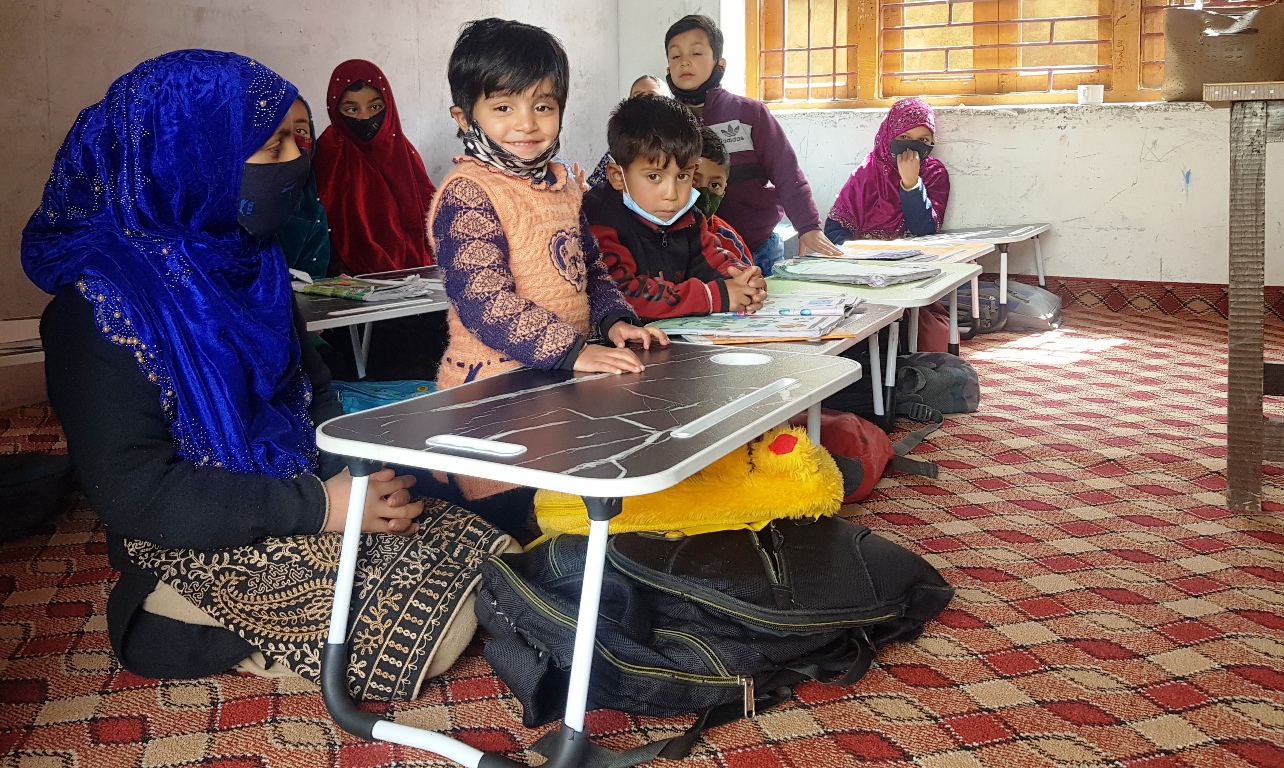
Recent data placed before the parliament exposes a deepening structural crisis in Jammu and Kashmir’s school education system. While the erstwhile state maintains “comfortable” pupil-teacher ratios, eleven at primary, eight at upper-primary, and twelve at secondary, these statistics belie growing challenges in enrolment and retention. The number of government schools with fewer than ten students has steadily increased, from 798 in 2022-23 to 997 in 2024-25, while teacher deployment in these under-utilised schools has risen from 1,692 to 1,778, indicating that rationalisation has not kept pace with the decline in students.
The most worrying indicator is the secondary-level dropout rate. While primary and upper-primary dropouts have fallen to around 1.5 per cent and 3.2 per cent, respectively, secondary dropouts have surged from 5.96 per cent in 2021-22 to 13.4 per cent in 2023-24, remaining critically high at 12.9 per cent in 2024-25. This sharp increase threatens to swell the number of low-enrolment schools in rural and hilly districts where access to education is already constrained.
District-level data highlights the severity of under-utilisation. Udhampur has 27 zero-enrolment schools, Rajouri 19, Doda and Kishtwar 18 each, Kathua 12, and Jammu and Shopian 10 each. Many of these districts host significant Scheduled Caste and Scheduled Tribe populations, suggesting that the marginalised are disproportionately affected. With nearly 18,785 government schools serving 1.39 million students under 94,202 teachers, the mismatch between teacher deployment, student numbers, and school infrastructure is striking.
Although centrally run schools, fifty-five in number with 1,638 teachers, are adequately staffed, they remain few, and overall infrastructure utilisation is uneven. Programmes like Samagra Shiksha and PM eVidya provide funding and digital learning support, but without local-level monitoring and targeted interventions, these initiatives cannot reverse the dropout trend.
The data signals that Jammu and Kashmir’s education system, despite favourable pupil-teacher ratios, is at risk of inefficiency and inequity. Rising secondary dropouts, under-utilised schools, and uneven access threaten long-term learning outcomes. Immediate focus on retention strategies, rationalisation of resources, and improved access in remote districts is essential to convert staffing advantages into meaningful educational results and prevent further decline in the Union Territory’s public schooling system.
The sustained underperformance of the state-run education system has accelerated a decisive shift toward private schooling, as parents across Jammu and Kashmir seek higher-quality learning and better long-term prospects for their children. By March 2025, nearly 47 per cent of the 2,649,158 students enrolled across Jammu and Kashmir were studying in private schools, despite these institutions operating with far fewer resources, smaller infrastructures and leaner staffing than government schools. Government schools accounted for 1,393,820 students, while private schools enrolled 1,255,338.
What makes the shift more striking is that Jammu and Kashmir’s public school network is almost six times larger than the private sector, yet families continue to opt out of government institutions, signalling a deep crisis of credibility and outcomes in the state-run system.