SRINAGAR: A landmark 2010 academic study published in the Global Economy Journal has found that Western countries dominate global rankings measuring adherence to Islamic economic principles, while most Muslim-majority states rank significantly lower.
The study, titled An Economic Islamicity Index (EI2), was conducted by economists Hossein Askari and Scheherazade Rehman. It evaluated 208 countries to assess how closely their economic systems reflect core principles derived from Islamic teachings. Importantly, the index does not measure religiosity or personal faith. Instead, it examines governance structures, institutional performance and economic outcomes.
Ireland ranks first globally in the index, followed by Denmark, Luxembourg, Sweden and the United Kingdom. Other high-performing countries include New Zealand, Singapore, Finland, Norway, Belgium, Austria, Canada, Australia, the Netherlands and the United States. These countries perform strongly on measurable indicators such as rule of law, corruption control, access to education, labour protections, regulatory efficiency and financial transparency.
Malaysia, placed 33rd globally, is the highest-ranked Muslim-majority country. It is followed by Kuwait, Kazakhstan, Brunei, Bahrain, the United Arab Emirates and Turkey. However, when the 56 member states of the Organisation of Islamic Cooperation (OIC) are assessed collectively, their average ranking stands at 133 out of 208. By contrast, OECD countries record an average ranking of 24.
The study draws a sharp distinction between religious identity and economic implementation.
Countries fall into different constitutional categories. Some formally declare themselves Islamic states in their constitutions. Others designate Islam as the official religion without explicitly defining the state as Islamic. There are only seven declared Islamic states (Afghanistan, Bahrain, Iran, Mauritania, Oman, Pakistan, Yemen) and only twelve countries that have declared Islam as the state religion (Algeria, Bangladesh, Egypt, Iraq, Kuwait, Libya, Malaysia, Maldives, Morocco, Qatar, Tunisia, United Arab Emirates).
A third category consists of Muslim-majority societies that do not constitutionally establish Islam as the state religion. Finally, there are non-Muslim-majority countries, many of them Western democracies, with secular constitutional systems.
The study concludes that constitutional designation alone does not determine performance. For example, Pakistan ranks 145th, Iran 139th, Iraq 148th, Afghanistan 149th and Yemen 180th. Lower rankings are associated primarily with weaker institutional performance in areas such as corruption control, contract enforcement, governance effectiveness, economic freedom and social welfare delivery.
The Economic Islamicity Index is built around twelve broad dimensions derived from Islamic economic thought. These include economic opportunity and freedom, justice in property rights and contracts, fair treatment of workers, investment in education, poverty alleviation, social welfare systems, responsible management of savings and natural resources, low corruption, ethical financial practices based on risk-sharing, and overall economic prosperity. Each dimension is given equal weight in calculating the final ranking.
Rather than relying on theological definitions, Askari and Rehman used internationally recognised data sources such as World Bank indicators, United Nations development data, corruption perception measures and economic freedom indices. The result is a composite score reflecting how effectively countries translate ethical economic principles into institutional practice.
Western nations rank highly largely because they demonstrate strong rule of law, independent judicial systems, contract enforcement, regulatory transparency, social safety nets and relatively low corruption levels. According to the study’s framework, these characteristics align closely with the economic justice and governance standards embedded in Islamic economic teachings.
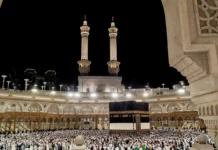
Saudi Arabia, widely regarded as the custodian of Islam’s two holiest sites, Makkah and Madinah, occupies a central symbolic position in the Muslim world. As home to the Masjid al-Haram and the Prophet’s Mosque, the Kingdom carries religious influence that extends far beyond its borders. Constitutionally an Islamic state governed under Sharia principles, Saudi Arabia presents itself as a leading voice in the global Islamic community. However, in the context of the Economic Islamicity Index, it does not feature among the top-performing nations. Its ranking reflects mixed performance across governance indicators such as economic freedom, transparency, labour participation and institutional accountability, underscoring the broader finding of the study that religious centrality does not automatically translate into higher adherence to measurable economic principles associated with Islamic teachings.
Iran, which constitutionally defines itself as an Islamic Republic and operates under a system that combines elected institutions with clerical oversight, represents one of the most explicitly religion-based state structures in the contemporary Muslim world.
Since the 1979 Revolution, its political and legal framework has been formally anchored in Islamic jurisprudence. However, in the Economic Islamicity Index, Iran ranks in the lower tier globally. The ranking reflects challenges in areas such as economic openness, corruption perception, financial system restrictions, institutional transparency and broader governance indicators used in the index. The study’s findings suggest that despite its formal Islamic constitutional identity, Iran’s measurable economic governance outcomes place it well below many non-Muslim-majority nations in adherence to the index’s defined economic principles.
The authors acknowledge limitations in their methodology. The index relies on existing global datasets, which may not perfectly capture every dimension of Islamic economic principles. Some areas, particularly wealth distribution and charitable giving, are difficult to measure consistently. The researchers describe their work as an initial framework requiring further refinement.
Nonetheless, the study’s core conclusion is clear: adherence to Islamic economic values appears to depend more on institutional strength and governance quality than on formal religious designation. The findings challenge assumptions that Muslim-majority or constitutionally Islamic states automatically reflect Islamic economic principles in practice.
More than a decade after its publication, the 2010 study continues to provoke debate by reframing the discussion around economic ethics, governance and accountability rather than religious labels alone.