by Jameel Ansari
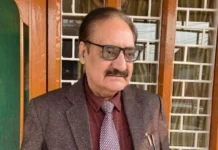
Abdul Ahad Farhad, Kashmir’s respected broadcaster, poet, and writer, passed away on December 22, 2025, leaving behind a legacy of voice, verse, and enduring public love.

That voice belonged to Abdul Ahad Farhad, one of Kashmir’s most respected broadcasters, poets, and writers, who passed away suddenly in Jammu on December 22, 2025.
Born in Soura, Srinagar, Farhad spent most of his life in the city, deeply connected to its people and rhythms. His death has left literary, journalistic, and cultural circles in profound mourning.
During the violence of the 1990s, Kashmiris relied on Farhad’s broadcasts as a lifeline. “His mesmerising, beloved voice still echoes across the valley,” said Nazir Khan, an ardent radio listener.
Farhad studied in Srinagar and completed his Master’s degree in English at the University of Kashmir. He was selected for a lecturer’s post, a stable and respected career, but was also chosen by Radio Kashmir. Farhad joined the radio as a scriptwriter, was later promoted to newsreader, and eventually retired as a Grade One newsreader, a rank equivalent to director-general.
For the first three years of his career, he did not miss a single day of work. “I chose radio because it was a culture of brotherhood,” he once said. “There was no culture of bribes. That is what kept me there and kept me connected to the people.”
Though his income as news editor of Daily Wular was modest, what mattered more to him was integrity.
Before the microphone made him a household name, Farhad was already known as a poet. He participated in state-level symposiums and later appeared at a World Conference of Poets. He described the announcement of his name at the conference as humbling.
The bard-broadcaster translated two books during his career. After retirement, responding to repeated requests, he published four books in September 2023, mostly compilations of his naats, poems in praise of the Prophet Muhammad (peace be upon him). Many of these naats were already widely recited. “It was the reciters themselves who urged him to publish them, so the words could be preserved, corrected where needed, and recited properly,” said Maqbool Hussain, his poet friend. Lines such as “Ba-khuda saerie khudaei asiha pardan andar” became part of Kashmir’s cultural memory.
“For many years, people did not know what Farhad looked like,” said a former colleague at Radio Kashmir. “He was simply a voice. Shopkeepers, farmers, and villagers knew the name Farhad because they heard him every day.”
With the arrival of television and his frequent appearances on screen, people finally began to recognise his face, and his popularity grew. “In those early days, there were only a few broadcasters like him, including Farooq Nazki. Later, many more entered the field.”
Farhad remained honest about change. “Our generation had the least competition,” he said. “There were hardly any journalists in town. Today, even one neighbourhood has dozens, working under constant pressure and scrutiny.”
He often said he had no single mentor. Anyone who taught him something, scholars, colleagues, or listeners correcting him, was a mentor. These exchanges with the public were his greatest source of learning.
Roshan Khayal Khan, who worked with him for many years, called his passing a personal loss. “As a senior broadcaster, he encouraged me when I joined the newsroom as a young and raw newsreader,” he said. Khan recalled working alongside giants such as Abdul Rashid Banday, Syed Muzaffar Kashani, Moti Lal Khazanchi, and Makhan Lal Bekus. “I often felt like a minnow among them. Such was their stature and aura.”
Farhad would sometimes recite newly written naats and poetry in his unforgettable style. Shafiq Ahmad, who spent more than two decades with him at Radio Kashmir, remembered him as graceful and generous. “He was a professional of the highest standard,” he said. “He dedicated his youth and later years to All India Radio, Delhi, and Radio Kashmir, Srinagar. His command over the Kashmiri vocabulary was exceptional. Truly, he was a living legend.”
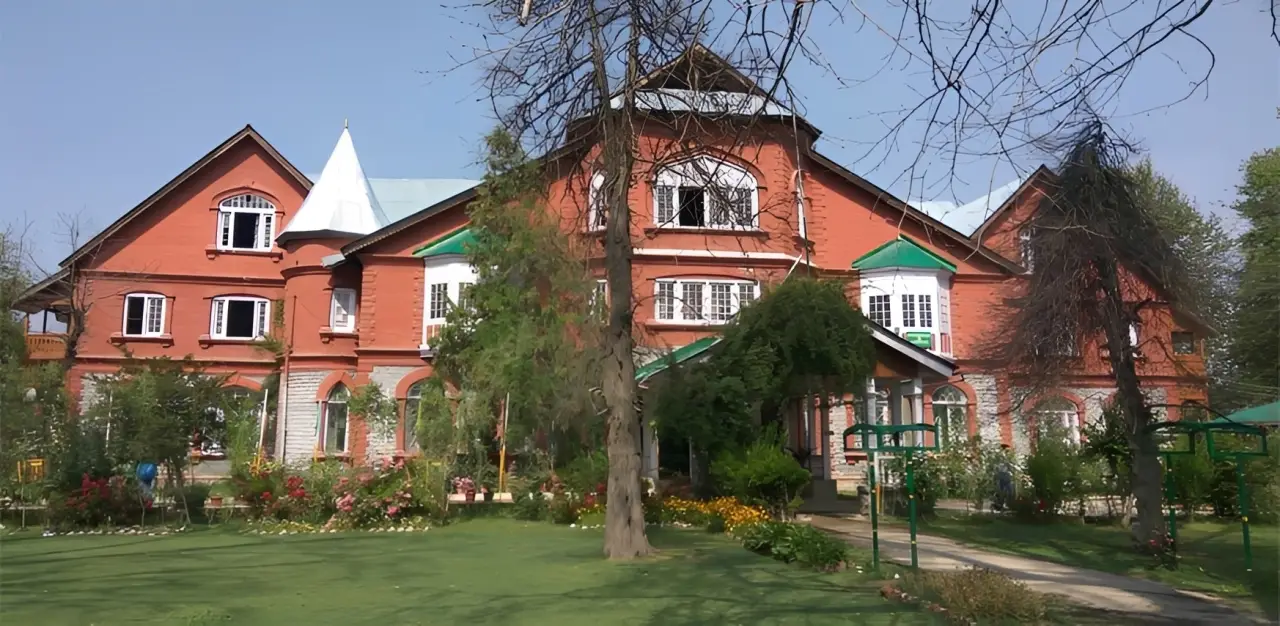
Nisar Gilani, his college friend and debating partner, traced their bond back to SP College, Srinagar. Though one studied Arts and the other Science, literature brought them together. Under professors Ghulam Nabi Firaq, Sattar Shahid, and TN Bhan, they worked on the college magazine Partab. The two travelled together on RTC buses, discussing life and the future. In debates, Gilani spoke in English, while Farhad was the Urdu voice. In 1967, they travelled to Delhi for an inter-college competition. Decades later, living only a few hundred metres apart in Jammu, they still spent winter afternoons over tea, talking as if time had barely moved.
Farhad never received many major awards, nor did he seem to mind. He believed his greatest achievement was the love of the people. There were moments when that love became overwhelming. During a condolence visit to Sopore, someone recognised him while he was travelling by car. A crowd gathered so quickly that the army had to intervene to let him pass. “That,” Farhad once said, “was my biggest award.”
He is survived by his wife, a former principal, and two daughters, one a banker and the other a professor. His family remained deeply devoted to his work and admired his creative genius. Friends and neighbours remember community moments, too. Farooq A Nawchoo, his neighbour in Umerhair, Buchpora, recalled sitting with him in his lawn, discussing life and worldly matters. Author Zahid G. Muhammad remembered him as a learned friend and a mystic in later years, recalling his early writings in Daily Aftab under the pen name Kokab Kashmiri.
Farhad believed his survival through the years of violence, and later through the COVID pandemic, was a divine blessing. He often spoke of gratitude, faith, and patience.
“Today, his voice no longer rises from the radio each evening,” said a colleague. “But people still remember how his voice carried the valley through fear, uncertainty, and silence.”
(Author is a calligrapher and writer. Ideas are personal.)