SRINAGAR: The Amar Singh Club in Srinagar hosted a compelling and timely seminar titled “Healing With Honour – Ethics & Empathy in Medical Practices”, as part of its Common Interest Conversations initiative. The event brought together a powerful lineup of legal experts, senior doctors, and engaged citizens to critically examine growing concerns surrounding medical ethics, corruption, and the erosion of trust in healthcare systems in Jammu and Kashmir.
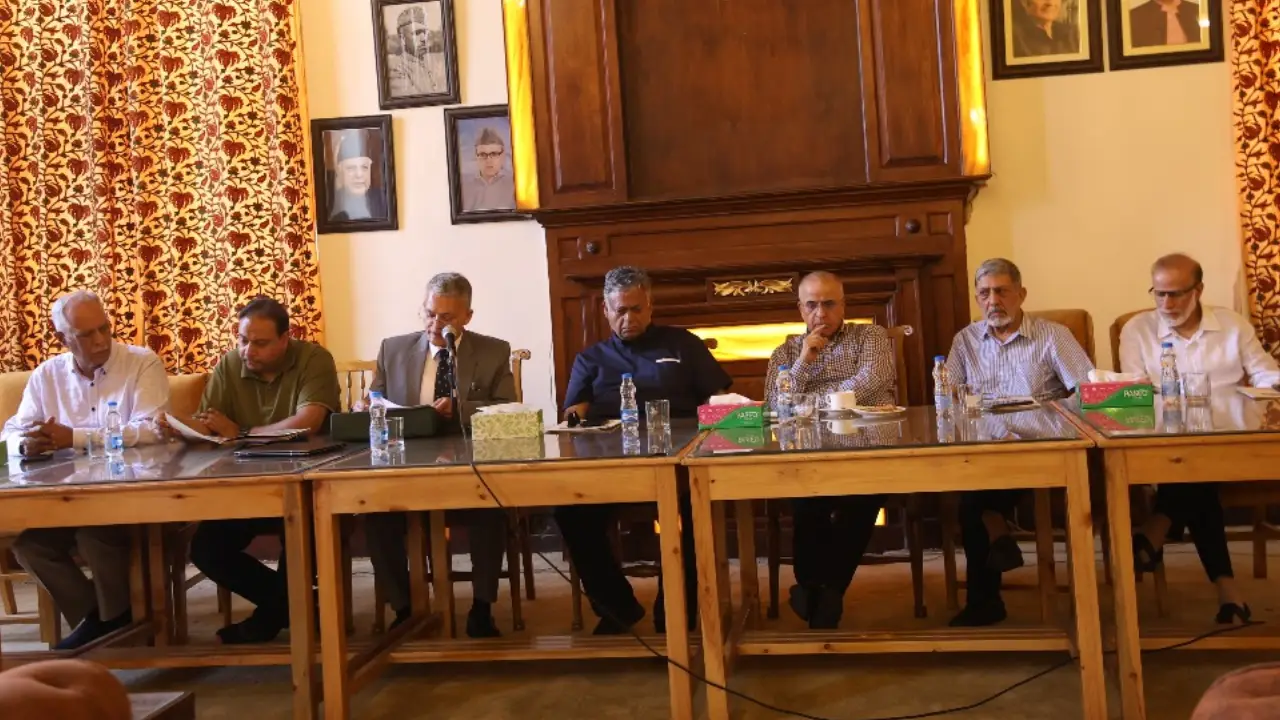
At-Amar-Singh-Club-top-experts-from-Jammu-and-Kashmir-discussed-medical-ethics-in-July-2025
In his opening remarks, Nasir Hamid Khan, Secretary of the Club, outlined the purpose of the Common Interest Conversations series, which has previously tackled issues like drug abuse, mental health, and digital addiction. He delivered a wide-ranging historical overview of medical ethics, tracing its roots not just to the Hippocratic Oath, but also to classical Indian texts like the Charaka Samhita, Sushruta Samhita, and Bhela Samhita—some dating back nearly 3,000 years. Khan reminded the audience that these texts prioritised compassion over commerce, laying out moral obligations for physicians that predated even Western codes of medical conduct.
Khan then shifted focus to modern ethical breaches in medicine, citing alarming trends like unnecessary surgeries—including Caesarean sections performed for financial reasons—overdiagnosis, stent fraud, and prescription manipulation. He criticised India’s voluntary Uniform Code of Pharmaceutical Marketing Practices (UCPMP) for lacking teeth, and contrasted it with the United States’ Physician Payments Sunshine Act, which mandates full disclosure of payments and benefits given to doctors by pharmaceutical companies.
Senior Advocate Zaffar A. Shah, who presided over the session, addressed the complex interplay between system overload, doctor burnout, and ethical decline. While acknowledging the pressure on doctors, particularly in overburdened government hospitals, he did not shy away from naming the problem: “There has to be an independent authority,” he said, advocating for a statutory regulatory body—akin to a State Legislative Council or an empowered Medical Council—to monitor, investigate, and act upon ethical violations.
Shah exposed the hurdles faced by patients in seeking justice. “Doctors rarely testify against colleagues,” he noted, adding that most complaints of negligence never reach court, let alone lead to punishment or license cancellation. He condemned practices such as doctors prescribing specific labs for commission and accepting incentives from pharmaceutical firms, arguing that medical service should never be confused with commercial enterprise. “If you want to make money, be a businessman—not a doctor,” he declared emphatically.
Chairing the seminar, eminent neurologist Dr. Sushil Razdan acknowledged the growing mistrust between patients and physicians. “Medicine remains an imperfect science,” he said, cautioning against assumptions of guaranteed outcomes. He described the added stress doctors face in private hospitals where they are expected to meet financial targets, often diverting them from core clinical duties.
Dr. Abdul Wahid advocated for detailed patient history-taking and diagnostic integrity, blaming hurried consultations for many misdiagnoses. He also called for empathy towards doctors, many of whom suffer from burnout syndrome. Dr. Wahid fondly remembered Kashmiri medical pioneers like Dr. Ali Jan and Dr. Naseer, whose deep compassion made them legends.
Dr. Mustaq Margoob described how technological changes and online information have frayed the traditional bond between doctor and patient. He warned that burnout among doctors has surged—from 16 percent in the 1990s to over 43 percent today—fuelled by systemic pressures and eroding patient trust.
Dr. Naveed Nazir, speaking both as a practitioner and an ordinary citizen, said the lack of a formal healthcare referral system in Kashmir had led to chaotic patient flows and overburdened tertiary hospitals. “Patients often trust chemists more than doctors,” he noted, also raising doubts about the practicalities of generic prescriptions given issues of availability and quality. Dr. Nazir called for a universal, state-supported healthcare system to ease financial burdens on patients and better counselling for young doctors to instil compassion in clinical practice.
In a lively audience interaction, Nawab Mehran Khan questioned whether private practice was a compulsion or a choice, while Mohammad Ashraf Mir pointed to architectural inaccessibility in many private clinics. Journalist Peerzada Ashiq suggested that all prescriptions be submitted online to a state-run auditing body for ethical scrutiny.
In his closing remarks, Zaffar A. Shah issued a call to conscience. Rejecting arguments that corruption in society justifies corruption in medicine, he stressed: “You cannot afford to be corrupt because you have chosen to render service to society.” He argued that even the threat of independent oversight could significantly deter unethical behaviour.
The seminar concluded with a strong consensus: there is a pressing need for systemic reforms, independent monitoring, and a shift in both mindset and policy to reclaim the noble core of medicine. Drawing inspiration from Kashmir’s own medical stalwarts, the seminar urged today’s practitioners to pursue healing not just as a skill, but as a moral duty.