by Dr Farooq A. Lone
As AI transforms education, teachers become more vital by guiding critical thinking, ethics, and understanding, ensuring students move beyond information access to meaningful, independent learning
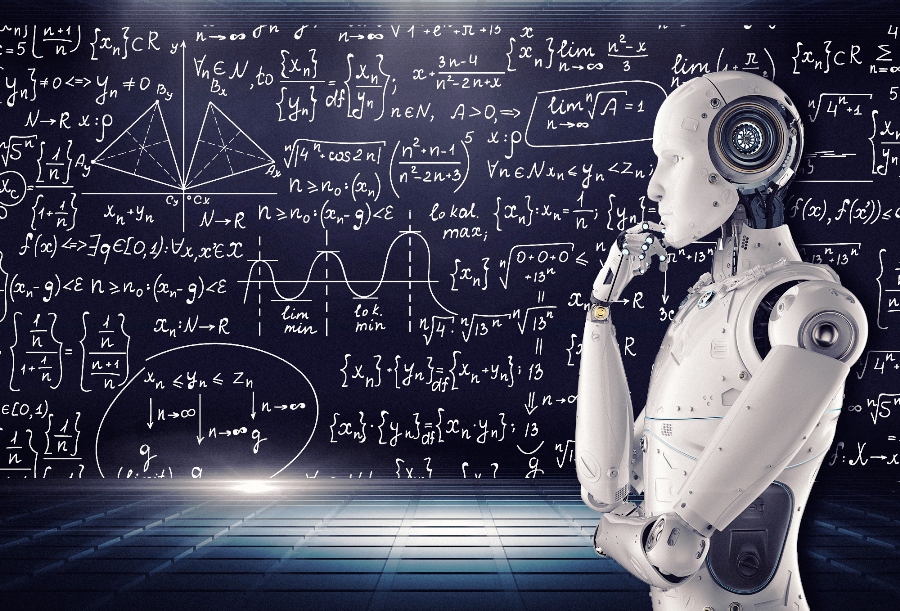
Having spent almost a decade in teaching and research more than four decades ago, I often wonder how technology has changed the contours of teaching and research during this period. Teaching, no doubt, has become the most challenging job in the world, and the challenges grow faster every day with advancements in technology.
We are living through one of the most transformative periods in the history of education. Artificial Intelligence has moved rapidly from research laboratories into our classrooms, our offices, and even our students’ pockets. Today, a student can solve a complex equation, summarise a research paper, generate computer code, or draft an essay in a matter of seconds using AI tools.
This technological revolution naturally raises an important question: if information is instantly available and machines can perform many cognitive tasks, what is the role of a teacher?
The answer is both reassuring and challenging. Teachers are not becoming less important; they are becoming more important than ever. However, their role is evolving from being primary sources of information to becoming architects of understanding, facilitators of inquiry, mentors of intellectual growth, and guardians of academic integrity.
Information Abundance
For centuries, education operated in a world of information scarcity. Teachers, books, and libraries were the principal gateways to knowledge. Access to information was limited, and the teacher served as the essential transmitter of that knowledge.
Today, we inhabit a world of unprecedented information abundance. A student with a smartphone can access lectures from leading universities, scientific databases, digital libraries, and AI-powered learning tools from anywhere in the world.
Yet, access to information is not equivalent to education. Information is raw data. Knowledge is organised understanding. Wisdom is the ability to apply that understanding judiciously in real-life contexts.
Artificial Intelligence excels at retrieving and organising information. But education aims for much more than information retrieval. It seeks to cultivate judgement, discernment, creativity, ethical reasoning, and intellectual independence.
The Limits of AI
AI is remarkably powerful, but it is not intelligent in the human sense. It does not possess consciousness, curiosity, moral responsibility, or lived experience. AI can process enormous volumes of data, detect patterns, generate plausible responses, automate routine tasks, or personalise learning resources. But AI cannot understand meaning in the human sense, exercise moral judgement, inspire through personal example, build authentic relationships, nurture character and values, or replace empathy, encouragement, and trust. A machine can provide answers. Only a teacher can cultivate understanding.
The Changing Role
The role of the teacher is shifting from instructor to intellectual guide. The teacher as mentor helps students navigate uncertainty, overcome self-doubt, and develop confidence. In an age where answers are abundant, mentorship becomes invaluable.
Not all information is accurate, relevant, or meaningful. Teachers as curators help students evaluate sources, distinguish evidence from opinion, and identify reliable knowledge.
The teacher acts as a designer of learning. Effective education requires carefully crafted experiences such as discussion, reflection, experimentation, collaboration, and application.
Good teachers act as cultivators of questions. AI may answer questions, but teachers teach students how to formulate important, meaningful, and transformative questions.
Foundational Learning Matters
One of the greatest risks in the AI era is the temptation to bypass foundational understanding. Students may use AI to solve advanced problems without mastering basic principles. This creates an illusion of competence without genuine understanding. For example, a student may use AI to solve a differential equation instantly, yet struggle to model a real-world phenomenon mathematically. Similarly, AI may generate an elegant essay, but the student may lack the analytical skills required to construct an argument independently.
Foundational knowledge remains indispensable because it enables students to frame problems correctly, evaluate AI-generated outputs, detect errors and biases, apply concepts in novel situations, and innovate rather than merely imitate. Without conceptual foundations, AI becomes a crutch rather than a tool.
Reimagining Teaching
Traditional lecture-based teaching, while still valuable, is no longer sufficient as the sole pedagogical approach. Modern classrooms must emphasise problem-based learning, case studies, collaborative projects, inquiry-based discussions, experiential learning, and interdisciplinary exploration. The teacher’s role is to create learning environments where students actively construct knowledge rather than passively receive information. Learning must move from memorisation to meaning-making.
Balanced Integration
The question is not whether AI should be used in education. It already is. The real question is how it should be used responsibly and effectively. AI should be viewed as an educational partner, not a pedagogical replacement. Appropriate uses of AI include automating administrative tasks, providing personalised practice, offering immediate feedback, supporting differentiated instruction, assisting research and data analysis, and enhancing accessibility for diverse learners.
However, essential human functions must remain with teachers, including ethical guidance, critical dialogue, emotional support, intellectual mentorship, evaluation of originality and depth, and the formation of character and citizenship.
Rethinking Assessment
Assessment practices must evolve. If examinations reward only memorisation or formulaic responses, AI will outperform students with ease. Such assessments no longer measure meaningful learning. We need assessments that value critical thinking, creativity, problem-solving, original analysis, application of knowledge, oral communication, reflection, metacognition, and collaborative competence.
Authentic assessment methods may include open-ended projects, research portfolios, oral examinations, case analyses, field-based assignments, reflective journals, and design challenges. The goal should be to assess not merely what students know, but how they think.
Human Connection
Education is fundamentally relational. Students learn best when they feel seen, supported, and challenged. A thoughtful question, a timely intervention, or a word of encouragement can profoundly shape a student’s intellectual and personal development. No algorithm can replicate the transformative power of genuine human connection.
Teachers do more than teach subjects. They model curiosity, integrity, resilience, and compassion. They help students become not only skilled professionals but also thoughtful human beings.
Challenges for Teachers
The transition to AI-integrated education presents significant challenges, including adapting to rapidly changing technologies, redesigning curricula, maintaining academic integrity, balancing innovation with rigour, addressing inequities in access, and developing new assessment strategies. These challenges require continuous professional development, institutional support, and collaborative learning among educators.
The future belongs not to teachers who resist change, nor to those who surrender entirely to technology, but to those who integrate it wisely.
A Vision for the Future
The future of education is not a contest between teachers and technology. It is a partnership. In this partnership, AI handles routine and repetitive tasks. Teachers focus on higher-order learning. Technology expands access. Teachers deepen understanding. AI delivers information. Teachers cultivate wisdom.
This division of labour allows educators to devote more time to what matters most: inspiring, mentoring, and transforming lives.
Conclusion

The rise of Artificial Intelligence does not diminish the role of teachers. It elevates it. As machines become better at delivering information, the uniquely human dimensions of teaching become even more valuable. A teacher’s task is no longer simply to provide answers. It is to nurture discernment, foster creativity, inspire inquiry, and develop ethical, reflective citizens.
In the age of AI, the teacher is not obsolete. The teacher is indispensable. Indeed, the teachers of the future will not be defined by how much information they can deliver, but by how effectively they can help students think, question, create, and grow. Let us therefore embrace this moment not with fear, but with confidence, wisdom, and renewed purpose.
(Author is a retired IAS officer who was Chairman of Jammu and Kashmir Public Service Commission. Ideas are personal.)