SRINAGAR: The assassination of Iran’s Supreme Leader Ayatollah Seyyed Ali Hosseini Khamenei by the United States and Israel has revived memories in Kashmir of his brief but significant visit to the Valley in 1980 or 1981, when he travelled to Srinagar for nearly 48 hours as part of Iran’s post-revolution outreach.
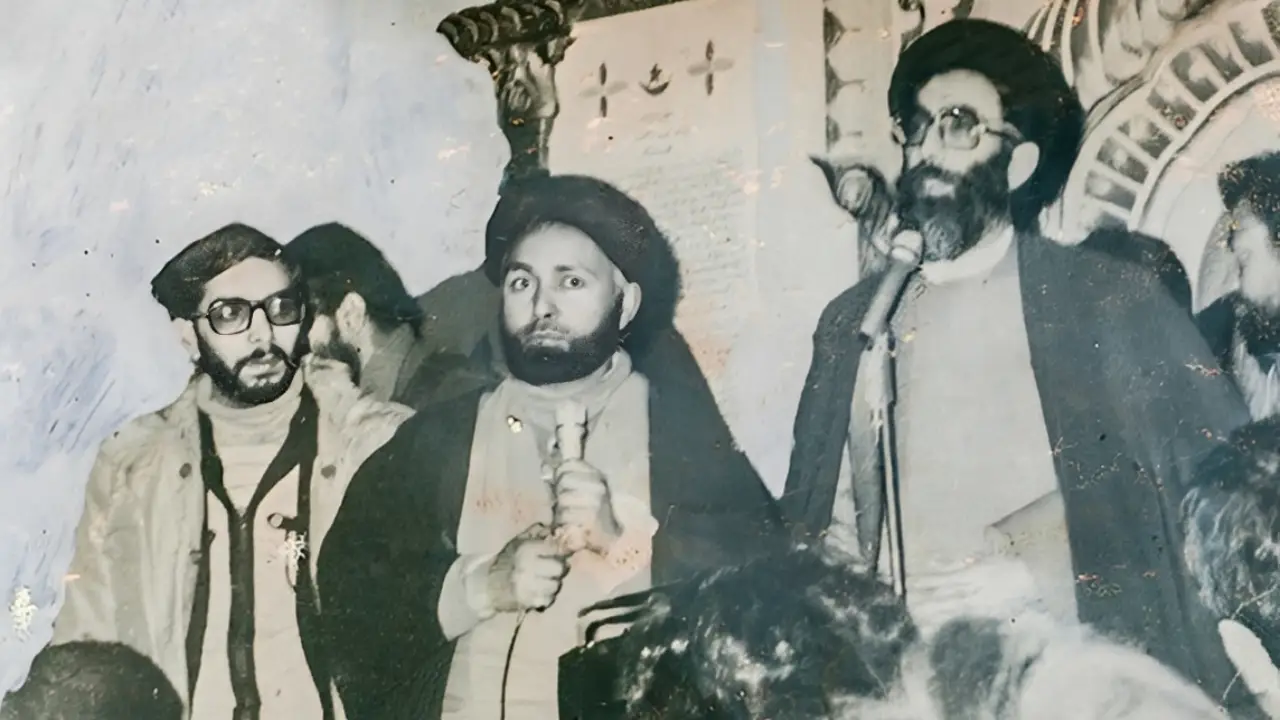
According to accounts from individuals who received him at the time, the young cleric, who later succeeded Ruhollah Khomeini as Iran’s Supreme Leader, was tasked with strengthening ties with Muslim communities abroad and promoting Shia-Sunni unity. His Kashmir visit was reportedly clubbed with a tour to Karnataka in India.
A sources in Budgam’s influential Agha family said the short visit took place in March 1981.
Eyewitnesses said large crowds gathered at Srinagar airport to receive him, with people arriving in buses, taxis, trucks and private vehicles from different parts of the Valley. During his stay, he visited the historic Jamia Masjid in downtown Srinagar, where he joined Friday congregational prayers led by then Mirwaiz Mohammad Farooq and delivered a 15-minute address emphasising sectarian harmony.
Now in his eighties, Aga Syed Mohammad Taqi vividly recalls the visit.
“It was a brief one, hardly 24 hours,” he told Kashmir Life over the phone. “In fact, he arrived a day late and missed what would have been a massive reception by people from all sects.”
Aga said that when news spread that the flight had not landed, many returned home disappointed. “We were told he had not arrived, and we went back frustrated that the Imam-e-Juma of Tehran had not kept his word,” he said.
However, events took an unexpected turn. “When I reached home, a young Iranian gentleman came to see me. He was his PRO, the same Dr Beheshti who was later assassinated,” Aga recalled. “I asked him why the visit had been cancelled. He explained that Khamenei had actually boarded the aircraft but, at the last moment, was asked to disembark because the government in Delhi wanted to make adequate security arrangements for his travel. Dr Beheshti informed me that Khamenei would fly the next day, and he did.”

According to Aga, the schedule was tightly packed. “Khamenei landed at the airport, proceeded to Agha Sahib’s residence for dinner, and after Maghrib prayers shifted to a hotel in Srinagar,” he said. “The following day, he led Friday prayers at the Jamia Masjid, delivered a brief address, offered his namaz, and then travelled to Zadibal. From there, he went to the Dargah, where he offered Asr prayers.”
Aga particularly remembers one moment from the Friday sermon at the Jamia Masjid. “He told the gathering that he had come with the salaams of Ayatollah Khomeini and with a request that Muslims must rediscover the Qur’an,” Aga said. “That statement transformed the atmosphere inside the Jamia.”
Memoirs attributed to Kashmiri activist Qalbi Hussain Rizvi, a Kashmiri-origin activist who eventually migrated to Iran, where he passed away, describe the speech as a turning point in local sectarian relations. He wrote that Khamenei’s address at the Sunni mosque marked the first time a globally recognised Shia cleric spoke from its pulpit, and that it contributed to easing sectarian barriers in subsequent years.
During the visit, Khamenei also addressed gatherings at Zadibal Imambara, visited Hazratbal Shrine, and travelled to Budgam, where he was hosted by members of the prominent Agha family. Agha Syed Hussain reportedly served as his interpreter during interactions with local ulema. Witnesses recalled an instance in which enthusiastic supporters briefly lifted his car and carried it forward before allowing it to proceed.
Iranian memoir literature similarly refers to the Kashmir visit in late 1980 or early 1981, noting that he engaged with both Shia and Sunni leaders in Srinagar. Decades later, during a meeting with then Prime Minister Manmohan Singh in Tehran in August 2012, Khamenei referred to his earlier India trip and expressed appreciation for India’s freedom struggle and leadership.
Local accounts continue to describe the 1980-81 visit as a short but symbolically important episode in Kashmir’s religious history, particularly in the context of inter-sect relations in the Valley.