SRINAGAR: Jammu and Kashmir Chief Secretary Atal Dulloo on Monday directed all concerned departments to prioritise the timely completion of projects under the AMRUT 2.0 and Swachh Bharat Mission (SBM) 2.0 schemes, stressing strict adherence to deadlines and regular monitoring.
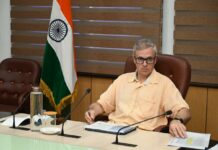
Chairing a high-level review meeting, Dulloo described the two flagship urban development missions as “Pragati programmes” that are being closely monitored at the highest levels of governance. He instructed officials to fast-track processes including tendering, approvals, and on-ground execution.
To ensure systematic implementation, the Chief Secretary called for the formulation of month-wise work plans and submission of fortnightly progress reports by all executing agencies.
During the meeting, it was revealed that considerable progress had been made under SBM 2.0, particularly in solid waste and used water management. The department has achieved a major milestone in Integrated Solid Waste Management, while infrastructure for used water disposal is also advancing, with several schemes already under construction or in planning stages.
In terms of Construction and Demolition (C&D) waste processing, 125 TPD capacity has been allotted to the Srinagar Municipal Corporation (SMC) and 65 TPD to the Jammu Municipal Corporation (JMC). Additionally, 1.33 million tonnes of legacy waste have been remediated since the previous review.
Regarding sanitation, construction of 375 toilet seats is underway — 100 by JMC and 95 by SMC — with an additional 275 toilet seats and 58 urinals tendered by the Directorate of Urban Local Bodies. Construction of Individual Household Latrines has commenced for 51 identified beneficiaries.
Commending the joint efforts of urban local bodies, consultants, and other executing agencies, Dulloo underlined the importance of maintaining quality and meeting deadlines. He reiterated that these projects are essential for sustainable urban growth and safeguarding public health.
While reviewing the Atal Mission for Rejuvenation and Urban Transformation (AMRUT 2.0), Dulloo noted that the scheme aims to ensure water security and enhance quality of life in cities. Of the 153 approved projects, 99 target water supply enhancement, four address sewerage and seepage, and 50 focus on water body rejuvenation. He said that 100 per cent household tap connections in AMRUT towns remain a key goal.
Most of these projects have either been tendered or are under execution, while some remain in the allotment phase. The Chief Secretary directed officials to accelerate pending allotments and civil works, upgrade sewage treatment infrastructure, and ensure safe wastewater disposal and reuse.
Dulloo also reviewed progress on complementary initiatives such as SNA Sparsh onboarding, the Jal Hi Amrit initiative, Amrit Mitra scheme, and the GIS-based Master Plan for Class-II towns. It was informed that 26 towns have been approved for GIS master plans with financial support of Rs 23.40 crore.
The meeting was attended by senior officials including Commissioner Secretary Housing and Urban Development, Commissioners of SMC and JMC, Chief Engineers of Jal Shakti (Kashmir and Jammu), Special Secretary H&UD, Superintending Engineers, and other concerned officers.
The Chief Secretary expressed confidence that with coordinated efforts and strict monitoring, Jammu and Kashmir can set an example in the effective implementation of national urban development missions.