SRINAGAR: The Supreme Court on Monday agreed to consider listing for urgent hearing a series of petitions challenging the constitutional validity of the Waqf (Amendment) Act, 2025 — just a day after the law received presidential assent.
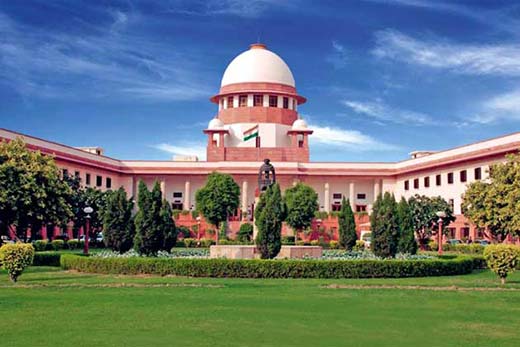
A bench led by Chief Justice Sanjiv Khanna, along with justices Sanjay Kumar and KV Viswanathan, took note of the submission by senior advocate Kapil Sibal, appearing for Jamiat Ulama-i-Hind, who said multiple petitions had been filed on the issue and an urgent hearing was necessary. Senior advocates Abhishek Manu Singhvi and Nizam Pasha also sought an early hearing on behalf of other petitioners, including AIMIM president and Lok Sabha MP Asaduddin Owaisi.
The CJI, who has done away with oral mentioning for urgent listings, asked the lawyers to file written requests or send emails. When Sibal said that the required letters had already been filed, the Chief Justice responded, “I will see the mentioning letter in the afternoon and take a call. We will list it.”
The Waqf (Amendment) Bill, 2025 was passed by Parliament following heated debates in both Houses before receiving assent from President Droupadi Murmu on Saturday.
Multiple petitions have since been filed in the apex court, including those by Congress MP Mohammad Jawed, AAP MLA Amanatullah Khan, and various civil society organisations, arguing that the law infringes upon the religious freedoms and constitutional rights of the Muslim community.
In its petition, Jamiat Ulama-i-Hind alleged that the law was “a direct attack on the country’s Constitution,” describing it as a “dangerous conspiracy to strip Muslims of their religious freedom.” The organisation also stated that its state units would challenge the law in high courts across the country. Maulana Arshad Madani, president of the Jamiat, has also filed an interim petition to stay the implementation of the law.
Samastha Kerala Jamiathul Ulema, a religious body of Sunni Muslim scholars, filed a separate plea claiming the Act amounts to a “blatant intrusion” into the right of religious denominations to manage their own religious affairs, a right protected under Article 26 of the Constitution. The plea warned that the amendments would irreversibly distort the religious character of Waqfs and concentrate excessive power in the hands of the Centre at the expense of states and State Waqf Boards.
The Association for the Protection of Civil Rights, an NGO, also moved the top court, stating that the Act imposes “arbitrary restrictions” on the management of Waqf properties, thereby undermining the community’s autonomy and religious freedom.
Owaisi’s petition argued that the amendments removed legal protections historically granted to Waqfs, while retaining them for Hindu, Jain and Sikh religious endowments. The result, it claimed, is “hostile discrimination” against Muslims and a violation of Articles 14 and 15 of the Constitution.
Khan, in his plea, urged the court to declare the Act unconstitutional, citing violations of a wide range of constitutional provisions including Articles 14, 15, 21, 25, 26, 29, 30 and 300-A.
As the petitions pile up, the court is expected to take a decision shortly on when the matter will be heard.