SRINAGAR: In a significant gesture of historical and strategic symbolism, a statue of the Maratha King Chhatrapati Shivaji has been installed on the banks of Pangong Tso, the 135-kilometre-long glacial lake located on the Line of Actual Control (LAC) in Eastern Ladakh, Changigarh newspaper THe Tribue reported. The lake, divided between India and China, holds immense strategic importance and has been a focal point of military activity over the years.
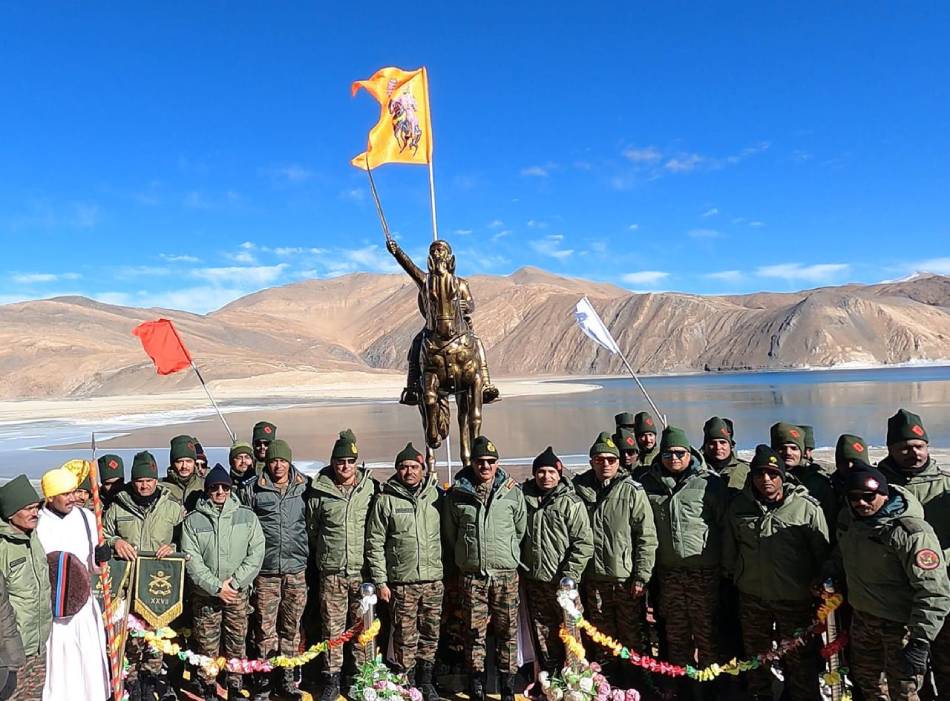
The statue, unveiled on December 26 at an altitude of 14,300 feet, was inaugurated by Lt Gen Hitesh Bhalla, the head of the Leh-based 14 Corps of the Indian Army. Lt Gen Bhalla, who also serves as the Colonel of The Maratha Light Infantry, led the ceremony in honour of Shivaji’s enduring legacy of courage and justice. Describing the statue as a “majestic symbol” of “valour, vision, and unwavering justice,” the Army, through its official account on X (formerly Twitter), highlighted the inspiration drawn from Shivaji’s leadership.
This installation underscores India’s resolve to strengthen its symbolic and strategic presence in locations of geopolitical significance. Pangong Tso, which witnessed fierce fighting during the 1962 India-China war, has remained a contested site. It was on the northern bank of the lake that Major Dhan Singh Thapa earned the Param Vir Chakra for his heroic defence during the war, a legacy that resonates with the statue’s unveiling.
The development also coincides with a shift in the Indian Army’s visual representations of its strategic focus. Earlier this month, a painting of the ‘Surrender at Dhaka’ in the office of the Indian Army Chief was replaced with an artwork depicting tanks operating near Pangong Tso, flanked by symbolic figures of Lord Krishna and Chanakya, highlighting India’s military vision and strategic priorities, the newspaper added.
Pangong Tso has been a hotspot of tension, with confrontations between Indian and Chinese troops over access routes to its northern bank.