SRINAGAR: For more than a week, Srinagar has been living under an unusual kind of curfew — not imposed by authorities, but enforced by two young black bears that slipped into the city and refused to leave. Their nightly wanderings have frozen entire neighbourhoods, disrupted campus life, triggered frantic searches and left residents joking nervously that the animals are on a “city tour” of the Valley’s premier institutions.
By day, the city stays calm. By dusk, panic returns.
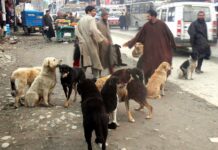
The pair, believed to be juveniles from the Dara forests, have adapted remarkably well to the urban landscape. They have been chased by roaring motorcycles, surrounded by packs of pariah dogs and tracked by thermal drones, yet continue to evade every capture attempt. Wildlife teams say that despite deploying their full arsenal, the bears remain a step ahead.
The saga began on November 27, when security cameras at the National Institute of Technology (NIT) in Nigeen recorded the first clear sighting. Within hours, wildlife officials reached the campus, only to find the animals gone.
Two days later, one of the bears appeared near the Kashmir University campus at Hazratbal. Chased by street dogs and visibly disoriented, it leapt into the girls’ hostel complex and vanished before the response teams arrived.
What followed was a series of sightings across the city. They were spotted at the Sher-i-Kashmir Institute of Medical Sciences (SKIMS) in Soura, where late-night CCTV movement forced security to close the gates. They were reported around Mirwaiz Manzil. Locals later filmed one bear swimming across Nigeen Lake, a video that spread instantly on social media. Their most recent confirmed presence was in Sadrabal, again late at night.
The bear sightings have also disrupted local livelihoods, with several early-morning businesses forced to delay operations. Bakers, who usually begin work before dawn despite the cold, are now opening much later due to safety concerns. In Sadrabal, Hazratbal—where multiple sightings have been reported—local baker Waseem Ahmad has even announced a reward of free bakery products for a year to anyone who helps capture the bear.
The repeated appearances have created a wave of evening fear across northern Srinagar. In Hazratbal, Kanitaar, Nigeen, Soura and surrounding neighbourhoods, parents have stopped children from stepping out after dusk. Local groups share continuous updates. Sales of torch light and battery lamps have surged.
Wildlife officials have issued multiple advisories, urging residents not to dump food waste along forest fringes — a practice that has been drawing wild animals deeper into human settlements.
Officials say the sudden intrusion is linked to broader ecological changes. Bear populations have risen due to healthier forests. But human disturbance, disrupted winter cycles, reduced food availability and climatic shifts are pushing the animals out of their natural habitat at a time when they should be slipping into torpor.
Across Jammu and Kashmir, the pattern of human–wildlife conflict has steadily intensified. Over the past eight years, the region has reported a concerning rise in deaths and injuries from encounters with wildlife, particularly bears and leopards. In 2024–25 alone, seventeen people were killed and 214 injured — the highest injury count in recent years. In the current year, 2025–26, four deaths and seventy-seven injuries have already been reported.
The ongoing search for the two juvenile bears is now one of Srinagar’s most extensive wildlife operations. Drones have been flown over forest fringes and urban pockets. Cages have been installed at NIT, Kanitaar and SKIMS. Awareness teams are visiting neighbourhoods, urging vigilance. Ground teams remain stationed through the night, guiding the animals away from residential areas and towards the forests.
Officials at SKIMS say their night staff now routinely monitor CCTV feeds for unusual movement. Other institutions have stepped up lighting and tightened perimeter checks.
So far, neither the public nor the bears have been harmed. Yet the fear remains palpable. A shopkeeper in Sadrabal, who saw one bear sprint through a residential lane late at night, said the moment left him shaken. “It was surreal,” he said. “As if the forest had followed us home.”
Wildlife authorities say they hope to either capture the juveniles or safely guide them back into the wild soon. Until then, Srinagar remains a city where the nights belong to two restless wanderers from the forests — and residents wait indoors, listening for sounds in the dark.
Post Script:
An operation is currently underway near Dargah in Srinagar to finally capture the animal.