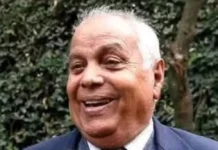
GA Peer, revered for integrity and resilience, rose from hardship to become one of Jammu and Kashmir’s most respected officers, serving fearlessly in challenging posts and leaving an enduring legacy of principled public service
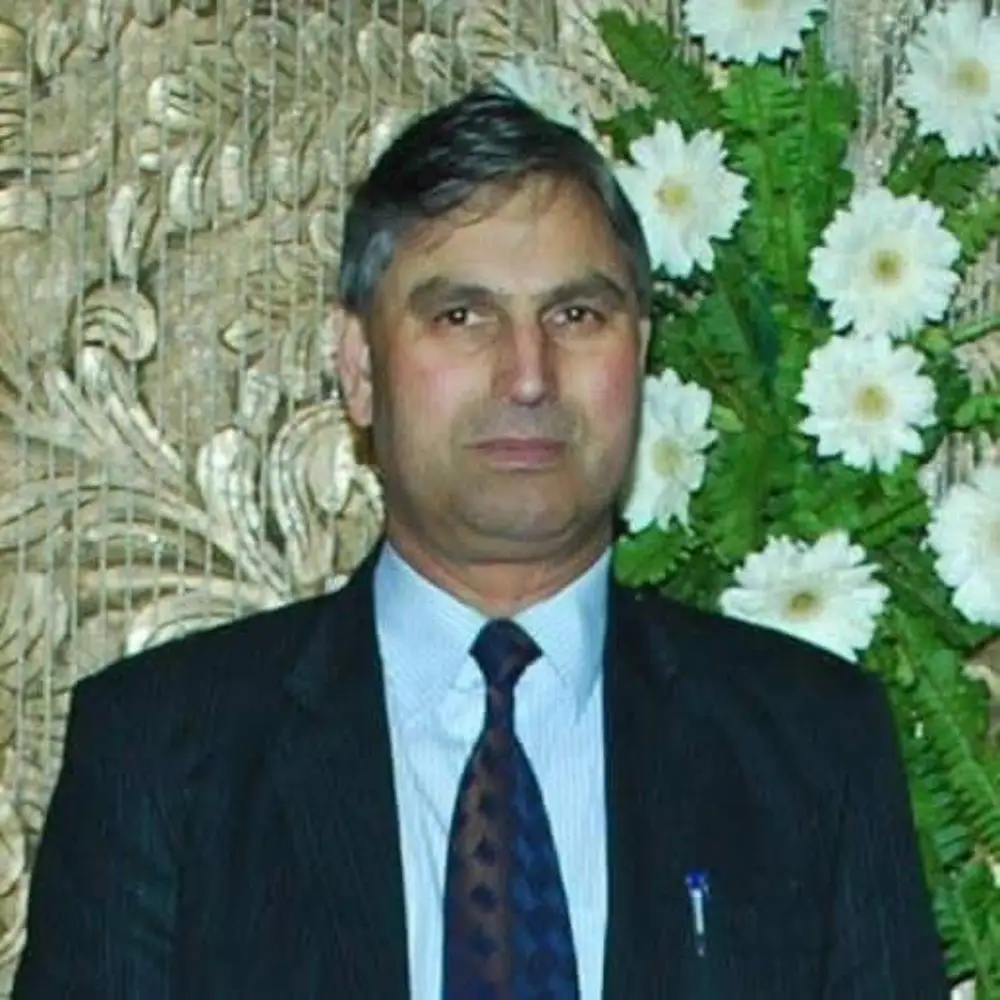
A towering presence in the bureaucracy and a man of impeccable integrity, GA Peer breathed his last on August 3, 2024, at the age of 73, after a year-long and dignified battle with motor neuron disease.
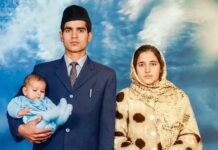
Peer is survived by his wife and two sons, Basharat Peer, the celebrated author of Curfewed Night, A Question of Order, and co-writer of Haider, who currently serves as Global Ideas Editor at Time magazine, and Wajahat Ahmad, an anthropologist teaching in Washington DC.
Struggling Childhood
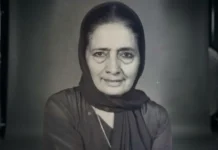
Born in March 1952 in Salia, Anantnag, into a humble peasant family, Peer’s early life was shaped by hardship and loss. Orphaned during childhood, he was brought up by an elderly uncle under trying financial circumstances. But adversity became the crucible of his character: it endowed him with resilience, compassion, and a sense of mission that would mark his four-decade-long public service career. He funded his education by tutoring and teaching in private schools, ultimately passing his graduation privately and joining government service as a teacher.
His journey from a disadvantaged orphan to one of Jammu and Kashmir’s most respected officers is a saga of sheer grit. Urged by a mentor to appear in the Kashmir Administrative Services (now called JKAS) exam, Peer succeeded in 1976 and began his career as a Tehsildar in 1977. This marked the beginning of a remarkable public service career that saw him rise steadily and with distinction through the state’s bureaucratic ranks.
In The Government
Peer’s tenure in public service was defined by integrity, intelligence, empathy, and a rare capacity for hard work. Those who worked with him remember a man who dressed impeccably, rarely raised his voice, and carried within his gentle demeanour a fierce determination to serve the people.
As Assistant Collector implementing the revolutionary Agrarian Reforms Act of 1976, he ensured justice for thousands of small farmers, earning their lifelong respect. Later, as Regional Transport Officer in Srinagar, he transformed a notoriously corrupt office into one marked by transparency and efficiency.
Challenging Assignments
Peer stood unflinching in some of the state’s most challenging and dangerous assignments, particularly during the tumultuous 1990s. As Deputy Commissioner of Sales Tax during the early days of the insurgency, he ensured tax recovery under threat from militant groups calling for non-cooperation. In an era when violence made most officers avoid frontline postings, Peer served fearlessly.
His reputation for integrity was tested and proven repeatedly. In 1992, posted as Deputy Director of Food and Supplies in Kashmir, a post no officer wanted after the assassination of his predecessor, Peer introduced a coupon system for fair kerosene distribution that restored public trust. During the 1993 Hazratbal siege, he ran emergency ration supply operations through police stations, winning public admiration.
In 1996, as Additional Deputy Commissioner of Anantnag, Peer was instrumental in conducting Parliamentary and Assembly elections under grave security threats. Officers had to be brought in from outside the state, and Peer meticulously arranged for their logistics and safety. The elections passed off largely peacefully. When the CRPF opened fire after stone-pelting at the counting centre, killing five, Peer stood firm, drawing on his public goodwill to restore calm.
Crucial Duties
Later that year, he was posted as DC Budgam. With the return of a popular government under Farooq Abdullah, Peer was keen to re-establish people’s trust in governance. He pushed forward development activities and tried to restore public faith in a battered system.
Peer’s connection with his native Anantnag district was deep and enduring. In 2000, amidst civil unrest over killings attributed to the Army and police in Pathribal in the wake of the Chittisinghpora massacre, he was posted as DC Anantnag. He was introduced to the public directly by the then-Chief Minister at a public rally. His appeal for calm worked.
Militants, however, did not forget. Peer survived two assassination attempts in 2001. One involved an IED explosion on his convoy’s route from Salia; the other was a delayed-trigger explosion on August 15. That same month, he survived a helicopter crash near the Amarnath cave. Each time, Peer returned to his duties undeterred.
In his various tenures as DC Anantnag, Peer stood at the centre of some of the most trying events in Kashmir’s modern administrative history. In August 2007, when a massive fire broke out in the Army’s Khundru Ammunition Depot, Peer led the evacuation of over 25,000 people from 13 affected villages. He organised relief camps, ensured medical aid, coordinated with the Army, and calmed panic-stricken citizens. His leadership during that catastrophe remains a textbook example of disaster response.
Peer’s service record was more than just an accumulation of posts; it was a living testament to what civil service could mean in a conflict-ridden society. His field assignments alone, from DC in Anantnag, Pulwama, and Budgam, to helming relief operations, leading censuses, running elections, and revamping education infrastructure, showed the sheer range and depth of his commitment.
A Teacher, A Director
In 2001, he took charge as Director of School Education, Kashmir. Here, too, Peer left a mark. He oversaw the implementation of the Sarva Shiksha Abhiyan (SSA) and supervised the reconstruction of over 700 school buildings damaged during militancy. His ability to get additional central grants despite funding delays reflected the high esteem in which he was held across government levels.
Peer retired in 2012 as Commissioner Secretary for Health and Medical Education, having earlier served in the same role for the School Education Department. His retirement marked the close of a 36-year career that embodied uprightness, quiet courage, and unwavering public service.
In his passing, Jammu and Kashmir has lost one of its finest civil servants, a man who did not just perform duty, but honoured it, even when it meant risking his life.