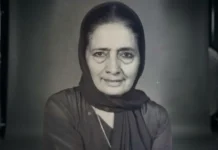
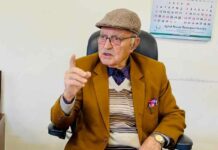
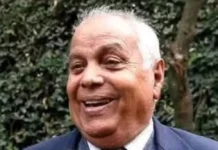
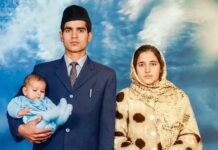
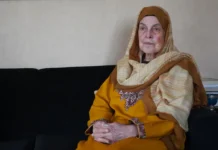
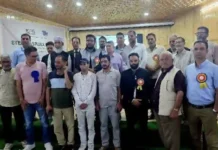
On September 17, 2025, Kashmir lost one of its prominent separatist politicians, a scholar-turned-politician whose voice for dialogue often stood apart in the Valley’s tumultuous political landscape. Prof Abdul Gani Bhat, former chairman of the Hurriyat Conference (APHC), passed away at the age of 90 at his ancestral home in Botingoo, Sopore.
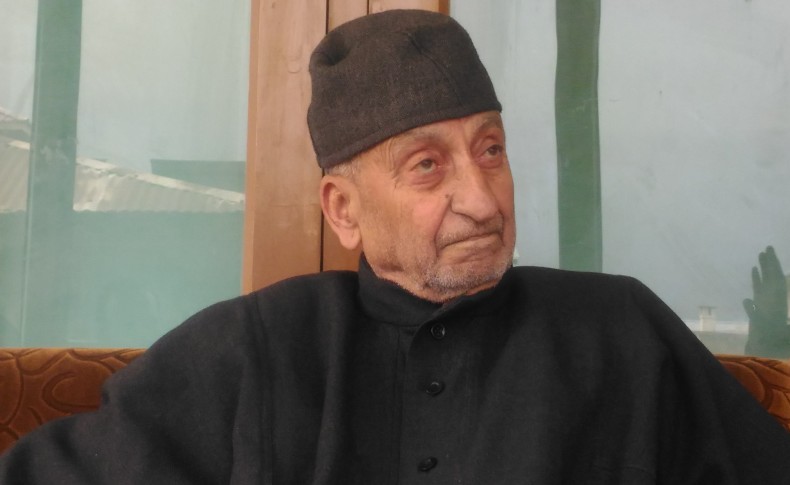
His death, after a prolonged illness, drew tributes from across the ideological spectrum and also sparked controversy, as political leaders alleged they were prevented from attending his funeral.
The Life
Born in 1935 in Botingoo village of Sopore, Bhat’s early life was shaped by books and classrooms rather than political stages. He studied at Srinagar’s Sri Pratap College, where among his contemporaries were two men who would later rise to lead Jammu and Kashmir as chief ministers, Farooq Abdullah and Mufti Mohammad Sayeed. He later pursued a postgraduate degree in Persian and law at Aligarh Muslim University.
After a brief stint practising law in Sopore, Bhat returned to the academic world as a lecturer in Persian. He spent over two decades teaching in colleges across Jammu and Kashmir, including a long tenure at Government Degree College Poonch. Those years earned him the affectionate moniker Professor Sahib that stayed with him throughout his life.
In 1986, amid growing political unrest and under the Governor’s administration of Jagmohan Malhotra, Bhat was among a handful of government employees dismissed on “security grounds.” Then he was heading the Muslim Employees Association. The loss of his academic career pushed him firmly into politics.
That same year, he became a key figure in the formation of the Muslim United Front (MUF), a coalition that mounted the first serious electoral challenge to the Jammu and Kashmir National Conference in the 1987 Assembly elections. The MUF’s defeat, widely believed to have been the result of rigging, marked a turning point in Kashmir’s political history and led to Bhat’s first arrest.
A Separatist Leader
In 1993, when various political and religious groups came together under the banner of the APHC, Bhat’s revived Muslim Conference became one of its founding constituents. He soon rose to the executive committee and later served as chairman.
In the early 1990s, his fiery speeches in chaste Kashmiri could stir massive gatherings. Yet over time, Bhat distinguished himself by favouring pragmatism over confrontation. He openly expressed his dislike for the use of the gun to achieve political goals and criticised the separatists’ frequent and prolonged shutdowns that crippled public life.
This approach brought him both respect and isolation. As one of the few Hurriyat leaders willing to engage in dialogue, he joined delegations that met Prime Minister Atal Bihari Vajpayee and Deputy Prime Minister LK Advani in the early 2000s. Later, he also met Prime Minister Manmohan Singh. His advocacy for talks eventually contributed to a split within the Hurriyat.
“Our political ideologies were poles apart, but I will always remember him as a very civil person,” Chief Minister Omar Abdullah said in his condolence message. “He had the courage to espouse the cause of dialogue when many believed violence was the only way forward, and this resulted in him meeting the then PM Vajpayee ji and Deputy PM Advani ji.”
The Drama
If Bhat’s political career was marked by controversy, so too was his funeral. Hours after his death, family members said authorities pressed them to hold a hurried, late-night Nimaz-e-janaza (funeral prayer) to limit attendance. Kashmir’s chief cleric, Mirwaiz Umar Farooq said he was locked inside his residence to prevent him from joining.
“It pains me beyond words that the authorities compelled the family of Prof Sb to conclude his ‘janazah’ hurriedly,” Mirwaiz wrote on X. “I have been locked inside my home, and being denied the right to walk with him in his final journey.” He called Bhat an “affectionate elder, a dear friend and colleague,” adding: “Kashmir has been bereft of a sincere and visionary leader.”
People’s Democratic Party president and former Chief Minister Mehbooba Mufti also claimed she had been placed under house arrest. She posted a picture of a locked gate, writing: “The decision to place the political leadership under house arrest today, simply to stop us from visiting Sopore to offer condolences on the demise of Professor Abdul Gani Bhat, lays bare the harsh and undemocratic reality in Jammu and Kashmir.”
“I have been put under house arrest in order to prevent me from visiting Botingoo, the ancestral village of Professor Ghani sahib,” Peoples Conference chief Sajad Lone echoed the same sentiment. “I fail to understand what is the need for this. Professor sahib was a pacifist and literally long retired. A final goodbye is something which we all deserved.”
Condolences
Condolences poured in through the night and the following day. Mehbooba Mufti described him as “a voice of moderation amidst the tumultuous history of Kashmir… an esteemed scholar, teacher, and intellectual with a pragmatic approach to politics.”
Apni Party chief Altaf Bukhari said: “Just received the heartbreaking news of the passing of Professor Abdul Ghani Bhat Sahib. Inna lillahi wa inna ilayhi raji’un. This is a personal loss for me, and today my heart grieves the departure of someone whose absence can never be replaced.”
CPI (M) leader MY Tarigami called him “an eminent figure in J&K’s political landscape, remembered for his humility, intellect, and lifelong struggle for the welfare of people.”
Clerics, too, mourned the loss. Aga Syed Hassan of Anjuman Sharia Shian called him a “radiant lamp that illuminated generations and guided society with his vision and sagacity.”
Former Srinagar Mayor Junaid Azim Mattu said his passing marked “the end of a very painful chapter in our history—where those like him who could have paved a path of peace were sadly starved of an ideological space.”
A Legacy of Intellect
Through his long journey from the classroom to the political stage, Bhat retained the dignity of a scholar and the manner of a teacher. He was known for his sharp wit, mastery of language, and ability to mesmerise audiences. But more than his oratory, it was his conviction that dialogue, not violence, held the key to Kashmir’s future that defined his legacy.