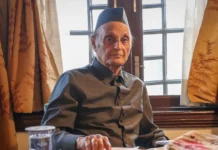
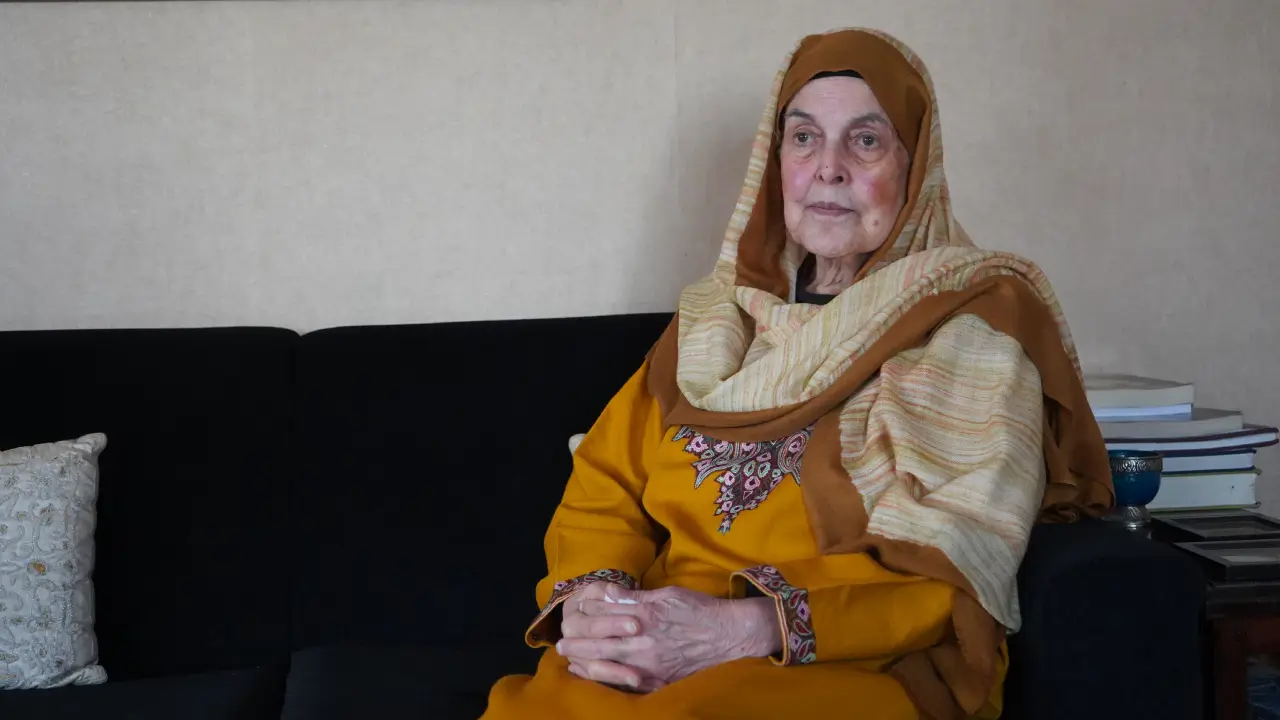
In the shadow of Kashmir’s turbulent past, the eldest child of Sheikh Muhammad Abdullah, Begum Khalida Shah, recalls a life shaped by political upheaval, resilience, and quiet defiance. From the fallout of her father’s arrest in 1953 to falling apart from her blood relation in 1984, she offers an unfiltered account of sufferings, survival, standing and struggles, Umaima Reshi writes
Begum Khalida Shah’s story is not simply a personal recollection; it is a testimony to an era marked by struggle, betrayal, and resilience. Hers is the narrative of a woman who has witnessed history unfold, weathered its storms, and steadfastly upheld her truth.
Born in 1934, Begum Khalida Shah recalls a childhood defined by love, unity, and the defiant spirit of a close-knit community. She remembers the time when people lived harmoniously, unburdened by the distinctions of insider and outsider. Reflecting on the political upheavals that have shaped her homeland, she contrasts the past with the present and wonders what the future holds.
Days of Innocence
Born and brought up in Soura, she fondly remembers the drizzling springs of Dulbagh, where boys and girls played freely, revelling in the innocence of youth. The contrast to today’s reality saddens her. “Even when my children were young, they could engage in all kinds of activities freely, something that has become increasingly restricted nowadays,” she said, in a detailed conversation for Kashmir Life’s Yadain (Memories), a personal history series.
Begum’s education began at Mission School, where she studied until the eighth grade. “Everything I learned, manners, discipline, education, came from there,” she said.
“During those days, I often saw the Maharani at school functions; she was always an honoured guest. Though I saw her many times, I never had the opportunity to meet her family. Later in life, I became closely associated with Dr Karan Singh’s family, forming a bond with his wife, who became like a sister to me.”
Keeping in view the tradition of times, at 14, she was married to Ghulam Mohammad Shah, her father’s longest political associate. The Shah and Abdullah families shared both political and personal ties, making her marriage a union of alliance and affection. “It was a simple and lovely day, without extravagance,” she remembers.
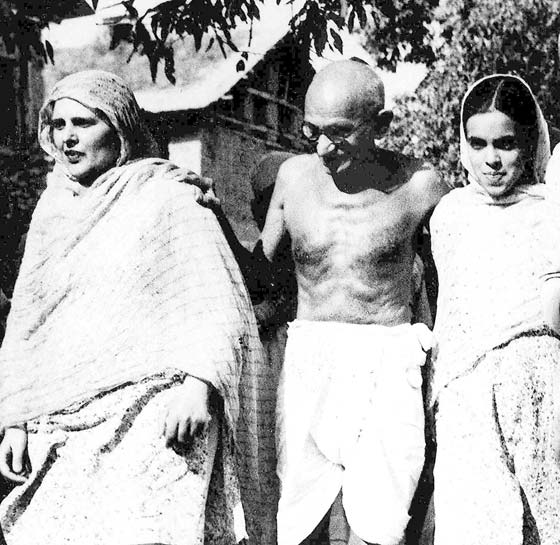
While recounting her experience of Mahatma Gandhi’s visit to Kashmir, she said that in Barzulla, there once stood the house of Kashori Lal, where Gandhi briefly stayed. “I vividly remember his presence there; we even visited for prayers. Before that, he had come to our house in Soura. Though I do not recall the exact conversations, I remember his emphasis on unity.” She pauses before adding, “He repeatedly urged that the spirit of brotherhood remain steadfast, that people stand together in all circumstances. Had he lived a little longer, perhaps the devastating events that followed could have been averted.”
Hurdles
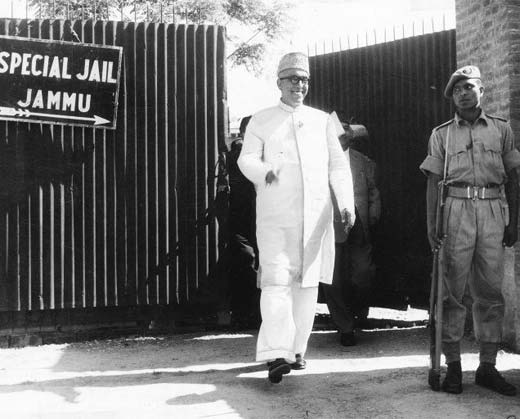
One of the most ‘harrowing’ periods in the life of Khalida Shah, Sheikh’s eldest child, came in 1953 when her family faced betrayal from within their ranks. “We were in Gulmarg with my parents and siblings when we woke to find ourselves surrounded by the military. They intended to arrest my father that very night, but he refused, insisting he would leave only after Fajr, the pre-dawn prayers. By dawn, the news was everywhere: Sheikh’s trusted man, Bakshi Ghulam Mohammad, was behind it all. The realisation that someone so close to us had orchestrated this was both shocking and deeply painful.”
As the family returned home, they found the streets eerily silent, as if something catastrophic had unfolded overnight. Within three days, they were ordered to vacate their residence. Reflecting on Sheikh Abdullah’s relationship with Bakshi, she said, “We never saw him as an outsider. We treated him as an uncle. But when a man succumbs to greed and ambition, he forgets his people and his roots. He was a capable leader, but he fell into the wrong hands.”
Defending her husband’s decision, which later led to a rift between Abdullahs’ and Shahs’ in 1984, Khalida insisted that it was done to safeguard the larger interests of the National Conference. While explaining the dynamics, she said that as political shifts unravelled, fissures emerged within the party, her father had founded. “Some people who had always opposed suddenly gained prominence and worked to weaken the party from within. The rot had set in long before it became visible.” Dedicated workers grew disillusioned, and internal rifts threatened to dismantle the movement. “Shah Sahab had no choice but to act. It was like a doctor forced to amputate a gangrenous limb to save the patient’s life. Hard decisions had to be made for the party to survive.”
She recalled how, in his final days, Sheikh Abdullah urged her husband to take up the role of Chief Minister three times. “My mother and several others witnessed it. Each time, Shah Sahab gave the same reply: he could never consider it while Sheikh Sahab was alive. His commitment to the party had begun in Aligarh and never wavered.”
Family and Politics
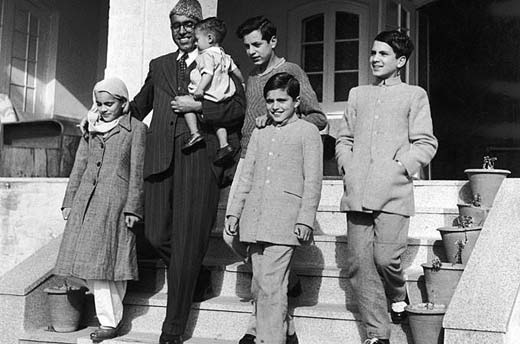
Despite the political turmoil that strained the Shah and Abdullah families, moments of reconciliation remained. “When my younger son had a baby, breaking the ice, my mother visited. The silence was stopped. Later, Farooq Sahab approached Shah Sahab, offering to make him Deputy Chief Minister. Shah Sahab agreed, saying that he would serve my people in any capacity. A title is not necessary.’ However, nothing of that sort happened.”
She remembers the sequence of events at home sadly, “When those you have nurtured turn against you, how long can you endure? It is like watering the branches while cutting the roots. What result can one expect from such self-destruction?”
Though there were certain instances of unification, but recently held assembly elections had again led politics to take over personal relationships. She said her son, Muzaffar, did everything for the JKNC, but at the last moment, he was nowhere.
Suppression and Resistance
Begum Khalida Shah remains steadfast in her belief that the Government of India sought to keep Kashmir dependent. “They never wanted Kashmiris to stand on their own feet. They fed us just enough to survive but never to thrive. Instead of empowering us, they sought to blindfold us. Sheikh Sahab was accused of conspiring with America, but why would he? It was merely a ploy to target him. Had there been any truth to these accusations, evidence would have surfaced.”
The allegations that he was hobnobbing with Americans were officially the key factor for Sheikh’s dismissal in 1953. It led to the constitution of the Kashmir Conspiracy case against him, but that was withdrawn later in anticipation of the 1975 accord.
One memory from her father remains particularly vivid. “A village headman, a Mokkdam, was addressing a gathering when a high-ranking government official suddenly appeared and slapped him, knocking off his dastaar, the head covering. It was not just an act of violence; it symbolised the utter disregard for Kashmiri dignity.”
Education, she recalled, was also systematically devalued. “Dr Ali Jaan once told me of an incident from his school days. During an inspection, the headmaster proudly presented him as a brilliant student. Instead of praise, the official’s response was chilling: ‘Nip him in the bud.’ It reflected the oppressive ideology under which we lived and the mindset towards us.” The incident had happened before 1947, when Kashmir was under Dogra rule.
She also spoke of a conversation between Maulvi Yusuf Shah and Sheikh Abdullah in 1964. “He told him, ‘We left out of fear, believing you would retaliate against us.’ But no one had threatened them. They fled of their own accord. He wished to return to Kashmir before his death, but fate had other plans. The passing of Pandit Nehru changed everything, and Sheikh Sahab deeply regretted being unable to bring him back.”
A Father’s Legacy
Beyond politics, the family had deep ties to the Pashmina trade. Although there was pressure for Sheikh Abdullah to join the business, his passion lay in education and, eventually, in politics.
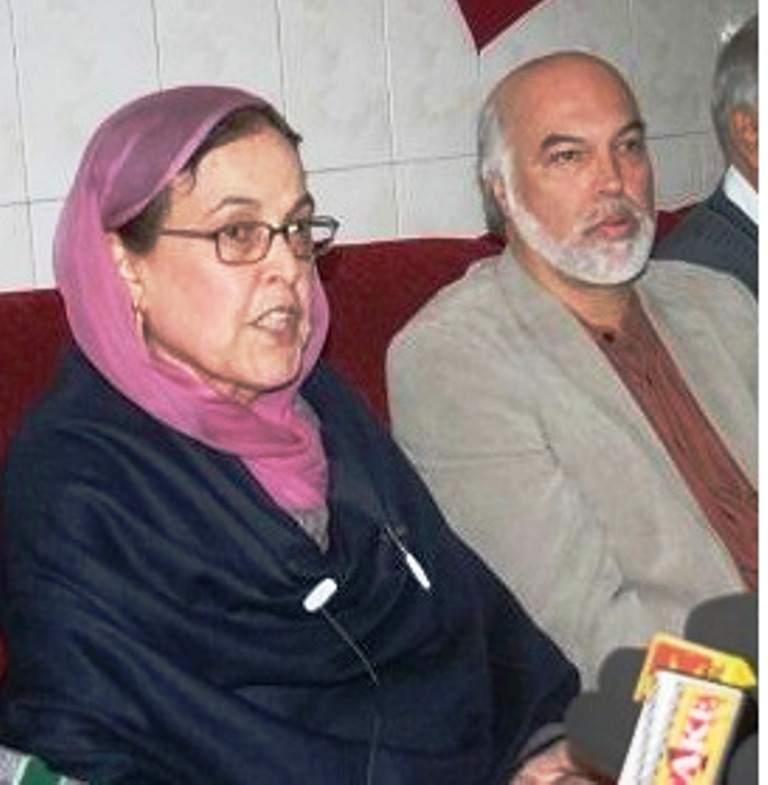
Begum reflected on her father’s lifelong dedication to Kashmir. “He knew his illness meant his time was limited, yet he wanted to devote every moment to his people. He envisioned a prosperous, peaceful Kashmir, one where businesses thrived, tourism flourished, and individuals were financially independent,” Begum said, when asked about Sheikh’s return to power after the Indira Abdullah accord in 1975. “He often said, ‘I cannot always be there for them. They must learn to differentiate between friends and foes.’ Even in his ailing days, when advised to seek medical treatment abroad, he refused. He insisted he would die at home, among his people.”
His guiding principle, she said, was simple yet profound: to live together in peace, treating all individuals with kindness and respect. “He instilled in us the importance of humility, civility, and goodwill, regardless of social standing.”
However, his political struggle meant he spent much of his life either away from home or imprisoned, leaving the family in the care of their mother. “The first memory I have of his imprisonment is from Badami Bagh, where we visited him several times.”
Each time he returned from detention, she recalled, the people would erupt in joy, desperate to catch a glimpse of him. “His legacy was undeniable, despite attempts to erase it.”
About the biography of Sheikh Abdullah, she said Aatish-e-Chinar was published posthumously, though he had wished for its release during his lifetime. “There were speculations that certain chapters were omitted,” she revealed. “I cannot confirm what was left out, but I heard from reliable sources that some portions were excluded. ‘Abhi bhi khauf-e-raas kuch kam nahi hai,’” she said—there is still fear surrounding those revelations.
Reflecting on his impact, she recalled how life improved for many under his leadership. “We often overheard people say that life had become more bearable. Villagers who once struggled found relief when the unjust system of landlords hoarding rice was dismantled. Previously, landlords took the lion’s share, leaving little for the farmers. Many also did not prioritise education, but over time, they recognised its importance. Gradually, change came.”
Past Efforts
In the aftermath of the 1947 tribal raids, Kashmir faced a new crisis: the influx of refugees. Begum Akbar Jehan, her mother, led efforts to rehabilitate them, working alongside Begum Jalaluddin and Sar Sahib. “They accompanied my mother to Amritsar, working tirelessly to assist those in need. Some refugees hesitated, fearing rejection upon their return, but my mother ensured that many found refuge.”
In the aftermath of tribal raids, she said, the Maharaja and his officers sought safe passage to Jammu. With transportation scarce, many travelled on foot or by cart. “Efforts were made to arrange vehicles for them, but tragically, around 300 were ambushed and massacred. It was a perilous time, filled with heart-wrenching stories. Many girls, afraid to return home, chose to stay, knowing they had no one left to protect or accept them. My mother was deeply affected by their suffering,” Begum Shah reflected.
Tribal Invasion
When asked about the 1947 invasion, Begum admitted that her memories were limited. “Our uncle, Ghulam Kadir, took us away within days to Indore, where he worked as the private secretary to Maharaja Yeshwant Rao Holkar. We fondly called him Harry, a connection to the famous Nedous Hotel. He was adamant about taking us along. He said, ‘Sheikh Sahib has to stay here. He has obligations, but who will take care of these children and my sister?’ So we accompanied him to Indore.”
By the time they returned, the conflict had ended, and they resumed their studies. However, they remained in Srinagar during the political shifts that followed. “In reality, everything was controlled by the Maharaja. Sheikh Sahib’s role was not instrumental at that stage; the Maharaja held absolute authority. However, it was made to appear as though Sheikh Sahib had coordinated everything.”
She believed that Kashmiris were treated as subjects rather than citizens. Even after independence, as attacks continued, the Maharaja remained in power. “The entire state was his domain, and its security was his responsibility. No one else, not even Sheikh Abdullah, could have claimed command over the land.”
The Reign of Bakshi
Reflecting on Bakshi Ghulam Mohammad’s more-than-a-decade-long rule, Begum Shah described it as a decade of fear. “It was a time when gangs operated with cruelty. Speaking out was dangerous, and to the extent that if anyone would mention Sheikh Sahib’s name, they would be interrogated.”
“There was a man known as Ganderbali, infamous for his brutality. He instilled such terror that people hesitated even to utter his name,” she said. On the governance front, officially, Bakshi was in charge, but it was his brother, Bakshi Rashid, who controlled things on the ground, with enforcers acting on his behalf. Their objective was clear: to erase Sheikh Sahib’s name from history. But names rooted in truth and justice cannot be erased. Those that rise for the wrong reasons may shine briefly, only to fade into darkness.”
Post-1953
The year 1953 marked a turning point in Kashmir’s history. With Sheikh Abdullah’s arrest, the region descended into political turmoil, and his family faced immense hardships. The Kashmir Conspiracy Case not only reshaped the political landscape but also deeply affected those closest to him.
“At my in-laws’ residence in Magarmal, people would gather outside, shouting cuss words,” recalled Begum. “They hurled curses and obscene remarks at me and my family. Even visitors, doctors included, were later ridiculed for associating with us. Only Dr Hafizullah refused to yield to the pressure, and Dr Ali Jan continued to visit whenever we needed medical assistance. Beyond them, very few dared to maintain contact with us. It was a trying time, especially with most of our men imprisoned.”
Her mother and siblings lived in Bachwara, where they endured similar difficulties. “My sister, Suraya, walked to college every day. My mother faced unimaginable struggles, raising us under immense obstacles. Unlike today, when one can simply hire a taxi, she had to walk long distances, managing everything on her own.”
She recounted an incident that still resonated with her. “One day, Ghulam Muhammad Sadiq narrated a shocking event. A group of men had approached him with a sinister plan to abduct Suraya. Outraged, he thrashed them. ‘Have you lost your minds?’ he demanded. ‘Politics is one thing, but this is something entirely different. She is like our own daughter.’’ They had expected his support, but he was a man of integrity. For that, I have the utmost respect for him.”
Begum Jehan’s Strength
Despite Sheikh Abdullah’s political rise, their home remained unchanged. Life continued as it always had, simple and undisturbed. “My mother always reminded us, until her final breath, to remain humble. She would say, ‘Keep your head straight, but always bow in humility. Never let it enter your mind that you are someone special because your father holds power in people’s hearts. Whether he is the Prime Minister or Chief Minister, it does not define you.’ This mindset protected us from arrogance, and I am forever grateful for that.”
Begum Akbar Jehan was more than Sheikh Abdullah’s wife; she was his steadfast pillar of strength. “She ensured that he never bore the burden of raising the children alone. She took full responsibility for our education and well-being, allowing him to focus entirely on his work. We were always told to prioritise our studies above all else.”
Writing a Legacy
Begum has seen major developments in Kashmir from a very close angle. She has been the daughter of Kashmir’s Prime Minister, her husband (Ghulam Mohammad Shah), brother (Dr Farooq Abdullah) and nephew (Omar Abdullah) have been the Chief Ministers of the erstwhile state. Born in a political family, she has seen, smelled and watched politics throughout her life.
As Begum Khalida Shah contemplates writing her memoir, she is resolute in her approach. “I will document my life as it was, unfiltered and unaltered. There is no need to hide the truth. It is said that guilt does not lie with those who commit wrongdoings but with those who stand by and allow it to happen. If I were to suppress my truths, it would mean my conscience is weak.”