Once a colonial-era jewel and linked to Kashmir’s first political family, the iconic Nedous Hotel in Gulmarg now stands shut, caught in a fierce legal and political eviction battle, writes Masood Hussain
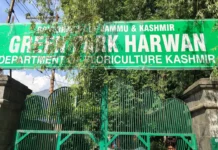
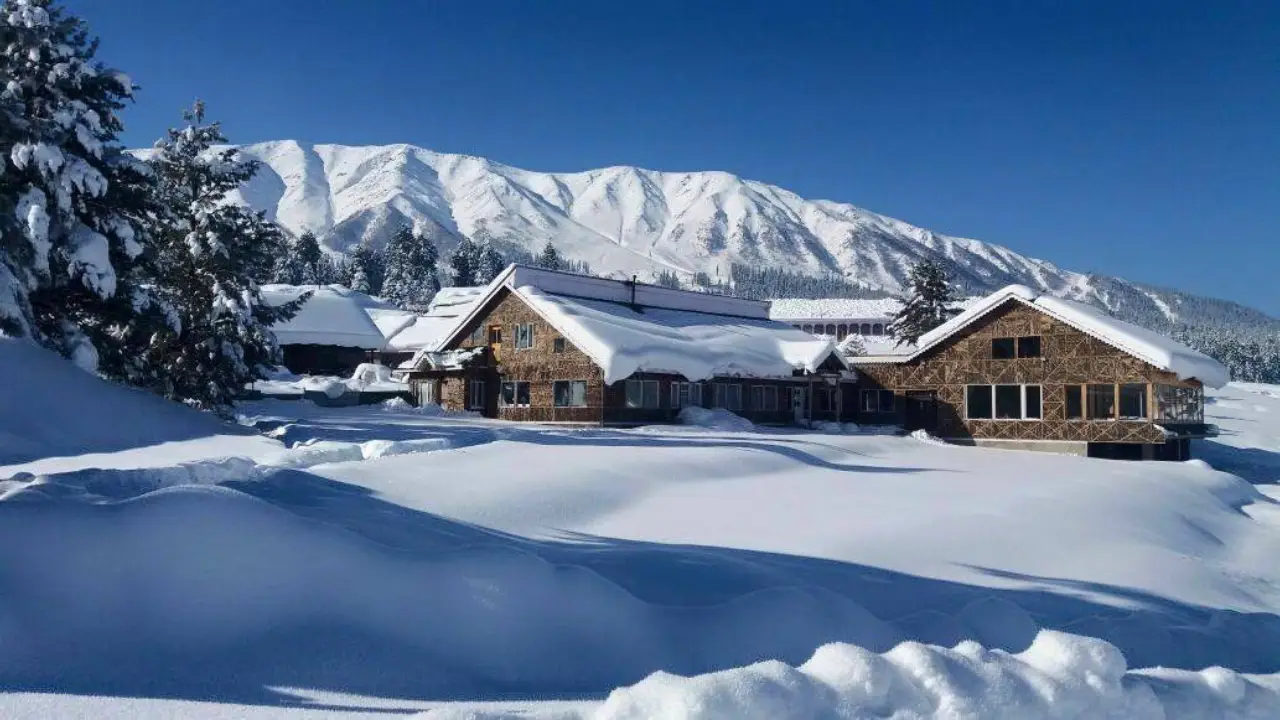
After more than 137 years of uninterrupted operations, the iconic Nedous Hotel in Gulmarg, a landmark of colonial-era elegance and an early symbol of Kashmir’s tourist boom, has been evicted. The order came on Saturday, August 2, 2025, when the Estates Officer, acting under the Jammu and Kashmir Public Premises (Eviction of Unauthorised Occupants) Act, 1988, formally directed the occupants of Hotel Nedous to vacate the 98 kanals and 11 marlas of prime land in Gulmarg they had held since the late 19th century.
The eviction follows years of legal proceedings, including the rejection of lease renewals by the Jammu and Kashmir government in February 2015, a dismissal of the hotel’s plea by the Jammu and Kashmir High Court, and final directions from the Supreme Court of India. The property is now under the charge of the Gulmarg Development Authority (GDA). The District Magistrate of Baramulla has been asked to ensure the peaceful execution of the eviction with police and magisterial presence.
The closure, while executed as a legal formality, symbolically ends a remarkable tale of family, love, royalty, and politics, one that stretches across continents and generations and is deeply woven into Kashmir’s own modern history.
The Beginning
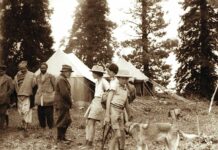
It began in the 1880s when Michael Adam Nedou, a professional architect from the Italian town of Ragusa (now Dubrovnik), came to India to design a palace for the Maharaja of Gujarat. Captivated by the subcontinent, Nedou switched tracks from architecture to hospitality. In 1880, he opened his first hotel in Lahore.
But it was Kashmir that truly captured his imagination. During a trip from Murree to Gulmarg, the Valley’s alpine charm lured him into establishing another hotel, this time in the meadow itself. Thus, in 1888, the Nedous Hotel in Gulmarg was born. It was the first hotel in commercial space. Till then, the Maharaja’s government was catering to the boarding, lodging and kitchen of the European visitors. In 1900, a third branch opened in Srinagar on what is now MA Road. Then, the road passed through two poplar lines and was a racing track as well. It linked Gow Kadal with Gur Dav (horse race) Kadal (Dalgate).
The Nedous Hotels were not just lodgings; they were institutions. With electric lighting, billiards rooms, confectioneries, and European-style entertainments, they redefined the idea of leisure and luxury in colonial India’s Himalayan backyard. Famed Kashmir bakery owes its existence to the Nedous. For decades, they remained the gold standard for visiting European officials, Indian royalty, journalists, diplomats and adventure seekers.
The hotel, with its wood-panelled interiors, stone fireplaces, and sweeping views, offered colonial comfort in a Himalayan setting. It soon became a fixture of Kashmir’s summer season, long before skiing became the winter draw that it is today.
Michael Nedou’s legacy was passed on to his son, Harry Nedou, who managed the growing hotel empire and eventually settled in Kashmir. It was Harry’s personal life, however, that would anchor the Nedous name not only in tourism but in the political future of Kashmir.
A Life Changing Marriage
Harry Nedou fell in love with and married Mir Jaan, a Rajput Gujjar woman from Gulmarg. The cross-cultural union, unconventional for its time, led to the birth of a daughter named Akbar Jahan. Her story would become even more entwined with Kashmir’s history.
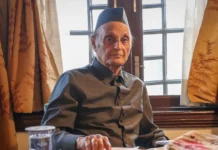
In 1933, Akbar Jahan married Sheikh Muhammad Abdullah, a rising political force who was soon to become the face of Kashmir’s Muslim identity and democratic aspirations. Her first marriage in Lahore had fallen apart in 1929. Sheikh Mohammad Abdullah would go on to lay the foundations of the Jammu and Kashmir National Conference, a party that led Kashmir’s political awakening against Dogra autocracy and aligned itself with India during the tumultuous years of Partition. It was the Muslim Conference that was later renamed JKNC with an avowed objective of making it more inclusive, apparently under the influence of the Indian National Congress.
Akbar Jahan, now known as Begum Abdullah, became an influential political figure herself, later serving as a Member of Parliament and a vocal supporter of her husband’s politics. A deeply religious woman, her contributions during partition in reclaiming the “abducted” women in Jammu were enormous and historic. Through her, the Nedous legacy acquired a political dimension, one that remained close to the heart of the ruling establishment in Kashmir for decades. The family had another connection with Congress through marriage. Harry’s granddaughter, Zainab, had married Ahmad Patel’s son. Patel was an influential Congress member and political adviser to Sonia Gandhi. However, she died in June 2016, at the age of 36.
Legacy In Controversy
Today, the Nedous Group of Hotels is owned and managed by Omar K Nedou, a direct descendant of Harry Nedou and cousin of incumbent Chief Minister, Omar Abdullah, the grandson of Sheikh Mohammad Abdullah. The Gulmarg property remained the crown jewel of the family’s hospitality portfolio, both a nostalgic icon and a lucrative venture in a region where land ownership and lease rights are hotly contested.
The family continued operating the hotel on leased government land until 1985, when their last formal lease expired. Despite efforts to extend the agreement, successive governments declined to renew it. For nearly three decades, the hotel operated in a legal grey zone, its future constantly questioned, but never directly challenged until recent years.
In 2015, the Jammu and Kashmir government under Governor’s Rule rejected the family’s appeal for renewal. The matter reached the High Court, which upheld the government’s decision and declared the family unauthorised occupants. The Supreme Court later endorsed the High Court’s view.
With the August 2, 2025, eviction, that long-pending legal outcome has finally been enforced. In a quick follow-up, the GDA took over the property.
Changing Gulmarg
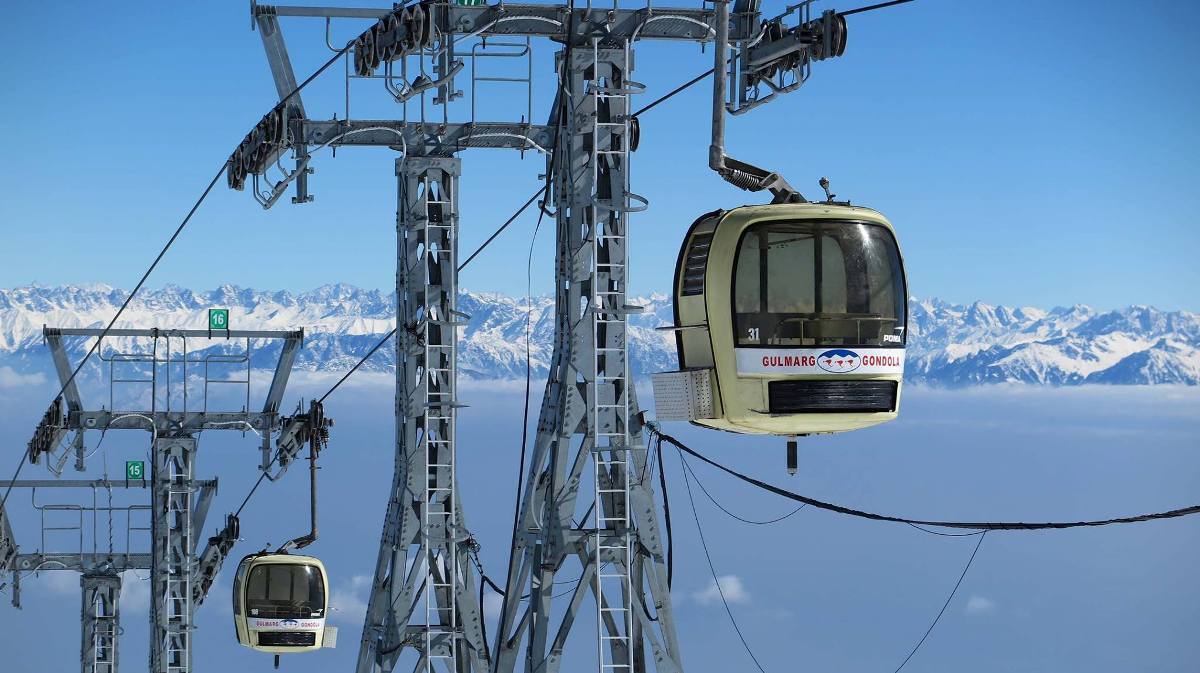
The closure of Nedous comes at a time when Gulmarg is being transformed by infrastructure investments and the aggressive expansion of high-end tourism under the aegis of GDA. The old-world charm of wood-and-stone hotels is giving way to glass-and-concrete luxury chains, ski resorts, and international partnerships.
For many Kashmiris and old visitors, however, Nedous was not just a hotel; it was a living remnant of the Valley’s pre-1947 ethos: multicultural, elite, yet deeply Kashmiri. The wood-smoke, the creaking floors, the waiting staff in traditional Pherans, all now frozen in memory.
The Srinagar Hotel
The family has faced a crisis in its Srinagar hotel as well. On frosty January 30, morning in 2023, when Srinagar’s streets were blanketed in snow and the country’s media glare fixated on the concluding leg of Rahul Gandhi’s Bharat Jodo Yatra, a quieter, more local drama was unfolding just off MA Road. A group of bulldozers stood poised in front of the hotel gate, facing a man in a pheran and karakul cap, holding a sheaf of documents defiantly before the machines. That man was Muzaffar Shah, nephew of Farooq Abdullah and cousin of Omar Abdullah, and he was standing not just for a family, but for an era.
What the administration called the “retrieval” of five acres of state land was, for many in Kashmir, the symbolic shuttering of a legacy, the sealing of the Nedous Hotel in Srinagar, the Valley’s first hotel. The administration defended its move as part of a broader demolition drive aimed at reclaiming state land from “big sharks,” a phrase that has become shorthand in Kashmir’s current climate of land recovery. But political voices, especially from the opposition, saw it as a class war, a selective erasure of history, or worse, a politically motivated show of strength.
The bulldozers moved away after the scene was created but it added yet another layer of crisis to the famed property where most of the Kashmir-linked historic decisions were planned, if not executed.
This hotel has a history of its own. Till most of the nineteenth century, the Dalgate – Maisuma – Batamaloo belt was a famed Poplar Avenue and a tourist attraction. It was a long race course. Most of the constructions started in the latter part of the century but on Residency Road. In the twentieth century, it became known as the Hotel Road as the Nedous Hotel, the first Kashmir Hotel, emerged on it. It was later renamed as Moulana Azad Road.
By 1947, as the subcontinent was cleaved into two and Kashmir descended into crisis, Nedous in Srinagar became a hub for foreign correspondents, Indian Army officers, and political emissaries. Letters from that time, like one from a British woman, Gwen Burton, describing the “siege of Srinagar”, paint a vivid picture of the hotel as a haven amidst the chaos.
It was at Nedous that war reporters got first-hand accounts from military officers and couriered their stories back to Delhi with air force pilots. The hotel, with its log fires, chandeliers, and confectioneries, became both a front-row seat and a buffer zone in a time of geopolitical transformation.

Later, in the 1950s, Soviet premiers Nikita Khrushchev and Nikolai Bulganin stayed at Nedous during their historic visit to Kashmir. Their visit was marked by a performance of Bombur Te Yemberzal, Nadim’s immortal opera, staged within the hotel itself.
In 1990, when the militancy broke out in Kashmir, the Nedous Hotel was quickly converted into a mini-garrison. After years of neglect and dilapidation, in 2012, ITCs Welcome Group revived its Nedou’s connection and they two signed a series of MoUs under a third party will revive and run the facility for both. It was supposed to be the first 5-star hotel in the heart of the city. Barring a gala function presided over by the Chief Minister, nothing much happened.
What Next?
Of the two historic properties, the family is practically out of one, retaining the Srinagar one. The Gulmarg property is anticipated to witness a hot contest as evicting somebody who has been the face of tourism in Kashmir for the last 137 years may not suit the history or the history makers. However, the promoters may have to get into intense negotiations with the government and pay for every inch they retain for a long time. They may have to vacate or own the encroachments the court has listed in the verdict and pay for it, if at all, the government is ready.
The architecture of the hotel might be colonial, the ownership elite, and the narratives complex, but the fact remains that Nedous Hotel was more than lodging. The twin hotels were a witness to Kashmir’s transitions: from princely state to democratic union, from colonial retreat to conflict zone, and from romance to rebellion. It deserves conservation and adequate protection. However, the fact remains: Kashmir’s first hotel stands closed—its doors sealed, its rooms silent, and its story hanging in the air like the last shard of that Soviet chandelier, waiting for light.