A Summer Ramble in the Himalayas blends travel, ethnography, and empire, depicting the Himalayas through beauty and domination. It reveals colonial attitudes toward nature, people, and power, exposing imperial contradictions beneath adventure and admiration, writes Muhammad Nadeem
A Summer Ramble in the Himalayas is not merely a travelogue; it is a layered historical document that captures the British colonial encounter with one of the world’s most formidable mountain landscapes. Written in 1860 under the nom de plume Mountaineer, the book belongs to a genre that blends exploration, ethnography, and empire. It records the impressions of a British traveller who ventured deep into the Himalayan world and Kashmir, combining vivid natural description with the thrill of adventure, yet filtered through an unmistakably imperial lens.
The text unfolds as a journey of discovery and domination, a meditation on beauty and danger, and an inadvertent record of how colonial ideology shaped both perception and prose. Admiration for the sublime Himalayas coexists with the persistent colonial impulse to measure, classify, and control.
A Living Character
The geography of the Himalayas dominates the book, emerging as both subject and spirit. Towering peaks, precipitous valleys, and shifting climates give the landscape a life of its own. The author’s descriptions are charged with awe, portraying the region as an arena where grandeur and peril coexist. Snow-capped ranges appear to stretch “in an unbroken line,” invoking both majesty and isolation.
The topography is presented in striking contrasts, lush riverbanks that rise abruptly to barren ridges, reaching heights of over 22,000 feet. The prose oscillates between admiration and endurance, with the author noting how valleys bloom with greenery even as the upper reaches remain stark and inhospitable.
Flora and fauna receive meticulous attention. Dense forests of rhododendron, cedar, and birch are interspersed with high-altitude meadows. The author cannot resist lyrical embellishment: “Few flowering trees equal in beauty a rhododendron in full blossom, its dark green leaves almost hidden by the mass of flowers.” Yet behind this aesthetic pleasure lies a utilitarian vision, nature as a resource, a storehouse of timber and wealth. The text’s digressions into the economic potential of Kashmir’s forests reveal how even admiration was tethered to the calculus of empire.
Wildlife forms a parallel drama. The musk deer, ibex, brown bear, and rare white leopard populate the pages as living emblems of the untamed wild. Hunting, however, transforms them from symbols of wonder into trophies of conquest. Each kill is anatomised: horn lengths recorded, shots recounted with military precision. These scenes illustrate how the colonial imagination turned nature into a field of mastery. The wilderness was not just to be admired, it was to be catalogued, subdued, and brought within the order of British empiricism.
Nature as Adversary and Ally
Nature in the book is not passive scenery. It is an active, sometimes antagonistic force that dictates the journey’s rhythm. Rugged slopes, loose shale, and sheer precipices test both the body and the will. The author recalls a particularly perilous descent: “The rocks were nearly at right angles to each other, so that it was something like descending from the ceiling of a high room.” Such passages dramatise the physical and psychological trials of Himalayan travel.
But the book’s nature writing is not purely about endurance. It carries moments of quiet reflection, when the grandeur of the mountains evokes humility and awe. The Himalayas are thus rendered as a paradox, at once beautiful and brutal, sublime yet indifferent.
Still, every lyrical pause is shadowed by the imperial gaze. The mountains may inspire reverence, but they also invite possession. The traveller moves through this terrain as a surveyor as much as a pilgrim, his notebook a tool of authority as well as wonder.

The Colonial Gaze
Beneath the descriptive grace of the travelogue runs a deeper current: the colonial perception of land and people. The author’s engagement with the Himalayas alternates between aesthetic admiration and economic appraisal. When he observes that “the Dhoon forests have for years supplied nearly the whole of Upper India with timber for building purposes,” he captures the extractive logic at the heart of empire.
The hunting episodes reinforce this mentality. Every shot fired, every measurement recorded, mirrors the colonial urge to classify and control. To catalogue the wilderness was to claim it; to quantify it was to civilise it. The act of measuring animal horns or mapping a ridge becomes symbolic of a broader imperial conquest, the transformation of mystery into data, of the wild into a resource.
This oscillation between wonder and exploitation defines the book’s moral tension. The traveller admires the Himalayas’ majesty even as he documents their subjugation. The mountains stand as metaphors for a land at once revered and ruled, a duality that reflects the larger contradictions of the British presence in India.
Power, Privilege, and Encounter
Though framed as an account of adventure, A Summer Ramble is steeped in the hierarchies of colonial power. The traveller’s interactions with locals, villagers, coolies, headmen, and rajahs, expose the unspoken assumptions of superiority that structured such encounters. The British explorer, with rifle and map in hand, embodies the imperial project: disciplined, rational, and commanding.
His remarks reveal this posture clearly. After felling an animal, he declares, “That’s how I like to see a beast fall.” The satisfaction is not merely sporting; it is symbolic of dominion, over nature, over territory, over the people who serve him.
Even in mundane transactions, power is unevenly distributed. When “the coolies purchased several of the carcasses for four annas each, the price of a living sheep being from two to three rupees,” the disparity underscores the economic distance between master and labourer. What appears as a casual observation of local commerce, in fact, reveals the deep structures of exploitation that underpinned colonial enterprise.
Similarly, his observation that “the offerings of the pilgrims being its only wealth” about a temple at Gangootri reflects the imperial habit of evaluating sacred institutions in material terms. Spiritual devotion becomes an economic index, a way to measure the “value” of faith through the vocabulary of capital.
Yet the narrative occasionally betrays ambivalence. The author grows impatient with British bureaucracy, praises the resilience of the locals, and expresses frustration at the inefficiencies of imperial administration. These moments complicate the otherwise confident tone of mastery. They reveal a faint awareness of the contradictions inherent in empire that authority, however self-assured, often rested on fragile foundations of coercion and consent.
The text also exposes how British presence reshaped local economies. Bridge-building, hunting, and trade were not isolated acts of adventure; they were extensions of imperial infrastructure and resource control. The traveller’s dealings with rajahs and village headmen mirror the broader machinery of colonial governance, negotiation laced with dominance, transaction masked as mutual benefit.
A Document of Its Age
As a historical artefact, the book provides a rare glimpse into mid-19th century Himalayan life before the full onset of modernisation. The author’s detailed notes on glaciers, rivers, and flora amount to an early ecological record. Descriptions such as a glacier appearing “as if the snow had been collected and thrown up in the middle for an immense railroad” carry the precision of proto-scientific observation, revealing an emergent curiosity about geology and climate.
The book also traces the economic geography of the period. Trade routes between Kashmir, Tibet, and the plains were already being drawn into the orbit of empire. Prices of food and livestock, the cost of porters, and the trade in dried grapes all point to a world in transition, where local economies were being reconfigured by British demand and mobility.
Culturally, the book preserves fragments of a world on the verge of change. Its depictions of temple rituals, rural governance, and bazaar life are tinged with the inevitability of disappearance. The very act of recording these details, from “offerings of pilgrims” to “village temples in Koonawur… curiously and intricately carved”, signals the colonial conviction that traditional ways were picturesque remnants, destined to yield to modernity.
Politically, too, the travelogue is revealing. The British explorer’s reliance on local authority figures, his employment of indigenous labour, and his economic transactions with villagers show how imperial power operated through collaboration as much as coercion. The book portrays British presence as orderly and “cheerful,” contrasted against the supposed “rusticity” of local life, a rhetorical device that sought to justify colonisation as improvement.
Yet, despite its self-assured tone, the book is haunted by contradictions. Its admiration for untouched wilderness coexists uneasily with its approval of exploitation. Its sympathy for villagers sits beside its disregard for their autonomy. These fissures make the text invaluable not only as a colonial document but as an unintentional critique of the very system it represents.
Social Hierarchies
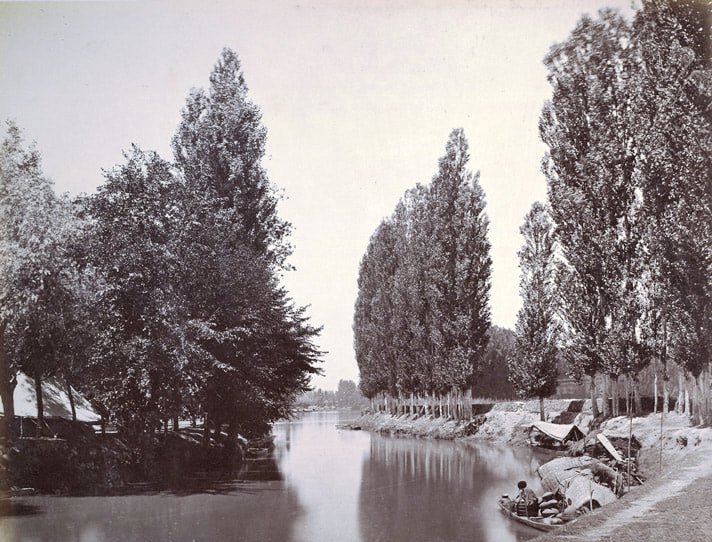
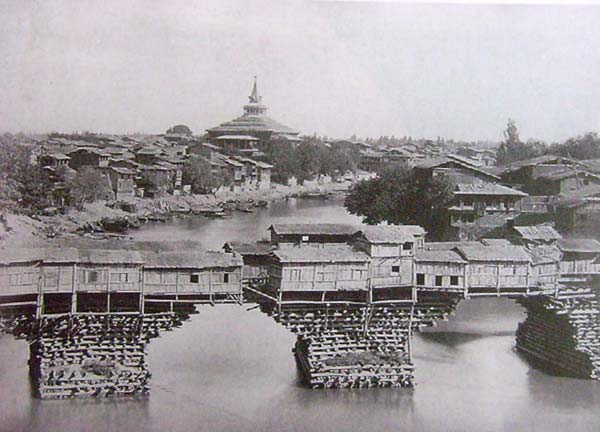
When the traveller enters Kashmir, his gaze turns from the vertical drama of the high Himalayas to a world of orchards, waterways, and villages that seem suspended between serenity and subjugation. The author’s descriptions of the valley’s beauty are infused with both lyric wonder and colonial distance. The lakes and rice fields appear as “an emerald set in silver,” yet the people who inhabit this paradise are portrayed as part of the landscape rather than as its makers.
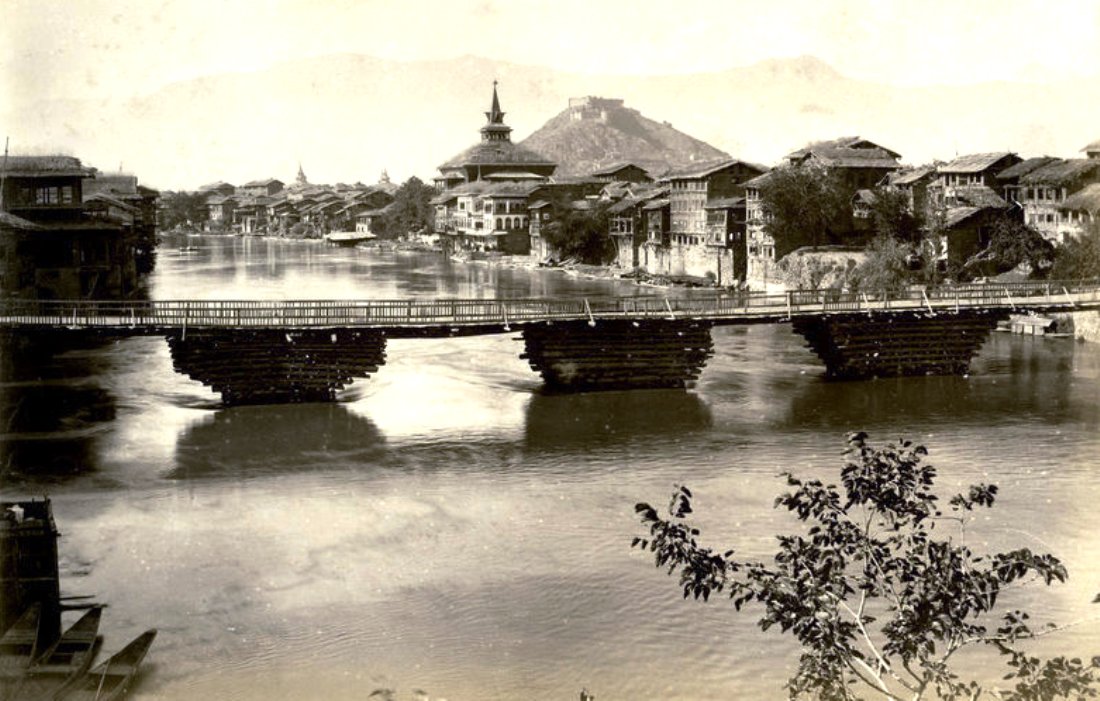
Kashmiri artisans and boatmen feature prominently, but always through the imperial lens of curiosity and control. The traveller marvels at the papier-mâché work and fine shawls, praising their “delicacy and splendour,” yet quickly measures them in terms of trade value and export potential. The same hands that produce art are framed as labour, picturesque but anonymous. His encounters on the Jhelum River and in Srinagar’s bazaars reveal the hierarchy beneath the charm: the sahib as observer and owner of narrative, the Kashmiri as object of description.
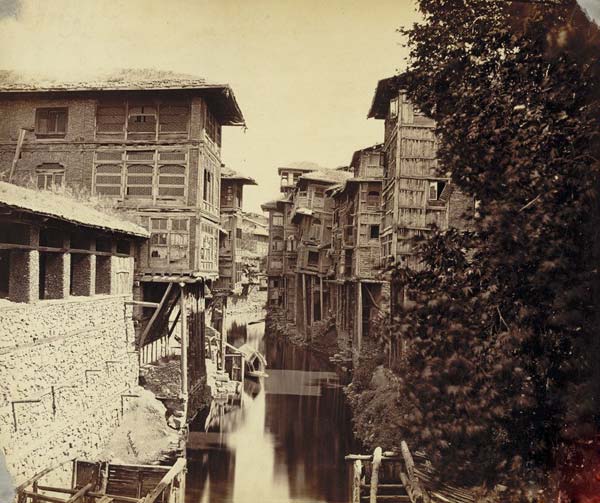
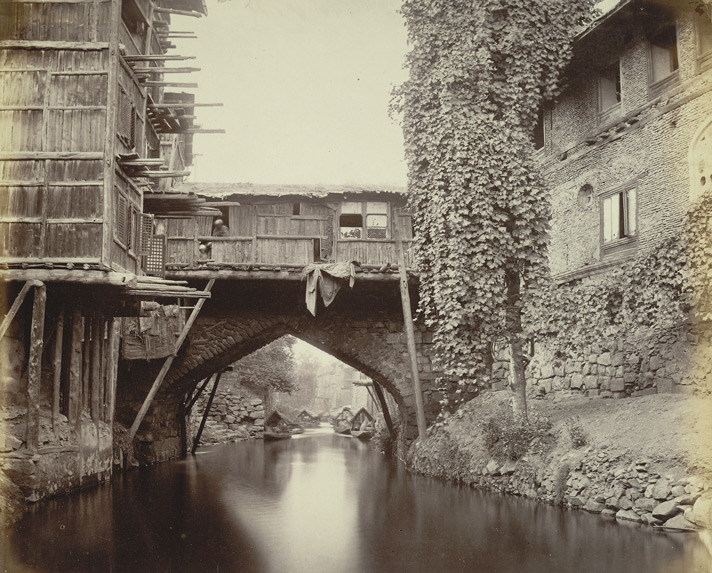
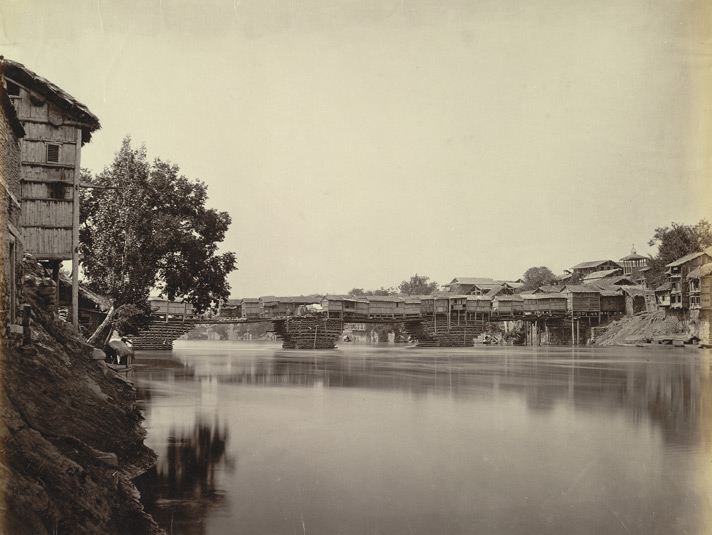
Architecture in Kashmir elicits mixed admiration. The traveller is struck by the wooden houses with their lattice windows and deep eaves, remarking that they seem to “grow out of the river itself.” He notes the mosques with their pagoda-like roofs and the quiet dignity of the Shah Hamadan shrine, but interprets them through a detached aesthetic lens, comparing them to “Chinese or Burmese structures” rather than acknowledging their indigenous synthesis. What he perceives as quaint hybridity is in fact the region’s architectural genius, a meeting of Islam, Buddhism, and Himalayan craft, though this cultural continuity escapes his imperial vocabulary.
Social interactions reinforce these asymmetries. The author’s servants, guides, and boatmen are rendered as loyal, indolent, or amusing, never as equals. Their speech and gestures are described with ethnographic curiosity, their faith with mild condescension. When he observes villagers bringing offerings to local shrines or performing seasonal rituals, his tone shifts between fascination and dismissal, describing them as “half-superstitious” yet “peaceful and content.” In these fleeting sketches, we glimpse the colonial effort to define the Kashmiri simultaneously as civilised and primitive, an aesthetic subject, not a historical actor.
And yet, despite his imperial framing, the text inadvertently preserves a rich portrait of 19th-century Kashmiri life: the floating vegetable gardens, the rhythm of the weavers’ looms, the interplay of commerce and devotion along the Jhelum. In capturing what he sought to categorise, the traveller immortalises what he could not fully understand, a society layered with artistry, endurance, and quiet dignity beneath the gaze of empire.
The Adventure Motif
At its narrative core, the book is an adventure story, animated by the thrill of exploration. The 19th century was an age that celebrated the explorer as hero, and Mountaineer fits this mould perfectly. The Himalayas are cast as a proving ground for courage and endurance, a landscape where physical trial becomes moral triumph.
The journey is depicted as an epic of hardship and exhilaration. The traveller endures scorching heat by day and piercing cold by night. In one episode, a thermometer placed on sun-warmed stone “went up to 130°,” a stark reminder of the region’s extremes. Ascents to passes like the Mannerung at 18,500 feet are narrated with precision, each step measured, each danger catalogued.
Hunting, again, serves as both motif and metaphor. The pursuit of ibex or bear becomes a moral performance of control and precision. Each expedition is a ritual of discipline, part sport, part science, part spectacle.
This language of conquest aligns the explorer’s endurance with imperial ideology. To endure the Himalayas was to deserve them; to describe them was to own them. The journey thus becomes not just a physical passage but a symbolic conquest of space and knowledge.
Romanticism and Empire
Stylistically, the book belongs to the romantic tradition of 19th-century travel writing, where the wild is both muse and mirror. The prose oscillates between scientific observation and poetic wonder, blending the language of measurement with that of awe.
The Himalayas are described as sublime, vast, untamed, and morally uplifting. This romantic vocabulary transforms the explorer into a heroic figure, locked in a quasi-mystical struggle with nature. But beneath this lyricism lies a political logic. By depicting the mountains as a wild frontier awaiting order, the text naturalises the idea of British intervention. The explorer’s compass and notebook become instruments of civilisation; his journey, a metaphor for imperial enlightenment.
Thus, the romantic tone serves a double purpose: it celebrates adventure while legitimising empire. The meticulous noting of distances, the recording of elevations, the methodical mapping of valleys, all these gestures of precision reinforce the image of the British traveller as both man of science and agent of order.
This fusion of reason and romance, of poetry and power, is what gives A Summer Ramble in the Himalayas its enduring complexity. It embodies the contradictions of an age that worshipped both nature and empire, that sought beauty even in domination.
A Remarkable Window
More than 165 years after its publication, A Summer Ramble in the Himalayas endures as a remarkable window into the Victorian imagination. It captures not only the splendour of the Himalayas but also the moral ambiguities of empire. Beneath its hunting tales and scenic sketches lies a dense text of power, ideology, and encounter.
As a piece of travel writing, it thrills with its detail and descriptive vigour. As a historical record, it exposes the economic and cultural transformations wrought by colonialism. And as a moral text, it reflects on the fragile balance between admiration and appropriation, between exploration and exploitation.
“Mountaineer” may have set out in search of sport and scenery, but what he ultimately recorded was an empire in motion, its anxieties, its appetites, and its contradictions.
In our own time, when debates on ecology, heritage, and identity are more urgent than ever, this 19th-century journey acquires new relevance. It reminds us that every landscape carries a history, not only of what was seen, but of who was looking.
A Summer Ramble in the Himalayas thus stands as both celebration and critique, as testimony and caution. It invites us to read beyond its surface adventures, to hear in its confident prose the quieter echoes of displacement, disruption, and desire, the very sounds of the colonial encounter it so elegantly records.