A year after militants killed 26 tourists in Baisaran Valley, Pahalgam’s tourism economy struggles to recover amid fear, hate incidents, and heavy security presence, reports Asrar Syeed
On the afternoon of April 22, 2024, four militants walked into Baisaran Valley, a meadow locals call “Mini-Switzerland,” five kilometres from Pahalgam’s main market, and opened fire on tourists after asking their names. Twenty-five tourists and one resident, Syed Adil Hussain Shah, were killed. The attack did not just claim lives. It wounded an entire valley’s way of living and brought a bad name to the reputation.
A year later, Pahalgam is open. Tourists are returning, slowly. But the hill station that sits at 2130 meters above sea level in Anantnag district, long celebrated for its alpine meadows, the cold rush of the Lidder river, and valleys like Betaab and Aru, no longer feels like the place its residents and regular visitors once knew.
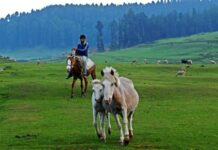
Walter Roper Lawrence, in his book The Valley of Kashmir, described Pahalgam as a Valley of Shepherds, a place that in earlier times was neither easy to reach nor simple to leave. Over the decades, that remoteness transformed into romance. The difficult trails became trekking routes. The alpine meadows became camping grounds. The horses that once carried supplies began ferrying tourists up to Baisaran.
What was once a shepherd’s valley became one of Kashmir’s most visited destinations, drawing visitors from across India and the world, particularly through the long summer months when the rest of the subcontinent swelters. For decades, it was a major location for Bollywood, and the Bobby Hut, the set where the most erotic song was filmed for Bobby, still commands the highest price.
That transformation took generations to build. What happened on April 22 took minutes to unravel.
Surviving On Visitors
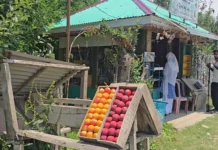
For decades, Pahalgam had built its economy almost entirely on tourism. During peak summer months, hotels ran at full capacity, streets filled with vehicles, and shopkeepers restocked daily. Ponywallas ferried tourists up to meadows. Street vendors served hundreds of plates a day. Migrant workers from neighbouring states found a reliable livelihood here, building lives far from home in a valley that had always welcomed outsiders with an easy generosity.
Dharmendra, 55, has sold bhel puri in Pahalgam for 14 years, sending money back to his family in Bihar. He still shows up every day. But the crowds that once sustained him have thinned sharply. “Since last year, it has been very difficult for me to manage both my expenses and my family’s,” he admitted, hoping the Achay Din (good days) would be around the corner.
Irfan Dar’s food cart used to draw over 300 customers daily. That number has fallen to 40 or 50. Hotel rooms that sold for Rs 5,000–7,000 a night during peak season are now going for Rs 2,000–3,000. Hotel owners like Zahoor and Nisar describe checking their phones repeatedly for bookings that rarely arrive. Some hotel owners have abandoned their leases entirely and moved into other lines of work.
The change in visitor behaviour compounds the problem. Tourists who do come rarely stay more than a day. The multi-night visits that allowed people to explore every corner of the valley, Betaab Valley, Aru, and Baisaran, have given way to quick, anxious trips. “Everyone fears for their life, and we can not hold this against tourists,” said Nisar. “But things will take time.”
For the ponywallas, the decline is equally visible. Ishfaq, who rents horses to tourists making the trip up to Baisaran, a route that has no paved road, making horses the practical choice, remembers April 22 with the particular anguish of someone close to it. “Had there been a macadamised road, maybe some lives could have been saved,” he said. It is a grief that mixes the personal with the practical, the way grief in places built on a single livelihood often does.
The Consequences
The massacre set off a chain of events that extended far beyond Pahalgam. India blamed Pakistan-based outlaws, with security agencies identifying three attackers as belonging to the banned Lashkar-e-Taiba. In the days that followed, hundreds were detained across Kashmir, and many houses were demolished. India suspended the Indus Waters Treaty and expelled Pakistani nationals lacking proper permission. Pakistan suspended the Simla Agreement, signed in 1972 to normalise relations between the two countries after the Bangladesh War, and expelled Indian diplomats.
On the intervening night of May 7, India launched military strikes under Operation Sindoor inside Pakistan, killing 26 people. India asserted the strikes targeted terrorist training camps. Pakistan declared the strikes an “act of war” and claimed it had shot down many aircraft, a claim India denied. Pakistan responded with Operation Bunyan-un-Marsoos, targeting India’s military installations and citing Article 51 of the UN Charter as justification under international law. A ceasefire was agreed on May 10. The two neighbours stepped back, but the aftershocks were felt most immediately in places like Pahalgam, where residents watched the escalation with dread, knowing their valley sat at the centre of it all.
Hate Arrives
One consequence that locals speak about with particular pain is the rise of communal suspicion directed at Kashmiris, in the Indian plains and increasingly, they alleged, within the valley itself.
Every winter, Kashmiri vendors travel across the country selling pashmina shawls, dry fruits, and other handicrafts. This past winter, many reported being driven out of rented accommodations and subjected to harassment. Kashmiri students studying in many states talked about hostile environments in their institutions.
In Pahalgam, Irfan noticed a new kind of question from some tourists. “Before Pahalgam, I was never asked by a tourist whether I am a Muslim or non-Muslim,” he revealed. “Since Pahalgam, I have answered this question several times.” He is careful to add that not every visitor has been hostile; some have expressed solidarity. “There have been both sides,” he said. But the question itself, he said, would have been unimaginable a few years ago. “Somewhere this hate has made it to this pristine valley.”
What locals also point out, with some bitterness, is that on April 22 itself, Pahalgam’s residents came out in large numbers to protest the attack, calling it “inhumane” and “barbaric.” Markets shut for days in mourning. That grief, they claim, went largely unreported in mainstream media, drowned out by louder, angrier narratives. The people of Pahalgam, who lost a neighbour in Syed Adil Hussain Shah and watched strangers die on their land, felt their condemnation go unacknowledged, and that silence has left its own kind of wound.
They, however, do not know that Srinagar protested in huge numbers, and all the political parties were part of the mourning marches within and outside Srinagar’s Lal Chowk. The protests continued for a few days.
Security Changes
The government’s response to the attack included a significant increase in security deployment across Pahalgam. Of the 87 tourist destinations in Jammu and Kashmir, 48 were closed immediately after the attack and reopened only in phases. Bunkers now stand on roads leading to parks and popular spots. Checkpoints operate in the evenings. Personnel patrol constantly.
Residents and visitors acknowledge the necessity. But several also describe how the visible security architecture has altered the atmosphere of a place that once felt open and free.
A visitor from Srinagar, returning to Pahalgam for the first time in over a year, said he had cancelled every plan to visit in the year since the attack due to the volatile atmosphere. Coming back, he found the valley had changed in ways difficult to articulate.
“Pahalgam was a place blessed by nature in abundance, but during this visit, things seemed different,” he said. “The valley has changed, maybe forever.”
Suresh Kumar, a non-native tourist, described being stopped and scolded by security personnel for wandering toward a scenic spot to take photographs. The soldier’s words stayed with him: “Wahan kyu gaye thay, agar wahan koi shot maar dega.” (Why did you go there? Someone could shoot you there.) Suresh said he was not sure he would come back next year. The remark was meant to protect him. It also, in a few words, captured exactly what has changed about Pahalgam, that its beauty now comes with a warning.

What Pahalgam Is Waiting For?
Mohammad Ramzan, who was born in Pahalgam and has spent most of his life here, looks at the parks and meadows he has known since childhood and sees something missing. The camping spots are quieter. The usual rhythm is gone. “Pahalgam is in shambles, locals are disheartened due to the ongoing situation, business is at an all-time low,” he said, his eyes moist. “These mountains have offered support and kindness to people from across the world, but when they needed the same, none showed up.”
What Ramzan and others are waiting for is not just the return of tourists. It is the return of ease. The ease of a tourist clicking a picture without being stopped. The ease of a vendor serving a plate without being asked his religion. The ease of a hotel owner confident enough in the season ahead to stop checking his phone.
Pahalgam has survived violence before. The broader Kashmir valley has lived through decades of conflict. But what made Pahalgam distinct was precisely that tourists were never the target. Through decades, an unspoken understanding held: guests were not to be touched. residents, whatever their own circumstances, ensured visitors felt safe. That understanding was shattered in Baisaran Valley on April 22.
The security will be reinforced in the coming days as the Pahalgam Valley is readying to host Amarnath 2026. The huge exercise is elaborate and security-intensive.
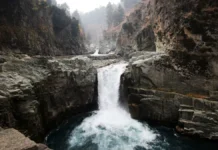
The mountains are still there. The Lidder still runs cold over dark stone. The meadows still open out into views that make people stop walking. The valley is not broken. But it is waiting, carefully and quietly, to feel like itself again.