As bullets shattered the silence of Pahalgam, long cherished for its warmth and hospitality, Kashmir was plunged into mourning, its grief echoed in collective outrage and condemnation. From social media outpourings and regional shutdowns to tearful apologies on the streets and political mobilisation at Lal Chowk, Kashmir responded with a single, resolute voice: this is not us, writes Faiqa Masoodi
On Tuesday, around 4 pm, five tourists were reported injured. Then eight. The newsroom stirred with tension, fingers crossed, eyes fixed on the screen, as reports shifted by the minute. Less than two hours later, the toll stood at twenty-six dead. A stunned nation watched in disbelief.
Chaos followed swiftly. The clock tower at Lal Chowk, moments earlier bustling with tourists, fell silent. Time appeared to reverse. What had felt ordinary seconds ago seemed irrevocably distant. Hope dissolved into the rising wail of sirens.
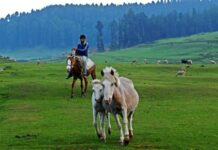
In the verdant meadows of Baisaran Pahalgam, often likened to Switzerland in miniature, twenty-five tourists and a resident pony rider lay motionless. They had been gunned down in what authorities described as a targeted killing, the first such assault on civilians in Kashmir, long scarred by mourning and loss.
Quick Response
Kashmir responded almost immediately. “Not in my name,” became the collective refrain. From the southern districts to the north, voices of dissent rose. A bandh was announced. Streets emptied. Shutters rolled down. Mosques reverberated with condemnation. By dusk, grief had turned to resistance.
The following morning, newspapers across Kashmir hit stands with blacked-out front pages, a stark act of protest. As the day progressed, schools remained closed, traffic disappeared, and business activity ceased. Protests gathered momentum.
Kashmir came to a standstill. From students to traders, from Pahalgam to Srinagar to Baramulla, participation was widespread. For the first time in years, Kashmir collectively denounced an act of violence so publicly. Every ten minutes, a new procession emerged. Slogans echoed through deserted streets. Flags fluttered. The roads remained empty, but the voices were resolute.
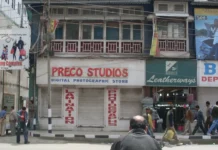
At Makka Market in Lal Chowk, traders stood silently with black banners. “Our guests were killed,” one said. “Kashmir has been wounded.” In Pahalgam, shutters stayed down. Protesters marched through quiet lanes. Locals opened their homes. Hotels waived charges. “Fifteen days, no charge,” said one hotelier. “This is not about tourism. This is about humanity.”
Taxi drivers offered free rides. Doors were opened. Online, solidarity flowed. “If any tourist needs help, my house on Airport Road is open,” wrote Shoaib Mehraj on X.
Virtual Protest
Social media erupted in protest. An AI-generated image titled “All Eyes on Pahalgam” went viral, widely shared across Kashmir. Online conversations surged. Support groups emerged instantly, with people circulating help links and messages of solidarity.
Residents responded with clarity and resolve, denouncing the act. “This is not us,” they said. Some confronted national media teams, accusing them of distorting facts.
“I travelled 100 kilometres,” said one protester. “I came to show my solidarity. When I said ‘we are one’, they turned their cameras away.”
By noon, Lal Chowk had become the epicentre. Protesters gathered around Ghanta Ghar. Civil society members, traders, and residents converged. Shutdowns were observed from Chenab to Jammu and Ladakh.
Political parties joined as well. The People’s Democratic Party (PDP) was the first to march, with Mehbooba Mufti leading from the front. “This is not Kashmiriyat,” she said. “We are ashamed.” Her march concluded at the clock tower.
“I strongly condemn the cowardly attack on tourists in Pahalgam, which tragically killed five and injured several, as is being reported at present,” she posted on Twitter shortly after the news broke. “Such violence is unacceptable and must be denounced. Historically, Kashmir has welcomed tourists warmly, making this rare incident deeply concerning. A thorough investigation is needed to bring the perpetrators to justice and examine potential security lapses. Ensuring visitor safety is paramount, and steps must be taken to prevent future attacks. Our thoughts are with the victims and their families.”
Ruling Party Protest
Later, the Jammu and Kashmir National Conference (JKNC) arrived. Among the crowd stood Omar Abdullah’s sons, Zahir and Zamir. Nasir Aslam Wani, Advisor to the Chief Minister, joined the gathering with folded hands, conveying a composed message of solidarity and resolve. Amid the demonstrations, a couple from Maharashtra spoke out. Recently married, they had travelled to Kashmir for its beauty but found themselves in turmoil.
“We just landed on the day of the attack,” they said. “We want to stay, just assure us.” Wani apologised and offered reassurance. He told them, “We are with you. We condemn these killings, just as we have condemned every such tragedy over the years. Even our party has suffered — we have lost ministers, workers, and our own loved ones to this violence.”
Amid widespread condemnation, a tour operator from Maharashtra expressed unwavering support. “We are sending out a strong message that we are not cancelling our tours to Kashmir. In this moment, we stand with Kashmiris.” Ironically, most of the casualties in the attack were from Maharashtra.
Omar Abdullah
Chief Minister Omar Abdullah, who was away at the time of the incident, expressed his shock on social media. “I am shocked beyond belief,” he wrote.
“This attack on our visitors is an abomination. The perpetrators of this attack are animals, inhuman and worthy of contempt. No words of condemnation are enough. I send my sympathies to the families of the deceased. I have spoken to my colleague @sakinaitooand she has moved to the hospital to oversee arrangements for the injured. I shall be flying back to Srinagar immediately. #Pahalgam.”
Throughout the day, Abdullah continued to share updates on X. “Our visitors came in peace. Now they return in coffins.” He stated that the incident was a stain Kashmir would carry for a long time.
Expressing sorrow over the mass departure of tourists following the attack, an official statement acknowledged the gravity of the situation. “It is heartbreaking,” the post read, “but we understand why they are leaving.”
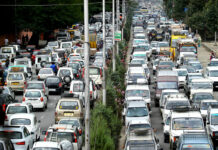
The statement detailed the logistical measures being taken to facilitate safe evacuations. “While the Directorate General of Civil Aviation and the Ministry of Civil Aviation are arranging additional flights, NH-44 between Srinagar and Jammu has been reopened for one-way traffic.”
Authorities have instructed the administration to prioritise tourist vehicles, though movement remains restricted due to unstable road conditions. “We are working to clear stranded vehicles, but completely unrestricted movement is not yet possible. We urge everyone to cooperate during this process,” the statement added.
Mirwaiz Kashmir condemned the attack, calling it “cowardly” and contrary to the spirit of Kashmir. He shared a Quranic verse: “Whoever kills an innocent soul… it is as if he had slain mankind entirely.” In a statement, he described the incident as “deeply disturbing news from Pahalgam of a cowardly attack on tourists that has resulted in tragic loss of life.” He emphasised that such violence was unacceptable and against Kashmir’s ethos of hospitality. “Thoughts and prayers with the families of victims and wishing speedy recovery to the injured,” he added.
The Mutahida Majlis Ulema also issued a strong condemnation, calling it “a dark day” and asserting that Islam rejects such acts. They called for a peaceful shutdown in protest.
Candlelight and Silence
At 3:30 PM, a two-minute silence was observed across the region. Government employees stood still, offices paused, and professionals, including lawyers, doctors, and Jammu and Kashmir Bank staff, joined in. Trade bodies echoed the sentiment. The Kashmir Traders and Manufacturers Federation stated, “Peace must prevail. We are united.”
By evening, candlelight vigils emerged as a powerful symbol of collective grief. Women marched silently across Srinagar’s Zero Bridge, heads bowed. Similar vigils were held in Pahalgam, Sopore, Ganderbal, Handwara, Kupwara, Baramulla, and Bandipora.
In Handwara, Sajad Lone led a candlelight march, with the crowd moving in solemn silence. Addressing the media, Lone praised the public for observing the shutdown. “The message is clear,” he said. “This protest speaks to the perpetrators.”
The Congress party also joined the outcry, with JK Pradesh Congress Committee president Tariq Hameed Karra labelling the attack as a national tragedy. “No words are enough,” Karra said. “The bloodshed at Pahalgam has left us devastated.”
Protesters gathered with candles, expressing solidarity with the victims’ families and denouncing the violence. Fayaz Ahmad Bhat, General Secretary of Makka Market, stated, “We condemn this attack against humanity.”
At Srinagar’s Lal Chowk, the final protest of the day illuminated the city centre. Chants of “Ro rahihai yeh zameen, ro rahahai asmaan” and “Kashmir se awaaz aayi, Hindu-Muslim bhai bhai” filled the air. Protesters demanded strict action against the attackers and called for unity.
“This should not have happened, not on our land, not in the name of Kashmir,” they said. “We Kashmiris are known for our hospitality, and we have shown it time and again. We disown this attack and assure our visitors that we stand with them.”
View this post on Instagram
As night fell, the refrain “Hum Hindustani hai, Hindustan hamarahai. Aye Shaheedo Salaam” resonated at Lal Chowk. While physical protests quietened, online condemnations continued. Across platforms, debates unfolded. The narrative, long stuck in conflict, began to shift. Kashmir shut down, stood up, and said no to targeted attacks on civilians.