At the peak of an impressive tourist season, a massacre at Baisarn led to a mass exodus of the visitors, forcing authorities to deploy additional flights, reports Humaira Nabi
On the chilly morning of April 22, Waseem Ahmad stood by the gate of his homestay, watching a cab pull away. A family of three from Delhi waved their goodbyes. He remained there until the vehicle disappeared.
Waseem owns Freedom Palace, a modest yet welcoming homestay in Pahalgam. Inside, his staff had already begun preparing the rooms for the next guests. He made several calls to confirm the arrival of five new visitors expected later that evening. By noon, all arrangements were in place.
For Waseem, the day had been progressing smoothly until a phone call at 3 pm altered everything. A friend’s voice pierced the stillness of the afternoon with alarming news.
“He told me that militants had attacked tourists in Baisaran Valley, leaving several dead,” Waseem recalled. “I was stunned, and suddenly chaos swallowed everything. In mere minutes, Pahalgam collapsed into disorder. Tourists and pony riders fled in terror, and shops were closed.”
“Our guests had just landed in Srinagar and were preparing to leave for Pahalgam when they heard the news,” Waseem added. “Within an hour, they called to cancel the booking.”
By evening, Waseem’s phone rang incessantly. One by one, all reservations were cancelled. “Until late evening, I kept receiving cancellation calls. It has been three days now, and we have not received any bookings so far,” he regretted.
Shockwaves
The Pahalgam massacre triggered widespread disruption across Kashmir. What had begun as a promising tourist season came to an abrupt halt. As word of the attack spread, tourists began to flee. Hotels faced a cascade of cancellations. Travel agencies suspended operations. By the end of the day, a mass departure had begun.
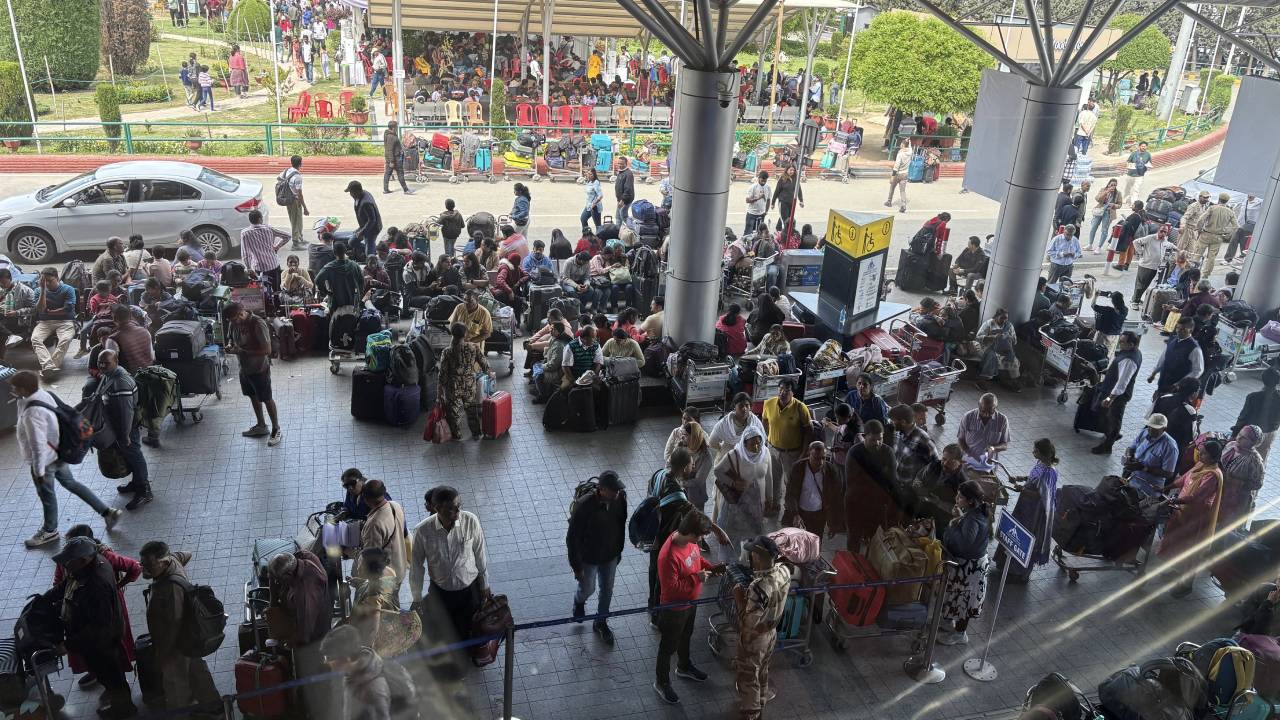
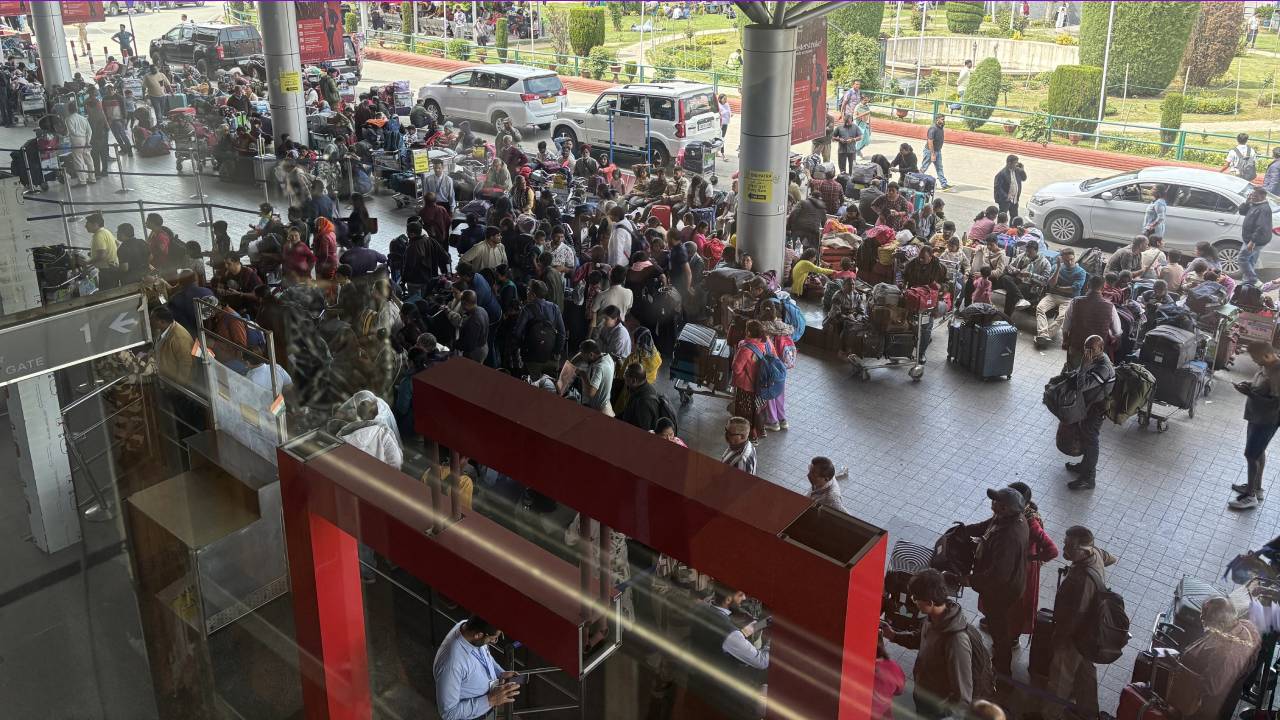
At Srinagar airport, crowds swelled. Queues extended across terminals. Travellers waited on the floor, desperate to secure seats on outbound flights. Airline counters struggled to keep pace with the demand.
The exodus showed no sign of slowing. Tourists were cutting trips short, many leaving without completing their planned itineraries. A season once poised for success now faced severe uncertainty. “We are currently operating six non-scheduled flights to Delhi and Mumbai to manage the sudden outflow,” said an aviation officer at Srinagar airport.
Airlines reported the cancellation or rescheduling of approximately 15,000 tickets to Srinagar—IndiGo handled 7,500, Air India 5,000, and SpiceJet 2,500. Flight cancellations surged sevenfold, while future bookings dropped by 40 per cent, according to Cleartrip. On April 23, a total of 59 flights operated from Srinagar, including seven additional services by Air India and IndiGo to Delhi and Mumbai. Airlines waived cancellation fees until April 30. Civil Aviation Minister K Rammohan Naidu enforced measures to curb surge pricing, prompting a sharp drop in fares to Srinagar.
“The trend has reversed completely. Flights arriving in Kashmir are no longer running at full load. The tourist influx, which had reached nearly 80 per cent just days ago, has dropped drastically to around 30 per cent,” the aviation officer said. On April 22, 59 flights got 9235 and flew home 9905. A day later, 56 flights brought 6561 and took home 11092. On April 24, it was 59 flights brought 4456 visitors and took home 11380.
Official Response
“It is heartbreaking to see the exodus of our guests from the Valley after yesterday’s tragic terror attack in Pahalgam, but at the same time, we understand why people would want to leave,” Chief Minister Omar Abdullah posted on X. “While DGCA and the Ministry of Civil Aviation are working to organise extra flights, NH-44 between Srinagar and Jammu has been reconnected for traffic in a single direction.”
He directed the administration to facilitate traffic between Srinagar and Jammu, allowing tourist vehicles to leave. When the tragedy struck Baisaran, he was at Ramban, which witnessed a climatic tragedy blocking the national highway. “This will have to be done in a controlled and organised way because the road is still unstable in places. We are also working hard to clear all stranded vehicles. We will not be able to permit completely free movement of vehicles at the moment, and we hope that everyone will cooperate with us.”
A Setback
Kashmir’s tourism industry contributed over 8 per cent to the region’s Gross State Domestic Product. Over the past decade, tourist footfall fluctuated, marked by phases of growth, decline, and recovery following the COVID-19 pandemic.
In 2015, Kashmir recorded one million tourists, drawn to various destinations across the region. The number rose to 1.3 million in 2016 and stood at 1.25 million in 2017, supported by infrastructure improvements and marketing initiatives. Security concerns led to a dip in numbers, with 0.9 million visitors in 2018 and 0.7 million in 2019. The pandemic caused a further collapse in 2020, with only 0.1 million tourists recorded due to widespread travel restrictions. Recovery began in 2021 with 0.8 million visitors, followed by 2.6 million in both 2022 and 2023, driven by growing demand and government efforts. By 2024, the region witnessed a peak of 3.5 million tourists, underlining the sector’s resurgence.
Early 2025 figures indicated that the year could surpass the previous record. However, the killing of tourists led to a disruption in what had been projected as the region’s busiest season. A survey by LocalCircles, a social media platform, found that 62 per cent of families planning trips to Kashmir between May and December 2025 had cancelled, with only 38 per cent still considering travel.
The impact of the attack rippled across the country. In Lucknow alone, 1,000 bookings were cancelled in a single day, affecting 150 agencies. Namaskar Travel Service reported cancellations amounting to Rs 6 lakh. In Karnataka, 5,000 cancellations prompted the Karnataka Tourism Society to declare the season lost until June. Pilgrimage bookings to Amarnath and Vaishno Devi declined by 50 per cent. In Kochi, which usually attracted 3,000 visitors each month, operators faced cancellations on packages priced between Rs 50,000 and Rs 60,000. Delhi saw a 90 per cent cancellation rate, with one agency reporting 25 flight cancellations. Agencies in Kolkata warned of a broader setback, anticipating a decline in travel due to shifting perceptions. In Mumbai, Abhishek Holidays experienced a wave of cancellations, while Go Jammu and Kashmir reported the loss of 270 bookings worth Rs 40 million. Operators in Hyderabad noted 80 stranded tourists, with cancellations continuing.
Across Kashmir, hotels were operating with significantly fewer guests. Radisson Srinagar reported a 70 per cent cancellation rate. Royal Castle in Gulmarg, previously enjoying full occupancy, had seen nearly 70 per cent of its bookings cancelled. Of its 45 rooms, only 15 remained occupied.
“Our hotels are empty,” said Mohammad Alam, a hotelier from Pahalgam, reflecting on the abrupt downturn. “We are witnessing mass cancellations. Rooms that were fully booked just days ago are now vacant. It is disheartening to see the momentum we had built over the years vanish almost overnight. This is not just about business; it is about the livelihoods of hundreds of workers who rely on this season to sustain their families.”
Adventure Tourism
In recent years, Kashmir has emerged as a leading destination for adventure tourism, drawing trekkers and hikers from across India and abroad. The recent attack in Pahalgam, however, dealt a significant blow to the region’s thriving adventure sector.
Indiahikes, a major adventure tourism company, issued a statement announcing the suspension of all treks in Jammu and Kashmir until May 11, 2025. The decision affected two trekking groups bound for Tulian Lake and one for Brammah Valley. The statement noted, “While security concerns have occasionally surfaced in parts of Jammu and Kashmir, we have not witnessed an attack this severe in over a decade of operating here.”
K2 Adventure, another company operating in the region, reported a 90 per cent cancellation rate. Explore the Valley, a travel agency with operations in the area, recorded an 80 per cent drop in bookings. Its manager stated, “This is going to be a tough season, at least for the next two months. All our trips for May have been cancelled.”
Some Stay Back
Evon Shimron, a tourist from Mumbai, had been hiking in the Aaru Valley when the incident occurred. Unaware of the attack until the following morning, he and his group were approached by army personnel at their campsite and advised to return to the plains for safety. Shimron, however, chose to continue his trip and remained in the valley with composed determination.
“I have been to Kashmir several times. It feels like home to me. There is absolutely nothing that can deter me from coming back,” he said, expressing his deep affection for the region.
In Srinagar’s Lal Chowk, the iconic Ghanta Ghar still attracted a few visitors, who continued to take photographs against its symbolic backdrop. Despite a decline in overall tourist footfall in recent days, several travellers opted to remain and carry on with their plans.
Residents, upholding the tradition of Kashmiri hospitality, actively engaged with visitors to ensure they felt welcome and supported. Many went out of their way to assist tourists and offer reassurance about their safety.
“I have never experienced this level of concern at any tourist destination,” said Prerna Rajput, a visitor from Pune who is holidaying in Sonamarg. “Locals here regularly check in on us, asking if we are all right or if we need any assistance. It is incredibly heart-warming.”
Commenting on the prevailing situation, Director of Tourism Raja Yaqoob stated, “We presently have over 1,300 tourists in Srinagar. On April 23, more than 5,000 people took the Gondola ride in Gulmarg, and 4,683 tickets were booked for April 24. This reflects the continued trust and confidence that tourists have in Kashmir’s tourism sector.”
Tool of Normalcy
Since the abrogation of Article 370 in August 2019, the Government of India has consistently sought to project a narrative of normalcy in Jammu and Kashmir. A central pillar of this strategy had been the assertive promotion of tourism, positioned as a symbol of peace and development in the region. Through extensive campaigns and high-profile visits, the government deployed tourism as a strategic instrument to reshape both domestic and international perceptions.
During his visit to the region in March 2024, Prime Minister Narendra Modi reaffirmed the government’s commitment to economic growth and regional stability. In a public address, he announced developmental projects valued at Rs 64 billion, focused primarily on revitalising local agriculture and expanding tourism infrastructure.
Modi described the tourism sector as a key contributor to Kashmir’s evolving landscape. He hailed the tourism dividend as evidence of growing confidence in the region’s safety and economic potential. There are plans afoot to make more investments in infrastructure and develop newer circuits so that tourism’s contribution to SGDP doubles in the next 10 years.