Recovering after the April 2025 massacre, Pahalgam shows resilience through returning tourism, local struggles, and cautious yet hopeful revival, reports Umaima Reshi after spending four days in the hill station
On September 28, my father, unusually buoyant, suggested, Pahalgam gachov (let’s go to Pahalgam). After three long years, he had finally proposed a family trip. My mother, ever practical, chimed in, “Take the camera along; we need some good clicks.”
I smiled inwardly. Three years was a long gap, and the idea of stepping away from the relentless hum of newsrooms, deadlines, and politics, to a valley that was both familiar and now marked by tragedy, felt surreal. Yet, beneath the surface of this casual family plan, I sensed an opportunity to witness, document, and perhaps make sense of a changed landscape. Perhaps, even to capture the subtle pulse of hope slowly returning to the valley.
The next morning, I broke the news in the newsroom. “You will really be able to work on quite a few stories, maybe six to eight at least,” my editor said, his words carrying both expectation and faith.
And so, we set off.
The Journey Begins
Our car wound through the familiar path via Bijbehara. My father, in the passenger seat, navigated as impatiently as ever, while my younger brother, steady and uncomplaining, steered us along the curving roads. I opened the camera I had borrowed from a colleague, immediately immersing myself in the ritual of capturing frames, the twisting roads, the sunlight catching the mountainside, the occasional flutter of a leaf across the wind.
It was my eighth visit to Pahalgam, yet this journey carried a weight no previous trip had. In April 2025, a massacre had ripped through the town, leaving 26 dead. The violence had sent tremors through the community, silencing streets that were once filled with laughter and song. Now, I was returning, lens in hand, to see what had survived, and what remained fragile.
After nearly 100 km, the car rolled into Pahalgam, the Valley of Shepherds. Horse riders waited at the main square. “Madam ji, sawari karega?” they asked eagerly, hoping for the small income each tourist ride promised. The town had not forgotten how to welcome visitors, though the number had nosedived.
We checked into Mountain View, a hotel aptly named, not only for the sweeping vistas it offered but also for the quiet reprieve it provided. The lobby was eerily silent. The manager, a man in his fifties, sighed when we asked about business. “We used to be full, every day,” he said. “Children played in the gardens, tourists filled every corner. Now… look around. It is like a well that has run dry.”
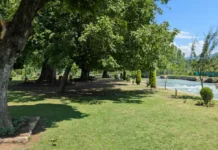
Rooms were available at half the usual rate. We settled in, took a moment to breathe, and decided to explore. Our plan was simple: a stroll through Lidder Park and the amusement areas. But the emptiness was hard to ignore. The few tourists we saw were locals; outsiders were rare.
At the riverbank of the Lidder, horsemen waited patiently, their ponies stamping the ground softly. One man called out, “Guirr sawear kheakha?” My father politely declined. But then, a younger rider approached with news that the Aru Valley, a popular tourist spot, had reopened just a day prior. My heart leapt. For months, places like Chandanwari and Baisaran had remained closed, and Aru’s reopening was a small but hopeful sign.
“I want to go tomorrow,” I said to my parents. My father’s sharp, silent glance was enough to convey a careful no. It was reasonable, but the shadow of fear still lingered, not just over tourists but also over residents whose livelihoods depended on visitors.
Voices of Survival
While my father hesitated, my younger brother dutifully became my cameraman. We wandered through the streets, stopping to speak with residents. A middle-aged horseman, Ghulam Rasool Malik, shared his plight.
“I have been idle for five or six months,” he regretted. “Sometimes, only school kids come to us. Our daily earnings are hardly Rs 200 or Rs 300. Tourism used to sustain eighty per cent of our families. Now… two or three cars a day do not make a difference.”
Malik spoke of the government’s regulated rates for horse rides, how tourists once tipped generously, and how now even locals negotiated the smallest discounts. “It is not just money,” he said. “It is pride. We are helpless. But what else can we do?”
Another rider added that before the attack, a typical tourist ride to Baisaran cost Rs 1300, but visitors often gave extra, as much as Rs 2,000. Now, he explained, they earned barely Rs 500 a day. “Even if locals come, they haggle us down. We have no land to fall back on, no alternative income. Every delay in opening the sites is a hit we cannot recover from quickly.”
Dinner at the hotel that evening mirrored the day; the dining hall was almost empty. Two local families joined us, but their presence did little to break the silence. Pahalgam was no longer the lively town it had been. It was quieter, cautious, and burdened by collective memory. The echo of April 22 still resonated, not as a headline, but as a shadow over each street, each shop, and each visitor interaction.
Aru Valley: A Slice of Rebirth
The next morning, we rose early, eager to witness the reopening of Aru Valley. A dozen Bengali tourists at breakfast had come with the same expectation. Disappointment hung in the air; Chandanwari and Baisaran were still closed.
In the market, I wandered into a shop displaying gemstones in red velvet trays. The owner, middle-aged, asked if I was filming a vlog. When I told him I was a journalist, he smiled. “You have a great impact,” he said sincerely, reflecting on our weekly magazine.
He revealed he had been a reporter once but left, disillusioned by the rise of social media journalism. “Anyone with a decent phone and a tripod calls themselves a journalist now,” he said. The conversation turned to fear, to the pervasive caution that had settled over Pahalgam since April.
“People are afraid to talk,” he said softly. “Whether it was our fault or not, we have all suffered. Our economy, our tourism, our lives, they have been changed forever.”
Determined, I turned to my parents. “I have to go. I will bear the expenses,” I insisted. My father, part disbelief and part amusement, finally relented. My mother arranged a local driver, a man who had once been a shopkeeper but now did odd jobs, charging Rs 1200 for a three-hour trip.
The road to Aru was a story in itself. Bridges had collapsed during the August rains; vehicles waited patiently to cross. Twelve kilometres from Pahalgam, Aru unfolded like a painting, meadows stretching toward mountains, lakes catching the sky.
Residents greeted tourists with halwa-paratha, a gesture of celebration. Shops were few and crowded, yet the atmosphere buzzed with cautious excitement. I filmed, captured interviews, and watched a young tourist beam. “This is stunning,” she said. “Who would ever say Kashmir is not safe?” An elderly couple added, “We have been coming here for years. Kashmir is always our first choice.”
Returning to Pahalgam, we found the town slowly waking. Markets were livelier; the silence of the previous day had begun to lift. Yet, in a dark hotel corner, another man shared his pain. A former hotelier, he had been out of work for six months. “Once, ten people worked for me,” he said, voice breaking. “Now, it is just me, praying every day that something good happens.”
Even as life returned in small increments, the shadow of economic despair was undeniable. Cab drivers, shopkeepers, and hoteliers all struggled to reclaim their pre-attack livelihoods.
Vibrancy Returns
On our third day, we ventured to Betaab Valley. At the taxi stand, the president of the local cab union recounted the impact of the attack. “Everything froze,” he said. “Only Betaab Valley was open. Even now, tourism has not fully revived.”
Bank-financed vehicles, loans, deand bts, and the community’s struggle was palpable. “Interest waivers from the government would be a huge relief,” he said. A nearby jacket seller echoed similar frustrations. “I spent months doing nothing. Now, with Aru open, it is slightly better.”
Betaab Valley itself was a contrast to Pahalgam’s quiet. Music, zip-lining, full parking lots, the valley was alive. Tourists laughed, strolled, and snapped photographs. For a few hours, life seemed almost normal.
Even the small vendors in Betaab reflected resilience. A tea-seller told me, “We never gave up hope. Months passed with almost no customers, but when the valleys reopened, our first day’s earnings felt like victory.” A boat operator added, “Tourists here are cautious at first. But when they see the beauty, they forget fear. That is the magic of Kashmir, it heals slowly but surely.”
Expanding the Lens
Tourism has been Pahalgam’s lifeline. Before the April 2025 massacre, the valley received thousands of visitors annually, ranging from families seeking leisure to international tourists drawn by its lush meadows, glacial streams, and the Amarnath Yatra. Horsemen, cab drivers, guides, and shopkeepers all relied on this flow for income.
After the attack, its economy was effectively frozen. Hotels closed, rides halted, markets emptied. Families that had depended on tourist spending were suddenly thrust into months of uncertainty. For local cab drivers, most of whose vehicles are debt-funded, the inability to operate meant accumulating debt with no means of repayment. Shopkeepers and small vendors watched their savings dwindle while attempting to support families.
The reopening of Aru, even partially, signalled a cautious return of hope. Yet, fear lingered. Locals are still worried about tourists’ perceptions, the safety of the valleys, and the potential for renewed violence. Conversations often began and ended with the same sentiment: we are resilient, but we need trust to return fully.
Conversations and Realities
Back in Pahalgam, the streets were slowly awakening. Small shops began opening their shutters, and the aroma of fresh bread and local snacks floated through the crisp mountain air. Despite this tentative resurgence, the shadow of April 22 lingered. My younger brother and I decided to explore further, hoping to uncover more stories hidden in corners overlooked by the few visitors still wandering.
In one quiet hotel, we encountered a man whose eyes seemed to carry the weight of months of uncertainty. His voice cracked as he began, “I was a hotelier. It has been shut down for six months. It is very tough. Our economy relies on tourism… all of us, be it a cab driver, a tour guide, or even a tea seller, are going through hard times. Once, ten people worked for me, and now, I am looking for a job.”
He paused, then said, “We’re trying to rebuild trust and hope tourists return. Last year, my hotel was full; now I leave home praying for a day’s earnings.”
Even as he spoke, the weight of his words lingered. We stepped outside into the biting cold, the mountain breeze carrying both a sharp freshness and a quiet melancholy. His story, repeated in variations across the valley, reflected a community struggling to survive while retaining its dignity and hope.
To Betaab Valley
On the third day, we visited Betaab Valley and nearby attractions. The morning was bright and clear, with sunlight spilling across Pahalgam’s hills and reflecting off the Lidder River in a gentle shimmer. We visited the bazaar to purchase some snacks before departure.
At the taxi stand, a man who appeared approachable became our first informant of the day. He was the president of the local taxi union. “Things were frozen everywhere after the attack,” he recounted. “All tourist spots were closed, and everything was back to zero. Only Betaab Valley was opened, which was still losing tourists compared to the past. We are grateful to the government for reopening a few remaining places; it has made at least a little difference.”
He explained that most vehicles were bank-financed, with very few independently owned. “For most of us, it is already hard to maintain our families. Nearly all vehicles are financed by banks. In our union of 600 taxis, only 50 are debt-free. If the government waives interest, it would be a huge relief.”
Nearby, a jacket seller caught my attention. “Business used to be easy,” he told me. “But now it is neither good nor bad. Fewer customers, but since Aru reopened, things have gotten a bit better. I spent months doing nothing. I volunteered to help during the yatra. Otherwise, it is my wife who works as a labourer and keeps the house running.”
The Last Day
On our final day, none of us wanted to leave. Stepping outside for a last breath of mountain air, my mother murmured, as she often did, Panun ghar gov panun ghar (there is no place like home). Yet, Pahalgam, though still recovering, felt like a temporary refuge, a place where life and hope quietly intertwined.
It was then that I met Mushtaq Pahalgami, the head of the Hotels and Guest Houses Association. “Things are starting to pick up for us,” he said. “Right now, out of the 12 tourist sites that have reopened, three are located in Pahalgam. The opening of Baisaran and Chandanwari will most likely result in a fifty per cent increase in tourists.”
Kashmir, he said, never required even the slightest advertising. “What we require the most is to take back what we used to have: the atmosphere, the public, and good management to keep it going,” he said. “There should not be any fear of the area because, ultimately, everybody is aware of how warm and friendly Kashmiris are, and how we have always been resilient throughout hard times. The only fear we harbour is being misinterpreted as the reason for something bad when, in fact, it was never us.”
I realised that tourism in Pahalgam was not just about economics; it was about trust, memory, and the reaffirmation of life itself. Every hotel opened, every horseman guiding a tourist, every shop selling local crafts, represented a defiance of fear and an assertion of hope.
I had collected enough material for stories, photographs, and videos. But beyond professional output, this trip had offered me a deeper understanding: that Pahalgam was a living entity, scarred yet resilient, where grief and hope coexisted, and where the human spirit, though tested, continued to thrive.
Closing Reflections
Walking through Pahalgam one last time, I noticed small details that spoke volumes: a child laughing while feeding ducks, the rhythmic sound of a horse’s hooves on stone, vendors arranging their goods in anticipation of visitors, and the Lidder River glinting in the afternoon sun. Each of these moments carried a quiet message: life persists, and beauty endures, even in places touched by tragedy.
The massacre had left scars, visible and invisible, but it had not broken the spirit of the people who called this valley home. Their courage, their willingness to rebuild, and their gentle patience were the true stories of Pahalgam. And in documenting this journey, I realised that reporting was not merely about incidents and statistics; it was about capturing humanity, resilience, and the subtle threads of hope that weave through the fabric of life.