In the face of terror in the Pahalgam attack, it was not armed forces or emergency responders but ordinary Kashmiris, pony handlers, cab drivers, and teenagers, who rushed to rescue tourists, ferry the injured, and open their homes, mosques, and hearts to strangers in need, Babra Wani reports
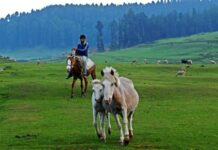
On what seemed to be an ordinary Tuesday afternoon in Pahalgam, Adil Hussain Shah, one of the many pony helpers guiding tourists to the meadows of Baisaran, often dubbed the Mini Switzerland of Kashmir, set out with the quiet resolve of routine. He left home around 8 am, despite his sister’s plea to stay back. Driven by a sense of duty and the need to buy medicine for his ailing father, Adil chose to work that day.
What began as a familiar ride along the winding trails ended in a shroud of silence and sorrow. By the following morning, the 27-year-old returned not on horseback, but in a white shroud, his body bearing the marks of three fatal bullet wounds – one to his neck, and two to his chest.
Act of Courage
Syed Adil Hussain Shah, a resident of Syed Mohalla in Nagbal, a remote hamlet in the Hapatnad area of South Kashmir’s Anantnag district, lost his life while trying to protect the tourists in his care. According to a close relative, Adil had confronted one of the gunmen who opened fire in the Baisaran area.
“While we were at SMHS to collect Adil’s body, we heard a female tourist saying that a godawala had tried to save them. Certainly. “He confronted the gunmen and told them to stop. In retaliation, he was shot,” a relative recounted. “She said the horseman kept telling them repeatedly, ‘Ye galat kar rahe ho, aap inko mat maaro’ (What you are doing is wrong, do not kill them).”
When Adil’s uncle informed the woman that the man she had spoken of had died, “she began to cry,” he recalled.
Adil, the family said, had always stood firmly for what was right. “Even if it was a family member who did wrong, Adil would speak out. He was a man of principles. He never tolerated injustice. He was brave,” they said.
The Sole Victim
Adil, a labourer who ferried tourists on horseback, was the only resident killed in the incident. As the sole breadwinner of his family, he supported his wife, siblings, and elderly parents.
“He has two younger brothers. One is very young, and the other occasionally works as a driver,” a family member explained. “During the off-season, Adil would migrate to other states to work as a labourer.”
After completing his higher secondary education, Adil left his studies to support his father, who could no longer work due to health issues. He had married four years earlier, but the couple had lost their only child at birth.
A Mourning Family
Adil’s uncle, Talib Hussain, said that when he first heard about the incident, he could never have imagined his nephew would be among the victims.
“When I returned from work that day, I called Adil’s younger brother to ask about him. I was told that Adil was unreachable and was not answering his phone,” he said.
Worried, Talib and other relatives contacted those who had worked alongside Adil. “We learnt that everyone else had returned home. Then someone called and told us that Adil is dead.”
The family rushed to the Pahalgam hospital, where Adil’s body was initially kept. They then travelled to SMHS in Srinagar, where they learnt of his final act of bravery. “He made us proud,” they said.
Pride and Pain
“Even though I cannot begin to express my grief over losing my son, I am very proud that he tried to save lives,” Adil’s father, Syed Haider Shah, said. “He cared more about others than his own life.” However, the father also expressed the depth of the family’s loss. “He was a good son. He always worked hard for the family, even when he was tired,” he said.
Adil’s funeral was attended by Chief Minister Omar Abdullah, other political leaders, and thousands of mourners. “Adil was not just earning his wages by ferrying tourists on horseback. He put his life on the line to save them. He even tried to wrestle a weapon from the attackers. That is why he was targeted,” Omar Abdullah told the media in Hapatnard.
Valley in Mourning
While Adil lost his life, his relative, Syed Nazakat Shah, a tourist guide who had been only a few metres away, ensured that the group of 11 tourists he was escorting reached safety unharmed.
As the gunfire erupted, Nazakat embraced two children from the group and laid down to shield them. The group later praised him for saving their lives. He not only protected them during the ambush but also returned to assist Arvind Agrawal’s wife, a member of the Chhattisgarh BJP youth wing.
“I do not know what would have happened had Nazakat not been there,” Arvind told The Indian Express. “My wife’s clothes had been torn, but the locals gave her clothes to wear.”
Nazakat ensured the entire group returned safely and even accompanied them to the airport the following day.
The tourist guide, a resident of Salia, said the group he was with were previous acquaintances. “We heard gunshots while the tourists were recording videos. Initially, we thought it was someone bursting firecrackers. But as more shots rang out, panic ensued,” he recalled. “When the gunmen began moving towards the zipline, I helped evacuate 11 people I was with. We escaped the area unharmed.”
Nazakat said the firing continued for over 15 minutes. “I held the children and we ran towards the main market in Pahalgam. I remember thinking I would not survive. But all I could think about was saving them. They mattered more than my own life.”
“I could only see death and fear. Some tourists pleaded with me to save their children. It brought tears to my eyes,” he said. “It is heartbreaking that such an incident took place in our Pahalgam. The people I helped are grateful and have been speaking about me everywhere.”
Nazakat recalled meeting Adil that morning. Adil had asked him to join him for tea, but he had declined, explaining that he was attending to a group of tourists and would catch up with him in the evening. It would be the last time he saw him.
Amid the horrific attack, where her father N Ramachandran, was killed, Aarti R Menon found unexpected support and solace from two Kashmiri taxi drivers, Mussafir and Samir, whom she now calls her “brothers.” As she struggled through the trauma—fleeing the scene with her twin sons, arranging her father’s remains, and waiting at the mortuary through the night—the two men stood by her like family, offering protection and emotional support. Deeply moved by their kindness, Aarti told the media that despite the tragedy, she left Kashmir having gained two brothers, expressing heartfelt gratitude and invoking blessings for them.
Acts of Courage
Alongside Adil and Nazakat, another local who emerged as a symbol of resilience was Sajad Ahmad Bhat, a hawker whose video carrying injured tourists on his back went viral.
Sajad was among the few residents who rushed to the site as soon as news of the attack spread. “As soon as we heard, we went with others to the spot. Our priority was to help the injured and provide medical aid. Not just me, several other men also carried the wounded on their backs to the hospital,” he said. “Children were screaming, ‘Uncle, please save me.’ We carried them to safety while trying to calm them.”
Sajad added, “We gave them water and did everything within our capacity. It was our duty to help and protect them.”
Recalling the scene, he described the chaos: people screaming, crying, and running in all directions for help. “This is the murder of humanity, not just those 26 people. Every Kashmiri is suffering right now,” he said.
A History of Sacrifice
Adil’s sacrifice was not an isolated act. A few years earlier, another young local, employed as a rafting assistant, lost his life while rescuing tourists after their raft capsized near the Rafting Point in Pahalgam.
Rouf Ahmad Dar, 25, a resident of Yannar, Pahalgam, had managed to save at least five people, including two foreign nationals. His body was recovered from the Lidder River near Bhawani Bridge the following day. His actions, which cost him his life, were widely hailed across all sections of society.
“He showed the real spirit of humanity and Kashmiriyat by saving five persons, including two foreign tourists, at the cost of his own life,” locals had told the media.
Rayees Ahmad Bhat, President of the Pony Stand in Pahalgam, who also helped tourists following the recent attack, echoed similar sentiments. He remarked that placing the lives of tourists and other non-locals above all else had long been a priority for Kashmiris. “We residents of Pahalgam have always kept our hearts and homes open for them, whenever there was any calamity or conflict,” he said.
Bhat added that since 1996, Pahalgam had remained a haven for tourists. On April 22, he assisted around 200 tourists, reaching the site within forty minutes and helping to carry the injured and guide others to safety. “We were among the first responders to the incident,” he said.
Reflecting on the bravery of both Adil and Rouf, he said they had made the ultimate sacrifice. “About Adil, I heard that he showed bravery and fought the gunmen to the point that he was shot from behind. And Rouf did not care about his life, rather, he jumped into the river to save the tourists,” he said.
Ghulam Mohammad Guroo
In another instance of selfless rescue, 60-year-old Ghulam Mohammad Guroo, a resident of Rajbagh, Srinagar, drowned in 2016 while trying to save his tourist passengers after his boat capsized in the Jhelum River near the Foot Bridge at Fateh Kadal.
According to several media reports, Guroo had been ferrying domestic tourists on a sightseeing trip when the boat overturned. Without hesitation, he leapt into the river and, with the assistance of another boat, helped bring the passengers to safety.
Reports also suggested that, after saving the tourists, Guroo was allegedly compelled by them to re-enter the river to retrieve a bag. Though he managed to locate it, exhaustion prevented his return to the bank.
On June 9, 2019, Guroo had again been out on a shikara trip with a family of five when the boat capsized. He rescued the tourists, including a man, two women, and two infants. Media accounts varied regarding the exact number of people he saved. A police officer told the Hindustan Times, “You have to see his [Guroo’s] age. He was tired after saving the three persons, but he attempted again without caring for his self.”
Reports suggested that the tourists, whom other boatmen claimed to have seen persuading Guroo to return to the river, fled the scene shortly afterwards. His body was recovered six days later from the Jhelum near Chatabal Weir.
While Adil, Rouf, and Guroo lost their lives in acts of compassion, many others like Rayees and Nazakat, though still alive, have risked their safety to ensure that guests in Kashmir return home unharmed and with a lasting sense of warmth.
A Tradition of Sacrifice
As the afternoon of April 22, unfolded, two young sisters, Rubeena and Mumtaza, from the Gujjar community, demonstrated courage amid chaos. Teenaged Rubeena, often referred to as the “rabbit girl of Pahalgam” for offering her pet rabbit to tourists for photographs to support her family, had been accompanying a tourist couple when gunfire erupted. According to several media reports, she ran for safety but, upon reaching a secure location, became anxious about the couple she had been with.
She began searching for them and, later joined by her elder sister, helped guide other tourists to safety.
Their actions were echoed across Pahalgam, as residents, including cab drivers, pony handlers, and tourist guides, mobilised swiftly to assist.
“We had kept the cab service free of cost for the tourists for two days,” said Zahoor Ahmad Lone, President of the Taxi Stand in Pahalgam. “We have around 400 taxis, and around 200 among them ferry the tourists from Pahalgam to Srinagar Airport for free. This is what Pahalgam, Kashmir, represents.”
A journalist who reported extensively on the Baisaran incident remarked, “When we reached Pahalgam on Tuesday, we witnessed a lot of locals helping the tourists. Some carried the injured on their backs, while others were trying to provide water to the shocked. Local Kashmiris were among the first responders and tried helping as many people as they could.”
Several videos showing locals carrying injured tourists on their backs circulated widely on social media. Tourists who fled Kashmir after the attack shared accounts of how their Kashmiri guides and drivers turned into saviours, helping them return home safely. Some residents carried the injured, others donated blood, while many offered free food, shelter, and travel, not only in Pahalgam but across Kashmir.
This was not the first instance of such gestures.
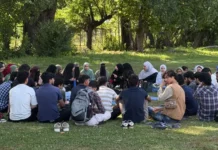
In December, residents of Gund on the Srinagar–Sonamarg route sheltered a group of stranded travellers in a mosque during a snowstorm. A dozen Punjabi visitors had been returning from Sonamarg on December 28, when their vehicles became stuck in the snow. With no motels nearby and local homes too small to accommodate them, the people of Gund opened the doors of the Jamia Masjid, offering them a place to stay for the night.
Historically, Kashmiris have extended similar hospitality to visitors during various crises.
Bashir Ahmad Mir, a politician who unsuccessfully contested twice for the assembly, has rescued numerous people, including tourists and pilgrims, from the Sindh River. A resident of Kangan and an accomplished swimmer, Mir said he had often been called upon by the authorities to rescue tourists and had retrieved the bodies of more than twenty who drowned.
“There have been many instances where I was called by the authorities to save the tourists,” he said. “I have also fished out bodies of more than 20 tourists who drowned in the river,” he recalled, once rescuing a woman and her son from the middle of the river.
“It is always that your life is at risk whenever you jump into the river to rescue or save a person,” he said.
Reflecting on the recent tragedy, he emphasised that Adil’s sacrifice deserved greater recognition. “Why is the media not hailing his heroism? Unfortunately, nobody is talking about it. All the lives lost in that unfortunate event were innocent, and everyone in Kashmir is grieving.”