The war in Iran has thrown Kashmiri students studying there into uncertainty, reopening a larger story of Kashmir’s deep historical connections with Persia through religion, scholarship, migration and trade, writes Masood Hussain
“It is frightening,” said the father of a young Kashmiri girl enrolled at Urmia University of Medical Sciences, located in a city in northwestern Iran near the borders with Turkey and Iraq. “A bomb landed very close to the facility where she is studying.”
His daughter is among an estimated 1300 students still in Iran after most of the nearly 2,000 students from Kashmir returned home amid war fears. Families say uncertainty over security conditions has caused anxiety among those who remain.
Over the years, Iranian medical universities have drawn large numbers of students from Kashmir, citing cultural familiarity and comparatively affordable tuition. The flow continued despite recurring geopolitical tensions in the region.
With Iran facing periodic crises in recent years, now a war with Israel and the United States, the Government of India has repeatedly undertaken evacuation and assistance measures for its nationals. Since the Covid-19 pandemic, repatriation exercises have been conducted in phases, and Iran has remained among the countries requiring close monitoring due to its security environment.
The present uncertainty, Kashmir’s architectural historian Sameer Hamdani observed, echoes an episode from 1887. That year, nearly 300 Kashmiri shawl weavers residing in the Iranian city of Mashhad petitioned the British Chargé d’affaires in Tehran seeking recognition as British subjects.

“The claim was forwarded to the Foreign Secretary in British India, who sent a telegram to the British Resident in Kashmir to conduct an enquiry,” Hamdani said. “It was revealed that during the famine of 1832, many Muslims had left Kashmir for Punjab and possibly Iran, though no communication was maintained with them.”
The matter was eventually left to the discretion of the British Chargé d’affaires in Tehran. What decision was taken, and what became of the Kashmiri weavers, remains unclear. “History has not preserved anything for posterity about what happened to them,” Hamdani noted.
He situates the episode within a wider geopolitical context. “All this happened in the backdrop of increasing British involvement in Iran, especially in the Khurasan region, which was seen as central to the Great Game between Russia and Britain,” he said. “Mashhad was viewed by the Government of India as critical to its intelligence-gathering network. The poor Kashmiri shawl weavers may well have served as pawns in that ‘game’.”
Separated by nearly 140 years, the two moments, one unfolding in nineteenth-century Mashhad, the other amid an ongoing war, underscore the depth and complexity of Kashmir’s connections with Iran. The broader relationship, historians suggest, stretches further back, beyond the confines of documented political history.
Age-Old Connections
Kashmir’s archaeologists and historians often point to a long pre-Islamic interface between the Valley and Faras, tracing connections that predate the arrival of Islam by centuries. Geographically, Kashmir occupied a strategic hinge between Central Asia, Persia, and the Indian subcontinent. Through trans-Himalayan trade arteries, currents of the wider Iranian cultural sphere filtered into north-western India, carrying not only goods but also cosmological ideas associated with Zoroastrian traditions, artistic vocabularies, and models of governance.
“From the double burial tradition to the Zoroastrian traditions, Kashmir has historically remained hugely impacted by Iran,” historian Prof M Ashraf Wani said. “We are even told that the ancient Achaemenid Empire, which brought the art of writing to the subcontinent, was instrumental in uniting the fragmented tribes in Kashmir into a single unit.”
Persia in that earlier epoch was not confined to the territorial boundaries of the modern state of Iran. It denoted a far more expansive civilisational zone stretching across large parts of West, Central, and South Asia. Even as tribal confederations and ruling houses fragmented this expanse into smaller polities over time, a unifying cultural grammar persisted. The Persian language functioned as the central adhesive, binding courts, scholars, merchants, and mystics into what historians often describe as the Persianate world.
Sameer Hamdani argues that many of the early migrants who reached Kashmir from this sphere were ethnically Turkic in origin but culturally Persian in orientation. In his formulation, they carried with them not merely lineage identities, but an already Persianised courtly and intellectual tradition that would eventually take firm root in Kashmir.
Unlike the distant antiquity, where connections must often be reconstructed from material traces, the Persian imprint on Kashmir’s demography, religious life, culture, and economy from the late medieval period onward is comparatively well documented in chronicles, court records, and travel accounts.

Even during the final two centuries of Hindu rule in Kashmir, Turkic-Persian currents were discernible within the royal court and military establishment. Central Asian mercenaries served in significant numbers, and courtly etiquette, titulature, and elements of administrative practice bore the stamp of the wider Persianate world. These influences preceded formal political transformation; they indicate that Kashmir was already absorbing currents from the West and Central Asia before the consolidation of Muslim rule.
Crucially, the arrival of Islam in Kashmir followed a trajectory distinct from much of the Indian subcontinent. In regions such as the Malabar coast, the faith spread largely through maritime trade networks and coastal mercantile contact. Even before the first mosque was built in Kerala, a mosque in Gujarat’s coastal area was constructed at a time when Muslims were praying towards Masjid al-Aqsa.
In Kashmir, by contrast, Islam filtered in overland, mediated through cultural, intellectual, and Sufi linkages tied to the Persian sphere. The transmission was gradual and dialogical rather than purely commercial. Persian language, mystic orders, and scholarly migration became the primary conduits through which the new faith took root in the Valley, embedding itself within existing social structures rather than arriving as an abrupt external imposition.
Among the earliest and most consequential religious figures to enter Kashmir from the Persian world were Bulbul Shah and Mir Sayyid Ali Hamadani, widely known as Amir-i-Kabir. Both arrived from Persia with substantial entourages of disciples and preachers, embedding organised Sufi networks within the Valley. Their missions were not solitary spiritual journeys; they represented structured transmissions of Persianate religious thought, institutional models, and social organisation.
In the subsequent century, Mir Shams-ud-Din Araqi emerged as a decisive figure in reshaping Kashmir’s sectarian landscape. A leading Shi‘i cleric associated with the Nurbakhshi order, Araqi’s arrival marked a new theological phase, consolidating Twelver Shi‘a influence in sections of Kashmiri society and court politics. Like his predecessors, he came from the same Iranian civilisational sphere that had already begun to leave its imprint on Kashmir’s religious architecture.
By this time, the establishment of the Shahmiri dynasty had opened the Valley to sustained cultural and intellectual currents from Persia and Central Asia. The transition, however, was layered rather than abrupt. Even during the reign of Zain-ul-Abidin, the famed Budshah, Sanskrit retained currency within segments of the court and scholarly establishment. Persian, meanwhile, was steadily expanding its administrative and literary reach. By the close of the Salateen period, Persian had effectively replaced Sanskrit as the official language of governance. Some historians maintain that even before Sultan Sikandar’s reign, certain Shahmiri rulers were already composing poetry in Persian, underscoring the gradual but decisive shift of the Valley into the Persianate cultural orbit.
Medieval Landmarks
Kashmir’s two principal sacred landmarks in the heart of Srinagar, the Khanqah-e-Moula and the Jamia Masjid Srinagar, stand as enduring architectural testimonies to Persian influence in the Valley.
The Khanqah-e-Moula, associated with the legacy of Mir Sayyid Ali Hamadani, reflects a distinctly Persian spatial conception. “The Khanqah’s plan is purely a Persian idea,” notes architectural historian Sameer Hamdani. “Its central hall and the hujras, the small meditation chambers, follow Iranian design principles.” According to him, the Persian architectural impact that began in this formative period never entirely receded; rather, it adapted and survived within Kashmiri building traditions.
Several structural and spatial features traceable to Persian prototypes became naturalised in local practice: the sufa, a raised platform in the courtyard of religious spaces; the uroosi elements in traditional Kashmiri mansions; and the dhalaan, a pillared or recessed hall space. These were not ornamental borrowings but components of a broader construction grammar that blended Iranian concepts with indigenous materials and climatic adaptations.
The Jamia Masjid offers even more clearly documented evidence of Iranian design lineage. Built during the reign of Sikandar Shah Miri (1393-1419 CE) under the supervision of Mir Sayyid Muhammad Hamadani, son of Amir-i-Kabir, the mosque embodies a recognisably Persian courtyard typology.
M Salim Beg, convener of the Kashmir chapter of INTACH, observes that the mosque follows the traditional four-iwan courtyard plan, an arrangement in which four vaulted halls open onto a central quadrangle. The iwan, introduced prominently into Islamic architecture by the Seljuks in the 11th century, is defined as a rectangular vaulted space enclosed on three sides and entirely open on the fourth. The architects associated with the Jamia, Sayyid Muhammad and Khwaja Sadruddin, are believed to have hailed from the Iranian regions of Luristan and Khurasan, further reinforcing the transregional transmission of design principles.
The overall pattern bears resemblance to the Seljuk-era Jameh Mosque of Isfahan. While adapted to Kashmiri materials, particularly timber, and local seismic realities, the Srinagar structure reflects the same conceptual blueprint. In scale and spatial drama, Beg argues, the Jamia Masjid of Srinagar rivals, and in certain dimensions exceeds, its Persian antecedent, underscoring how imported architectural ideas were not merely replicated but reinterpreted and expanded in the Valley.
While retaining the essential grammar of traditional Kashmiri timber architecture, Persian émigrés introduced elements of Timurid design into the Valley’s monumental vocabulary. The most refined surviving example is the Budshah Tomb at Mazar-e-Salateen near Zainakadal in Srinagar, a mausoleum commissioned by Zain-ul-Abidin for his mother.
Locally known as Dumath, the structure marks a clear departure from the predominantly wooden idiom of earlier Kashmiri religious architecture. It rises on an octagonal base, a form strongly associated with Timurid funerary architecture, and was originally surmounted by a copper-plated dome that once caught and reflected sunlight across the riverfront skyline. Though the dome no longer survives in its original splendour, historical accounts describe its metallic sheen as a defining visual feature.
The mausoleum’s blue-glazed brick façade, inspired by the architectural aesthetics of Timurid Samarkand, still preserves traces of its once-vivid pigmentation despite centuries of weathering. The use of glazed tilework, geometric articulation, and masonry massing situates the tomb within the broader Persian-Central Asian architectural continuum, while its adaptation to local materials and proportions reflects a hybridisation rather than a wholesale transplantation.
The Mughal Impetus
With the fall of the Chak rulers and Kashmir’s incorporation into the Mughal Empire in 1586, Persian acquired even greater authority as the language of governance. It was already well established during the preceding Shahmiri dynasty, but under the Mughals, it became the unquestioned lingua franca of administration, scholarship and courtly culture across the empire, and Kashmir naturally followed that pattern.
The Mughal presence in Kashmir left relatively few monumental buildings compared to other regions of their empire. Instead, the emperors turned the Valley into a landscape of leisure and imperial retreat, laying out a celebrated chain of gardens along the banks of the Jhelum and the Dal Lake. Yet alongside this aesthetic transformation, the Mughal administration continued to strengthen the position of Persian in official and intellectual life, reinforcing a linguistic shift that had already been underway for more than two centuries.
Toward the closing phase of the Chak rule, one of Emperor Akbar’s distinguished courtiers, Hakim Fatehullah Kashani, visited Kashmir. A scholar of wide reputation, he was known as a poet, physician and mufassir of the Qur’an. According to architectural historian Sameer Hamdani’s reading of historical sources, Kashani fell ill with fever soon after arriving in Srinagar. “Being a hakim, he began treating himself,” Hamdani notes. “He is said to have taken harissa and died the same day.” Kashani was initially buried at Khanqah, but his remains were later moved to the upper Drugjan graveyard. Over time, this burial ground came to be known as Mazar-e-Shouara, the cemetery of poets.
Medieval Srinagar itself had a clear funerary geography. The city maintained three principal burial spaces: one reserved for the ruling elite, another for poets and men of letters, and a third, known as Malkhah, for ordinary citizens. Together, they reflected the social and intellectual hierarchies that characterised the Persianised urban culture of the time.
Overlooking the waters of the Dal Lake, the Mazar-e-Shouara, the cemetery of poets, stands as a quiet archive of Kashmir’s Persian literary age. The graveyard holds the remains of dozens of scholars and men of letters who lived and wrote in the Valley during the height of its Persianate culture. Among those buried there are three distinguished Malik-ush-Shu‘ara, poet laureates of the Mughal court, Kalim Kashani, Tughra Mashhadi and Jan Mohammad Qudsi. All three were immigrants from the Iranian world who eventually made Kashmir their intellectual home.
Their presence in Srinagar reflected the Valley’s reputation during that period as a refuge for poets and scholars travelling across the Persianate cultural sphere. Qudsi’s verses, in particular, continued to circulate long after his death. Architectural historian Sameer Hamdani notes that one of his devotional lines, Marhaba Sayyid-ul-Makki, ul-Madni, ul-Arabi, is still recited in Kashmir during moulood gatherings, illustrating how Persian literary traditions filtered into the devotional life of ordinary people.
It was, in many ways, an age shaped by verse. Much of the written material that has survived from medieval Kashmir is poetic in form. Persian poetry flourished after the language took root in the Valley, and Kashmiri scholars and émigré poets alike contributed to a vibrant literary culture. Yet the scale and richness of this poetic tradition remain insufficiently studied. While scattered manuscripts and biographical anthologies preserve the names of many poets, systematic research into Persian literary production in medieval Kashmir has been limited. Much of the surviving documentation and scholarship, in fact, has emerged from research conducted across the Line of Control, where several studies have catalogued poets and their works from Kashmir’s Persian literary past.
Among the notable figures of Kashmir’s Persian literary tradition was Sheikh Yaqoob Sarfi, a revered scholar. Even Baba Ali Raina, the brother of the celebrated Sufi saint Sheikh Hamza Makhdoom, was a Persian writer. Writing in Persian, Sarfi belonged to a generation of Kashmiri scholars who were fully integrated into the Persianate intellectual world that stretched from Kashmir to Iran and Central Asia.
It was also the age that produced Gani Kashmiri, widely regarded as Kashmir’s greatest Persian poet. His verses travelled far beyond the Valley and were debated and admired in literary circles as distant as Iran. Over time, Gani Kashmiri’s persona itself entered folklore; stories surrounding his life and his famed kralpan (potter’s thread) became part of the narrative tradition associated with Persian literary culture. To celebrate his poetry, Sayib Tabrezi, a friend of the Mughal governor Zafar Khan, came all the way from Persia.
During the Mughal period, poetry often flourished in clusters around imperial reigns, with groups of poets emerging in particular eras. The time of Akbar, for instance, saw a circle of poets associated with Kashmir that included Khwaja Habibullah Hubi, Mezhari, Maulana Ali Sarfi, Muhammad Amin Mustaghani and Mehdi Ali Ladunni. Their works, composed largely in Persian, reflected the Valley’s deep participation in the literary currents of the wider Persianate world, where poetry functioned not merely as artistic expression but as a refined medium of intellectual exchange and prestige.
Verses In The Weave
The most ignored aspect of Kashmir’s influences and connectivity with the outer world was its craft as knowledge, playing a second fiddle.
For decades, scholarship on Kashmiri shawls has focused overwhelmingly on Europe, on what Walter Benjamin famously termed “cashmere fever” in The Arcades Project, and on the French and British imitations that followed. But in a significant reassessment in his 2024 extensive paper, Imperial Threads: Kashmiri Shawls in Nineteenth-Century Iran, textile historian Nader Sayadi argues that the more consequential story unfolded not in Paris or London, but in Tehran. His research repositions Iran not as a peripheral consumer but as one of the primary arenas where Kashmiri shawls acquired their most explicit political meanings.
Unlike Paris, where the Cashmere shawls were a fashion statement, Sayadi asserts that in Iran, shawls were much more than that. They were deployed across elite visual culture as unmistakable markers of rank. They appeared as door hangings, tent linings, tray covers, and floor spreads. They adorned the seats of the bride and groom at weddings and covered pack animals during ceremonial occasions.
Their symbolic reach extended into religious and funerary practice. Shawls were used as hangings or banners during Muharram processions and to cover graves in holy shrines. “Dark Kashmiri shawls adorned the coffin, bier, or portable shrines in funerals of aristocrats,” Sayadi records. In both life and death, the shawl was a visible statement of prestige.
During the 1810s and 1820s, when Kashmir exported 39 types of shawls to the Indian subcontinent, Central Asia, Turkey, Armenia, Arabia, Iran, and Russia extensively, four types were produced exclusively for Iran. “Indeed,” he emphasises, “Iran was a much more significant consumer of shawls than has previously been emphasised.”
Between the 1780s and 1810s, according to Saayadi Cashmere shawls were central to Iranian aristocratic wardrobes. Two primary forms dominated: the long, narrow patka and the striped jamawar. Patkas were worn as headgear (shāl-va-kulāh) or waist girdles (shāl-ikamar), often tied with cascading ends. Jamawars were transformed into undergarments, stockings, caps, veils, trousers, gowns, and linings. Unlike Europe, where shawls became predominantly associated with women, in Iran, they were not gendered. Both men and women wore them extensively.
The Rise of Kerman
Mass consumption by Iranian aristocrats had financial implications. It created a trade deficit and caused a significant outflow of specie in the first half of the nineteenth century. In response, the Qajar state attempted to curb usage among officials and encourage domestic production. But these top-down measures faltered in practice.
In order to manage the trade deficit, Iran did what Britain and France had done, stimulated imitation. To copy Kashmir shawls, Britain revived the Paisley Shawls in 1805, where they would imitate the Cashmere produce, and France created the Jacquard Loom in 1801 to mass-produce low-cost copies of Kashmir Shawls.
Iran did Kerman. Supported by policies initiated under Fath Ali Shah Qajar and continued by his successors, Kerman’s workshops entered direct competition with Kashmir. The city emerged as a formidable rival to Srinagar.
Contemporary observers described Kermani shawls as so convincingly similar “that even connoisseurs had difficulty distinguishing them.” Yet Sayadi stresses that despite this technical success, “Kashmiri shawls remained superior to domestic imitation counterparts in Iran.” Even when discouraged by state policy, courtiers and the Shah himself continued to wear and gift imported Kashmiri shawls throughout the nineteenth century.
Kerman notwithstanding, the demand for the Kashmiri shawl never declined because it acquired powerful political symbolism in Qajar Iran. By the 1840s, Kashmiri shawls had become closely tied to khil‘ats, robes of honour traditionally bestowed as signs of delegated authority. As the Qajar rulers consolidated power after decades of instability following the fall of Isfahan in 1722, these robes became an important instrument of political legitimacy, and Kashmiri shawls were the preferred fabric for the voluminous garments worn by ministers, officers and officials. By the 1860s, however, the symbolism of the textile itself had surpassed the robe: in an 1862 court illustration, Nasir al-Din Shah Qajar awards an untailored bolt of Kashmiri shawl to an official, who drapes it across his torso like a sash, demonstrating that the authority lay not in the garment but in the shawl itself.
Sayadi describes this as a performative activation of symbolism. “The shawl acted like a robe of honour when attached to the body.” By the 1860s, “the political symbolism of the shawl textile itself was more significant than any particular garment it might have been transformed into.” Materiality, not tailoring, marked authority.
“There was massive demand for Shawls from Iran,” admits Hamdani, “Official documents suggest 730 Iranian traders were camping in Srinagar in 1839.”
Gradual Decline
The decline of the Kashmiri shawl trade was shaped by developments on both sides of the trade corridor. Strains had already appeared during the Afghan period, when the ancestors of Ayatullah Ruhollah Khomeini migrated out of Kashmir. According to accounts cited by historian Sameer Hamdani, the family had lived in the Valley for two generations under the leadership of Syed Deen Ahmad Shah before moving first to Awadh and eventually returning to Iran.
The larger rupture, however, followed the Treaty of Amritsar, which placed Kashmir under Dogra rule within the orbit of British India. Soon, in 1889, the Dogra administration formally replaced Persian with Urdu as the official language of the state, which put an end to the use of a language in Kashmir after more than 500 years, half a millennium. The last Persian poet in Kashmir, Khawaja Mohammad Amin Darab died in 1979.
The old commercial networks linking Kashmir to Iran did not collapse immediately, but they steadily weakened as new political and administrative priorities emerged. An archival episode illustrates this fading connection: in 1907, a Srinagar trader, Har Koul, complained to the authorities that 45 Kashmiri shawls worth 4,000 British dollars had been lost while passing through the Persian postal system on their way to Shiraz. Despite diplomatic correspondence between British officials in the Persian Gulf and local postal authorities, the consignment was never recovered. That episode symbolised the fate of the Kashmiri shawl in the Iranian market.
The episode, Hamdani notes, symbolised a trade already in retreat. By the 1920s, the rise of the Pahlavi dynasty and its sweeping dress reforms, which mandated Western-style coats, trousers and shoes, effectively dismantled the Qajar-era culture in which Kashmiri shawls had once signified status and authority.
A Changed Relationship
By the time the Kashmir shawl trade was collapsing in the late nineteenth century, the older and fluid networks of empire, commerce and culture that had long connected Kashmir with the Persian world were also beginning to change. The rise of modern nation-states gradually replaced these open civilisational circuits with more rigid political structures. Over time, when Riyadh and Tehran began projecting sectarian influence as an element of foreign policy, the relationships within the wider Muslim world acquired new complexities.
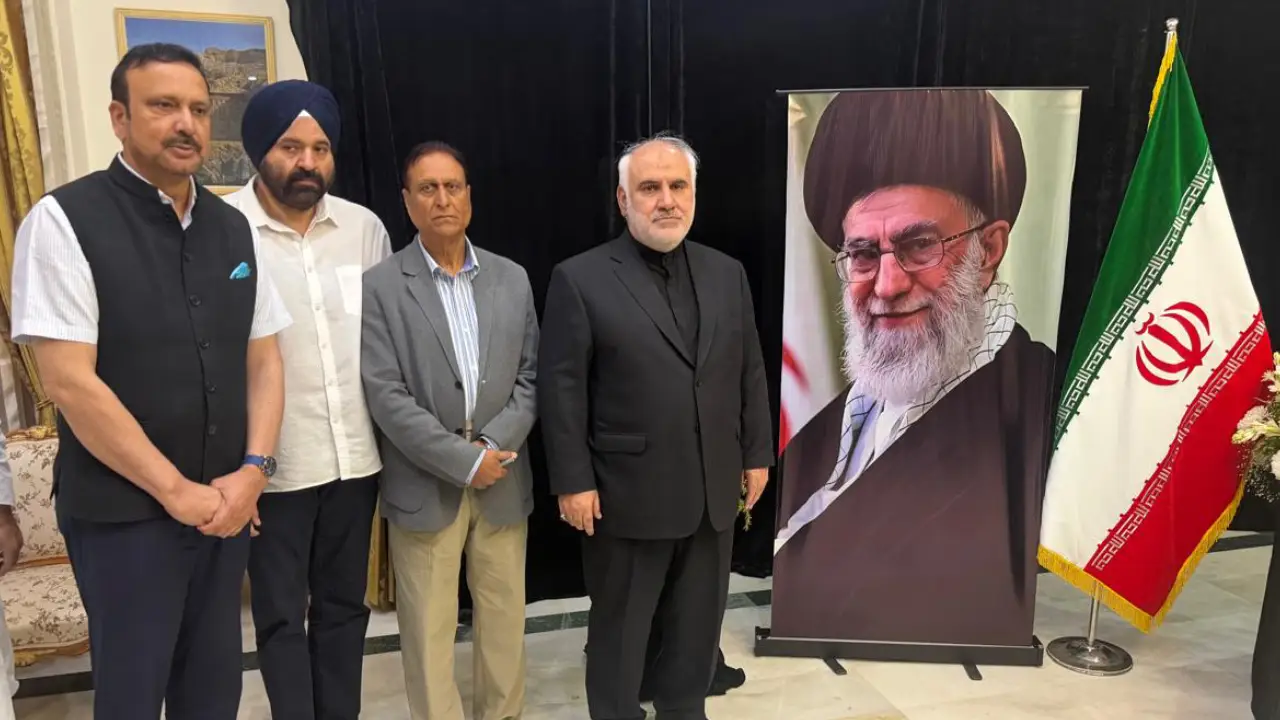
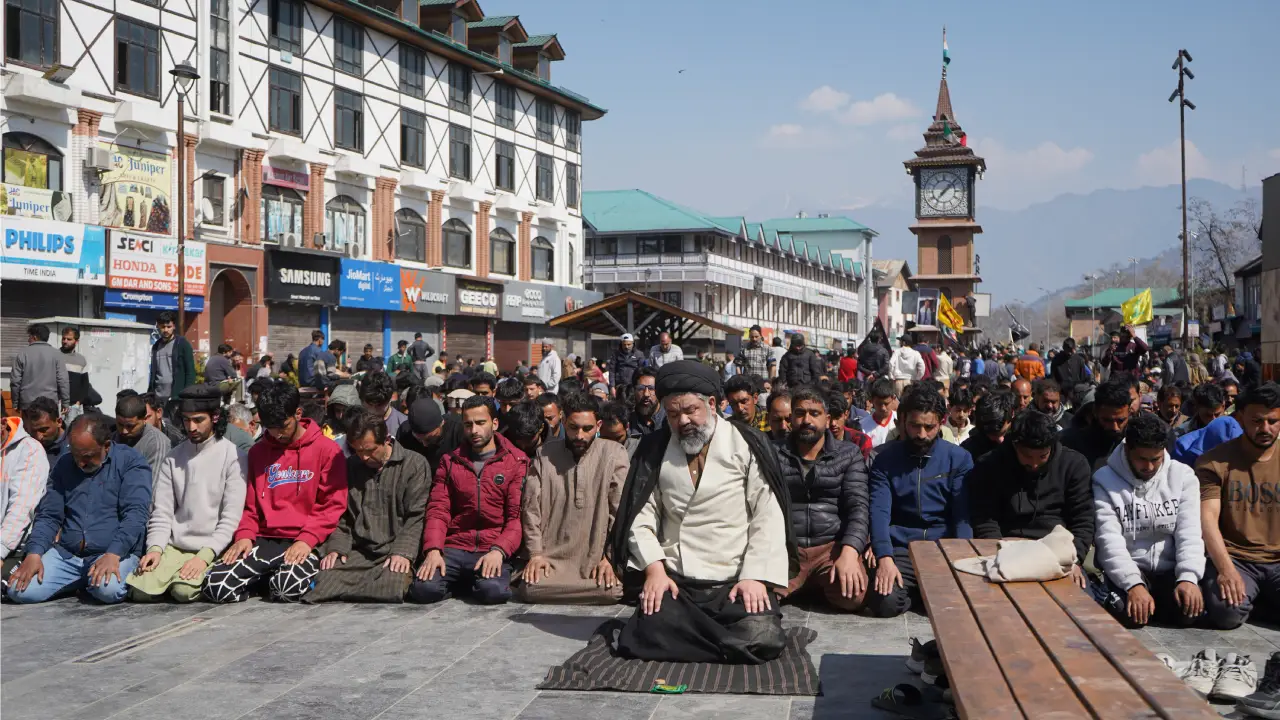
Yet Kashmir’s cultural and emotional affinity with Iran endured. Much of Kashmir’s Persian-speaking Shia religious leadership has traditionally received higher theological education in Iranian seminaries. Marriages are taking place and some emigrations too. Even in contemporary politics, the connection remains visible: Agha Syed Ruhullah Mehdi, the Member of Parliament from Srinagar, has had audiences with Ali Khamenei, Iran’s Supreme Leader, whose recent assassination in a joint Israeli-US strike triggered a week of mourning in parts of Kashmir under tight security restrictions.
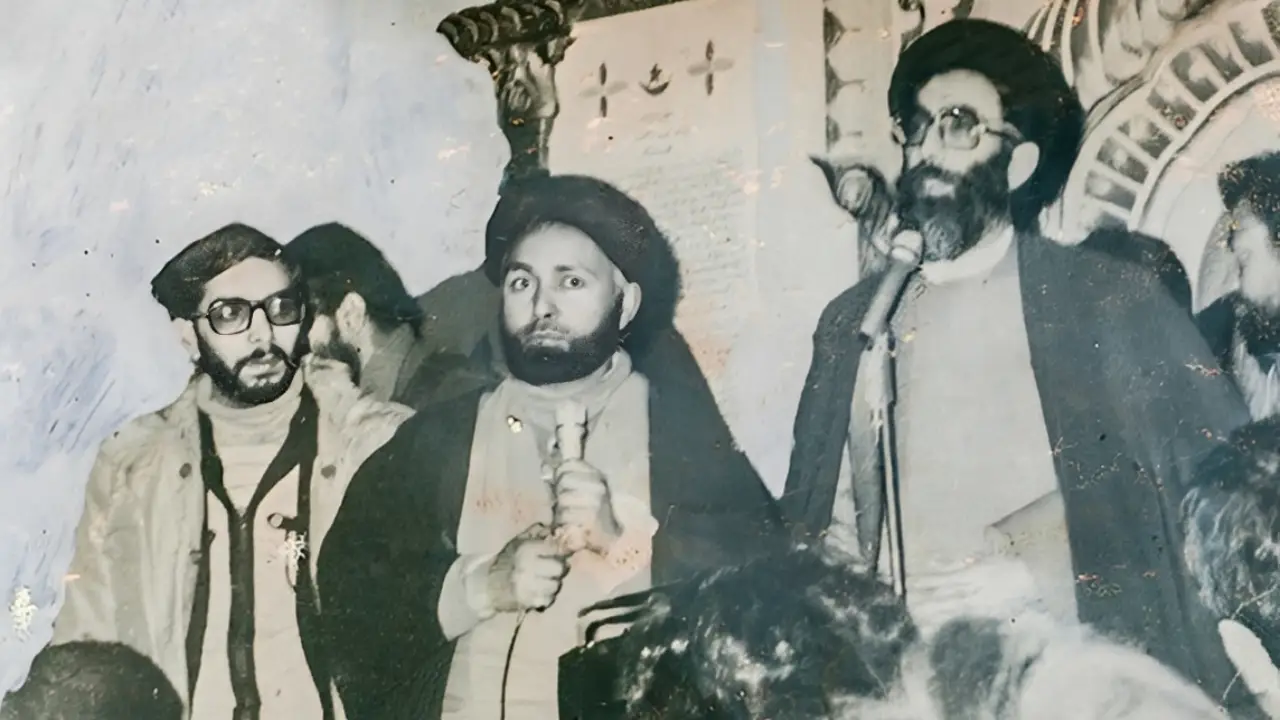
Tehran, for its part, never entirely lost interest in Kashmir. Local memory still preserves the brief but symbolically important visit of Khamenei to Srinagar in March 1981, soon after the Iranian Revolution. Tasked with building ties with Muslim communities abroad and emphasising Shia-Sunni unity, the young cleric addressed congregations during Friday prayers at the historic Jamia Masjid Srinagar and later visited the Hazratbal Shrine, besides speaking at gatherings in Zadibal and Budgam.
In the decades that followed, education emerged as the principal bridge sustaining these connections. Iranian institutions continued to attract Kashmiri students not only in theology but also in professional fields such as medicine. In fact, in recent years, the number of Sunni students from Kashmir enrolled in Iranian medical universities has exceeded that of Shia students.