by Dr Farooq A. Lone
Persian once shaped everyday Kashmiri life, education and expressions. Despite losing official patronage, its proverbs, prayers and poetic traditions still guide family wisdom, religious devotion and cultural sensibilities

Persian continued to ripple through daily life during our childhood, its echoes carried in speech, literature and even in the smallest moral lessons at home. Collections of Persian ethical and wisdom literature—Karima, Nam-e-Haq, Gulistan, Bostan, Pandnama—were once part of household learning for children in families that could afford a teacher or had a learned elder.
I was fortunate: my father himself taught me these books. At first, their meanings felt distant and difficult. Later, when we were given the option of studying Persian or Arabic in Classes 6 to 8, I chose Persian at my father’s insistence because he had already taught me to read the Qur’an.
The language absorbed me completely, and I approached the class with unusual seriousness. That early immersion later helped me understand the Persian oral traditions that elders continued to use naturally in their conversations. These expressions had survived across generations since the days when Persian enjoyed official patronage in Kashmir, long before it yielded space to Urdu.
The influence was so deep that even illiterate elders carried Persian wisdom on their tongues. My grand-uncle, Nur Cheche, often used to say:
Darin duniya kasay be gum na bashad,
Agar bashad bani Aadami na bashad.
(There is no one without sorrow in this world; if there is one, he cannot be a human being.)
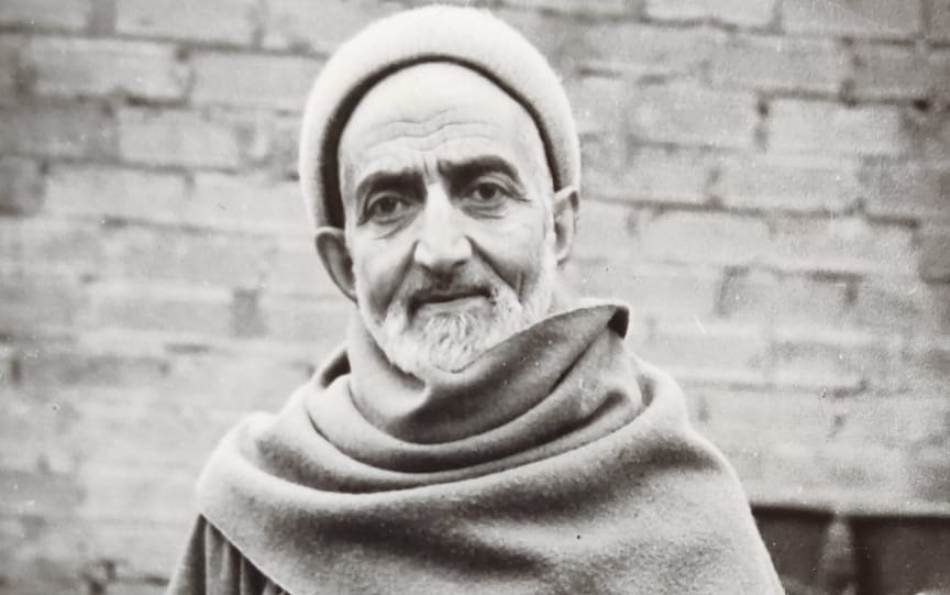
My father and his two Pandit friends, Sham Lal and Prithvi Nath, who ran a small provision shop with him in our village of Chowgam, relied on Persian sayings to guide us siblings. Their lessons, delivered through proverbs, remain with me:
Dost aan bashad ki giirad dast-e-dost dar pariishaan-haalii-o-darmaandagii.
A friend is he who helps his friend in distress; in simple English, a friend in need is a friend indeed.
They would recite:
Az abri siyah ma taras wa na az aadami garam;
Az abri safed bi taras wa az aadami naram.
Don’t fear black clouds or a hot-tempered person; fear white clouds and a gentle, soft-spoken one.
And:
Ma taras az javaanaan shamshir-zan;
Hazar kun ze pairaan bisyaar fun.
(Fear not the young swordsman;
beware, instead of old men brimming with experience.)
To remind us of life’s impermanence, they would quote:
Har baharay raa khazaanay ast wa har raahay raa paayaanay.
(Every spring has its autumn, and every road its end.)
Or simply:
Har kamalay raa zawalay dar pesh ast.
Every zenith has its nadir.
Persian maxims coloured almost every life situation:
Niim hakim khatr-e-jaan; niim mulla khatr-e-iimaan
(A half-learned physician is a danger to life, and a half-learned theologian is a danger to faith.)
Pidrum sultan bood.
“My father was a king”—spoken of one who boasts about ancestral greatness.
For a double-dealer, the phrase was:
Gandum-numaa jau-farosh.
(One who shows wheat but sells barley; one who cries wine but sells vinegar.)
Warnings were sharp and concise:
Haqunnaas badtar az Haqqullah ast.
(What is due to men is more serious than what is due to God.)
Jawaab-e-ablahaan khamoshi ast.
(The best answer to a fool is silence.)
Tars-e-baraadar marg ast.
(Fear is akin to death.)
Khufta ra Khufta ke kunad bedaar?
(How can one who is asleep awaken another who is asleep?)
Khud-biīn Khudaa-biīn nabuwad.
(A self-conceited person cannot see the truth.)
Khar-e-Isaa ba aasmaan na-ravad.
(The donkey of Jesus will not go to Heaven; association with the great does not make one great.)
Khar raa ba zadan asp natawaan kard.
(You cannot turn a donkey into a horse by beating it.)
Chiraag-e-kasay taa subah nami-sozad.
(No one’s lamp burns till dawn; no happiness is permanent.)
Miras-e-pidar khwaahi, ilm-e-pidar aamoz.
(If you want your father’s inheritance, first acquire your father’s knowledge.)
Makun bad ba kas gar na khwaahi ba khwesh.
(Do not ill-treat anyone if you do not wish to be ill-treated yourself.)
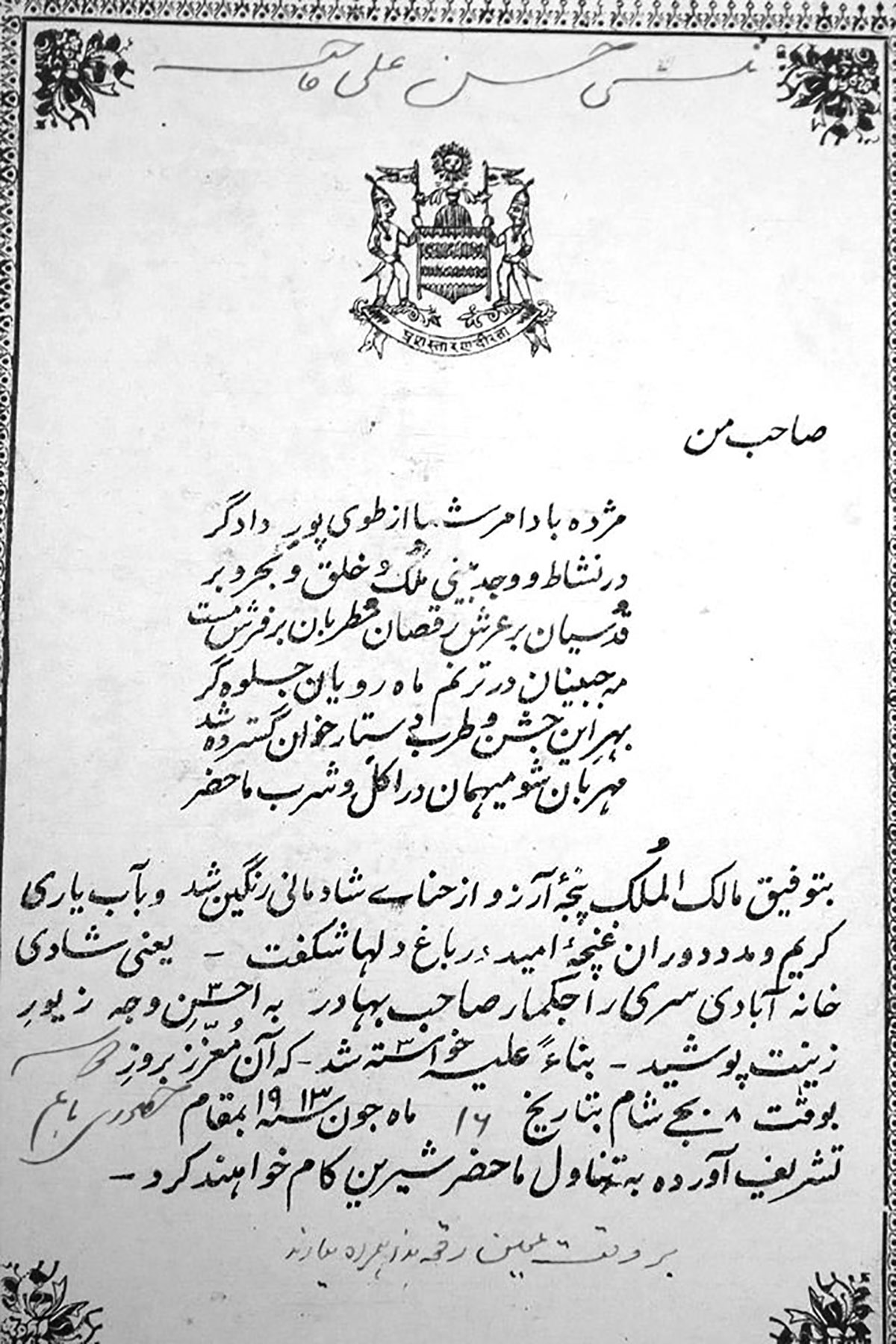
Even though Persian has long lost official patronage and is rarely learned by the younger generation, its influence remains quietly alive. Its verses continue to accompany every significant moment—from grief to repentance, joy to prayer. Persian still feels natural to us in our moments of deepest expression.
For instance, during Tauba, we instinctively turn to Persian. Our penitential prayer begins with:
“Khudawanda ba hazrati jalali tu baaz gashtaym, tauba kardem …”
Our most cherished Munajaat too are Persian. My favourite opens with:
“Ya ilahal aalamin baaray gunah awarda um…”
Many of our other beloved supplications remain in Persian:
“Ya ilahi bakhsh ma ra aafiyat az har bala …”
and
“Ilahi aaqibat mahmood gardaan …”
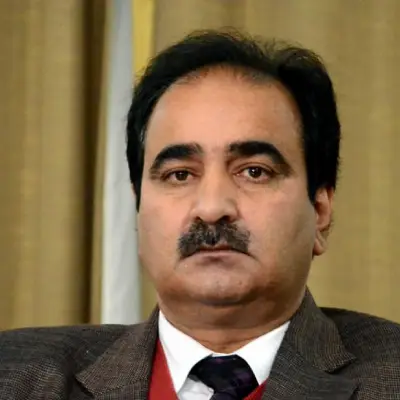
Even in worldly matters, Persian still surfaces unexpectedly. A striking example came recently when the first budget of Jammu and Kashmir, after its conversion into a Union Territory, opened with a Persian couplet:
Tan hama daag-daag shud,
Pumba kuja kuja kunam.
(My body is blemished, bruised and stained through and through;
At how many places shall I place the balm?)
In ways both subtle and profound, Persian continues to shape our cultural memory, our moral vocabulary and our deepest expressions of faith. Though it no longer thrives institutionally, it lives on—in the proverbs of elders, in moments of prayer, and in the quiet corners of our collective consciousness where language becomes heritage and heritage becomes emotion.
(Author is a retired IAS officer who was Chairman of Jammu and Kashmir Public Service Commission. Ideas are personal.)