In Kashmir, behind quiet walls and dutiful routines, many marriages unravel in silence. From arranged unions forged under family pressure to love marriages lost to bitterness, Babra Wani uncovers the emotional cost of mismatched lives, unspoken traumas, and the enduring toll such relationships take on couples, children, and generations to come
Every morning at 5 am, Saima opened her eyes and reached for a hairpin beside her bed. Draping her dupatta, she headed to the kitchen, switched on the electric kettle filled with water, washed up, and prayed. Upon returning, she prepared breakfast for her husband and their daughters. It had been her routine for the past ten years.
By 7 am, her family gathered in the kitchen. She laid out the dastarkhaan and served the carefully prepared breakfast. Namkeen chai for herself, sweetened tea for her husband, and milk for the twin daughters, both aged 12. Her husband preferred chapatis, so she made them daily.
Saima admitted that she had learnt cooking solely to please her husband. Her life revolved entirely around her family. She smiled, watching them eat, and said it gave her a sense of happiness and fulfilment.
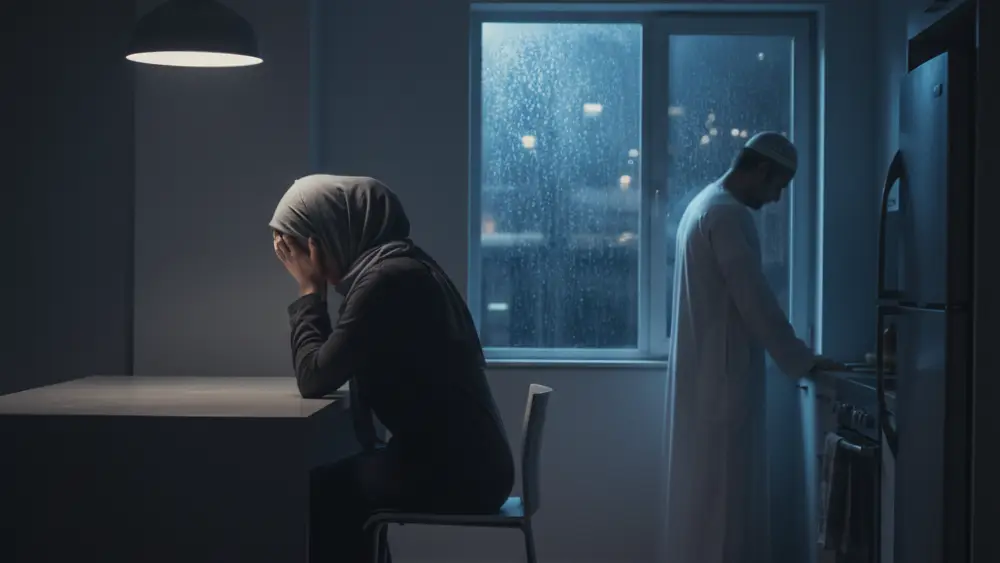
Behind this image of domestic harmony, however, lay a harsh truth. Despite over a decade of marriage, Saima and her husband were deeply unhappy. He, she said, had never wanted to marry her. She, in turn, felt defeated in her efforts to earn his affection. “I try my best to keep him content, but I could never win over his heart,” she sighed.
Her husband, Majid, held his parents responsible for the situation. He said he had been forced into the marriage without even knowing Saima. He described it as an order he could not defy and admitted he had never managed to love her.
Ten years ago, Saima, then 24 and living in Srinagar, married Majid, 28, from Anantnag, after their families arranged the match through an acquaintance. It was a conventional setup. Saima had just graduated with a Bachelor’s degree in Arts, while Majid was working for a multinational company in Delhi. He was summoned home and informed that his rishta had been finalised.
Majid initially protested, wishing to know more about his future wife. But an emotional appeal from his parents left him no choice. Saima, on the other hand, trusted her father’s decision and had no expectations.
A Lavish Wedding
The couple were married in a lavish ceremony. Gold was exchanged, a large sum was set as Haqq-e-Mahr, and pleasantries were shared. Saima, glowing with joy, wore a red and silver bridal outfit. Her cheeks were flushed with excitement. Majid, however, looked angry. His white khan dress was creased. He did not smile. Even in their wedding photographs and videos, his face remained emotionless. His eyes, heavy like unshed rain, wandered without settling, searching for something, or someone, long lost.
Majid later explained that he had no objection to an arranged marriage, nor was he romantically involved with anyone. He said he had simply wanted to know about his bride before the wedding, but was denied that chance. That, he believed, was the root of his unhappiness. Even though they had children and a functioning household, he described their relationship as a compromise. He acknowledged that Saima was a devoted wife and mother, attentive to every detail of their lives, but his resentment stemmed from how his parents ignored his wishes.
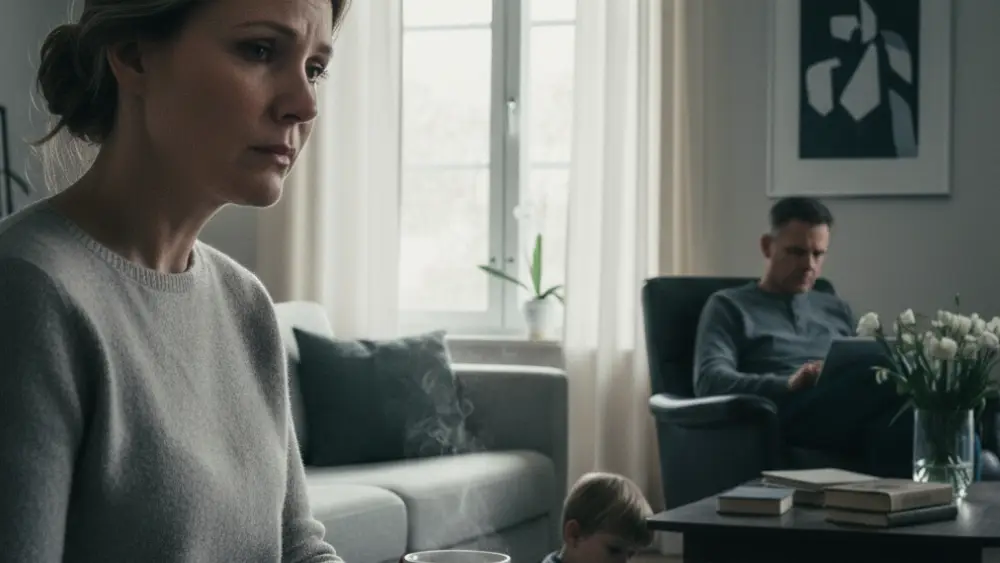
Despite living under the same roof for more than a decade, Majid and Saima had never truly opened up to each other. Saima recalled that in the early days, she had been expressive, unafraid to show love and affection. Over time, however, his indifference and rejection made her withdraw. She longed for intimacy, for an embrace that never came. Her voice trembled as she spoke of it, heavy with grief, like someone mourning a loss. She still hoped his heart might one day soften, that he might accept her fully. She described him as respectful and attentive, never once raising his voice or being cruel, but he did not love her, and for her, everything else faded in comparison.
Neither of them knew what the future held. Their marriage, they both said, was built on compromise, and would likely remain so.
Yet theirs was not an isolated story. Many couples interviewed for this report described similar marriages. For some, like Jaffar and Amina, the presence of children was the only reason they chose to stay together.
Married Without Love
When Jaffar married Amina in 2006, it was, as he described, out of compulsion. Amina, a relative, had never figured in his vision of a life partner. Though he resisted initially, he eventually gave in to his mother’s insistence. His reason, he said, was that he did not find her appearance appealing.
Amina was three years younger. They had met on several occasions but never considered each other in a romantic light. At the time of marriage, Jaffar was pursuing engineering, while Amina had ended her education after Class 10.
He admitted that he had harboured big dreams and had imagined a life partner who matched a certain ideal, one he felt Amina did not meet. He said that disappointment lingered even now.
Nearly twenty years into their marriage, they have a 15-year-old son. Jaffar said he had never accepted Amina wholeheartedly. Their relationship was amicable, he explained, but devoid of love, a sentiment he believed was mutual.
Amina, too, recalled how her parents had promised that marriage would bring happiness. That, she said, never happened.
“There is nothing fancy about marriage. What is shown in dramas and written in novels, it is nothing like that,” she said. Their life now revolved around their son. They were determined to give him every happiness.
Both of them agreed they were together only for the sake of their child and described their bond as a “loveless marriage”. They said they had tried to fall in love and had longed to feel it, but it never came, and likely never would.
Their son often asked them why they retired to separate rooms. Jaffar admitted they had no answers. “Once he grows up, he may understand,” he said, quietly adding that he hoped his son would never repeat the mistake he had made.
Many couples in such arrangements blamed the nature of arranged marriages for their unhappiness. Yet some had married for love, later found that the same feeling faded away and vanished.
When Love Turns Quiet
Zameer and Shamin married in 2015. It was a love marriage. While working together on an assignment, they fell in love and decided to get married a year later.
For the first few years, they lived in what felt like a dream. They had a son and a daughter. Life, Shamin said, had no tension, no worries. “We were like two peas in a pod. A single unit,” she recalled. “Then, something shifted. Everything changed”.
Arguments began, slowly at first, then frequently. The couple began disrespecting each other. Both admitted to being strong-headed. Their quarrels escalated into name-calling and verbal and emotional abuse. It became exhausting.
Zameer said that the love they once valued more than their lives was the first thing to disappear. As the love faded, the relationship broke down. Eventually, both realised they had started falling out of love.
The constant conflict began affecting their children. They decided to separate. Shamin moved into a rented flat in Hyderpora with the children, while Zameer stayed with his parents and siblings.
They tried reconciliation three times, hoping to rebuild the relationship for their children’s sake. But compromise eluded them. Shamin said they had tried everything, adjusting and reasoning, but nothing worked.
She said the children now preferred to stay with her and were distant from their father, even though he remained a good parent. She expressed regret. Marrying in haste, she felt, was one of her biggest mistakes. “I should have thought it through. I should have made it work. I should have tried,” she said.
Zameer agreed that their children were bearing the consequences. “Children always pay the price for their parents’ failures. I feel bad. No child deserves to live a half-life,” he said.
Their story, though painful, is not unique. Across Kashmir, many households echo similar tales, where love eroded under the weight of silence, companionship faded, and survival became an act of quiet endurance.
Love Lost Before It Began
Marriage came to Rafi when he least expected it. He was thirty, working in a private firm, earning just enough to meet his needs.
His wife, Shaista, was 24. Her parents had grown anxious about her prospects. In 1992, the two were married without even seeing each other.
The first week felt like bliss to Shaista. But soon, everything changed.
Two months into the marriage, cracks began to show. Rafi had long wanted to marry his friend’s sister, but his family had rejected the idea. He gave up the idea of marrying for love and remained single for five years until his family pressured him into marrying Shaista. Eventually, he relented.
“I thought it might work out,” he recalled. She had been kind, patient, and gentle. But within two months, he began to regret his decision. “I started hating her presence,” he admitted.
To escape the marriage, Rafi packed his bags and moved from Kupwara to Srinagar, leaving Shaista behind. She had conceived by then and did not see his face for nine months.
“I wanted to show her and my family that I was unhappy,” Rafi said, later acknowledging that he regretted his actions.
The distance and resentment began to manifest in how he treated Shaista. Despite being a devoted father to their daughter, she said he had never been a good husband. “I pray my daughter never ends up with a man like him. But I also pray every daughter has a father like him.”
Nearly three decades later, the marriage still lacked warmth. Shaista said he had treated her with cruelty, isolating her from family and friends when she moved to Srinagar. He often stayed with his friends while she raised their daughter alone.
There were long spells of silence between them. “When I questioned him, I got nothing but silence. Not even a response to this day,” she said.
Their families, unaware of the truth, believed the couple were happy. “My family thought I was living a fairytale. His family believed he had settled down. But no one saw the truth, the beatings, the insults, and the trauma.”
Speaking for the first time about her married life, Shaista said she now despised her husband. “He is still the same cold-hearted man. He never speaks to me. All his attention is on our daughter.”
Their daughter is set to marry. When they spoke to her about the marriage, they first asked if she had someone in mind. “We did not want her to suffer like we did,” Rafi said.“I have been a terrible partner. I do not want that for her.”
“Parents should never force their children into marriage,” an Islamic scholar reflected on such stories. “It is a sin. We are entrusted with their care. Children are blessings, a neamat. Forcing them into our choices often drives them into deep unhappiness.”
(Names have been changed to protect privacy.)