UN News: Hunger, dire living conditions made worse by heavy winter rains and ongoing hostilities continue to endanger people’s lives in Gaza, which has become “a graveyard”, UN humanitarians warned on Friday.
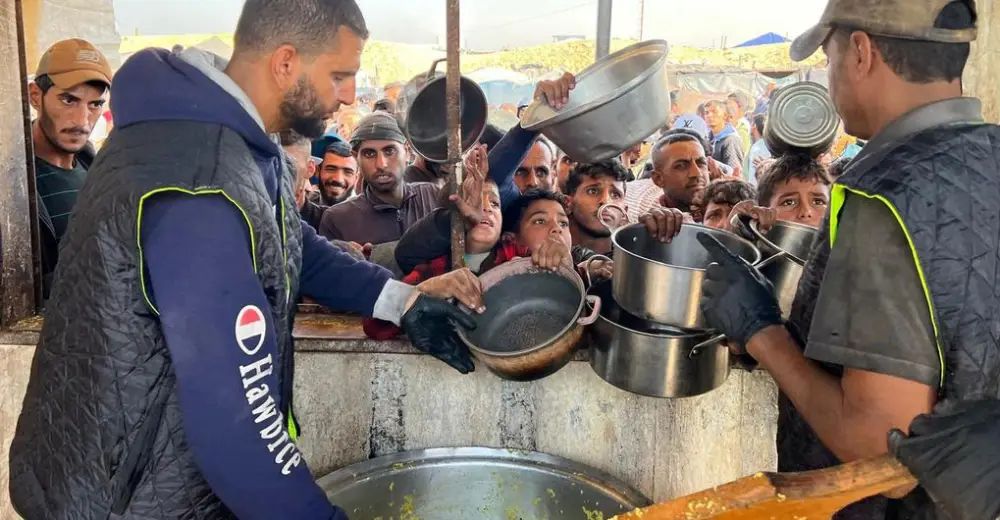
“The world is not seeing what’s going on with these people, it’s impossible for families to shelter in these conditions,” said Louise Wateridge, from the UN Agency for Palestinian Refugees (UNRWA).
Speaking from Nuseirat in central Gaza after heavy winter rains overnight and into Friday morning, the UNRWA Senior Emergency Officer insisted that “an entire society here is now a graveyard…Over two million people are trapped. They cannot escape. And people continue to have basic needs deprived and it just feels like every path here that you could possibly take is leading to death.”
Echoing that warning, the UN Children’s Fund (UNICEF) highlighted widespread and dangerous malnutrition levels in the enclave, where more than 96 per cent of women and children in Gaza “cannot meet their basic nutritional needs,” said Rosalia Bollen, Children’s Fund (UNICEF) communication specialist.
Speaking from Amman, Ms Bollen noted that the most northerly part of Gaza has been under a near-total siege for 75 days. This has largely prevented humanitarian assistance from reaching youngsters in need there “for more than 10 weeks”, she said.
“The suffering is not just physical, it is also psychological…Children are cold, they’re wet, they’re barefoot; I see many children who still wear summer clothes and with cooking gas gone, there’s also lots of children I see scavenging through piles of garbage looking for plastic they can burn.”
With more heavy rain expected on Friday evening, UNRWA’s Ms Wateridge emphasised the critical need to get aid into the enclave to support Gazans who have been uprooted multiple times by Israeli bombardment and who have little to protect themselves from the elements.
“It’s impossible for families to shelter in these conditions,” Ms Wateridge insisted. “Most people are living under fabric, they don’t even have waterproof structures and 69 per cent of the buildings here have been damaged or destroyed. There’s absolutely nowhere for people to shelter from these elements.”
Multiple and continuing aid obstacles imposed by the Israeli authorities have meant that humanitarians have had to prioritise food over shelter, leaving Gazans desperate and at risk from food stampedes.
“The certainty of winter has been the only thing that the United Nations has been able to plan for,” Ms Wateridge maintained. “And yet we have still not yet been facilitated to bring in enough shelter supplies for people, because we have had to prioritize food. Women have been crushed to death waiting for a piece of bread.”
On Thursday, the UN aid coordination office, OCHA, reported that the Israeli authorities had “denied another UN request to reach besieged areas of North Gaza governorate with food and water. As a result, Palestinians in Beit Hanoun, Beit Lahiya and parts of Jabalya remain cut off from the essential assistance they need to survive.”
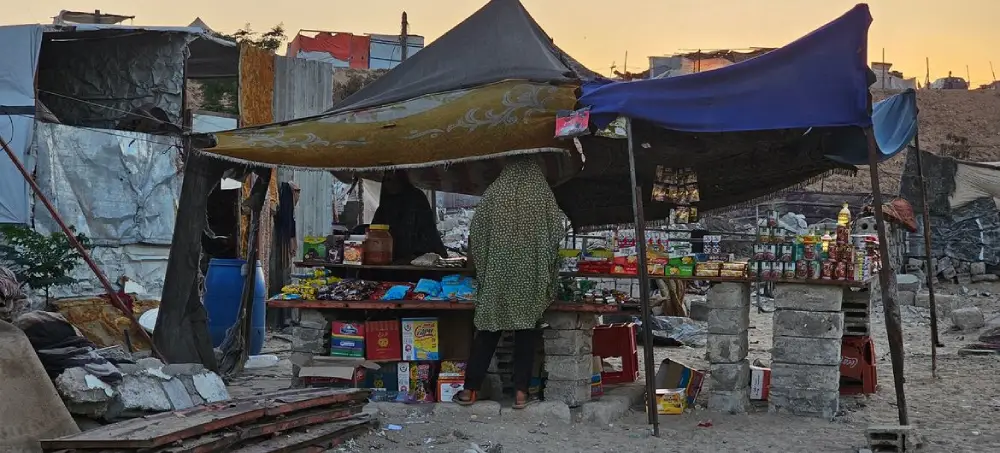
The head of the UN aid coordination office in Gaza, Georgios Petropoulos, issued a harrowing update on the dire situation in the enclave on Thursday, describing it as “the most dangerous place on earth right now.”
Speaking to correspondents via video link on Thursday, the senior OCHA official underscored the grim reality facing over two million people trapped in Gaza, where basic necessities like food, shelter, and safety have become scarce.
“Dying hungry and in pain” is an increasingly likely outcome for children, mothers, aid workers, and teachers alike, he said.
“We’re there to support [the people] who for more than 14 months have struggled to stay alive,” Mr Petropoulos explained. “But we’re not allowed to do our jobs,” he emphasised.
OCHA has been striving to deliver food, healthcare, and safe drinking water to Gaza’s besieged population, but fuel shortages and blocked access routes have exacerbated the crisis.
Moreover, these efforts have been opposed by what Petropoulos referred to as “blanket prohibitions” from Israeli authorities.
“When we raise these things with Israeli authorities, they reject virtually every single practical solution that we table,” Petropoulos said, adding that “the aid system has been weaponised.”
He further revealed that aid delivery often becomes a race against time, with insufficient supplies to meet the growing needs of the population.
“As an aid worker in Gaza, you’re forced to make horrible decisions,” he described. “Should I let people die of starvation or the cold? Do we bring in more food to ease hunger or more plastic sheets for some shelter from the rain at night?”, he illustrated.
North Gaza, under near-total siege for 75 days, has become a site of intensified military operations.
Petropoulos described chilling reports of mass casualties, the destruction of entire communities, and forced displacements under bombardment.
“The Israeli corridor bisecting the strip has been fortified to such a degree that it’s not really a corridor anymore,” he said, noting that 150 requests for humanitarian access have been denied since October.
Even when supplies manage to reach shelters or hospitals, they are often destroyed in subsequent attacks.
Petropoulos called on Member States to uphold their obligations under international humanitarian law and to ensure the protection of civilians. He emphasised the need for a ceasefire and immediate, complete humanitarian access.
“We need to get to people wherever they are,” he said. “We need to prove the impact of this response based on how people are doing and not the number of trucks,” he added.
The UN has consistently warned of the escalating humanitarian catastrophe in Gaza, with UN Secretary-General António Guterres urging all parties to respect the principles of international humanitarian law and facilitate aid delivery to those in need.
As the crisis intensifies, the UN’s humanitarian system in Gaza faces its greatest test yet, operating “hand to mouth” with little reserves left.
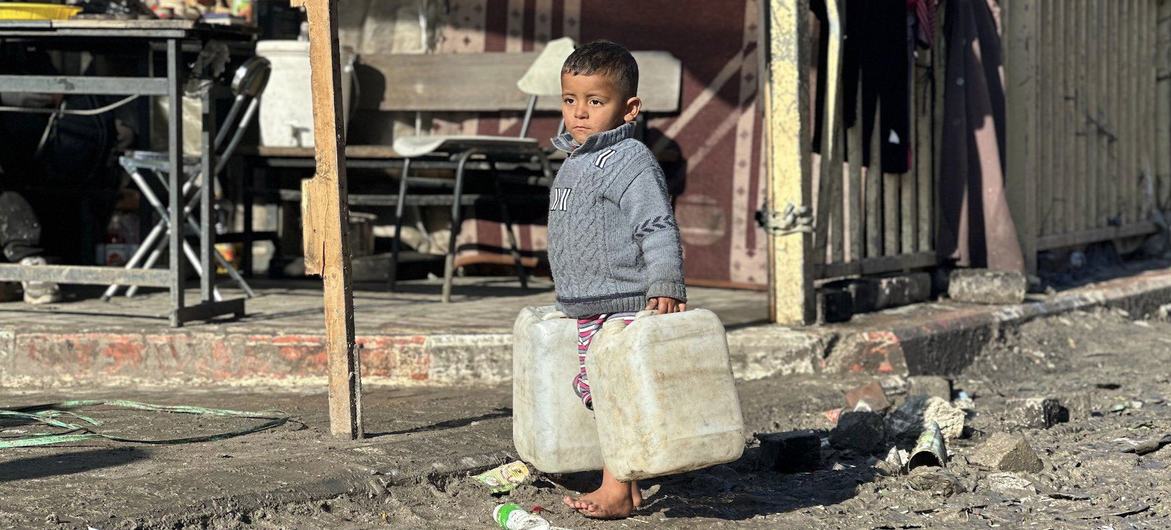
Nearly one million Gazans risk spending winter without adequate shelter as UN agencies struggle to provide cold weather assistance, amid ongoing Israeli bombardment, repeated evacuation orders and restrictions on aid deliveries, they warned on Wednesday.
In an update, the UN aid coordination office, OCHA, stressed that attacks on civilian infrastructure have not stopped, “particularly in North Gaza, where the UN World Health Organization (WHO) reports appalling conditions at Kamal Adwan Hospital – and where 61 out of 95 attacks on school buildings since 6 October 2024 took place”.
Flooding has already caused damage to makeshift shelters across the Gaza Strip, but humanitarian teams have only been able to assist 285,000 people in carrying out repairs between September and late November because deliveries of materials into the enclave remain so limited.
“At least 945,000 others now require urgent winterization support to protect them from the rain and cold weather,” OCHA said, noting that “waiting outside Gaza are 58,000 sealing-off kits and over 36,000 tarpaulins that have already been procured to cover the needs of about 400,000 people, but these would need two months to be brought in at the current rate of 10 shelter trucks entering Gaza per week”.
Aid convoys continue to face “extreme insecurity” once inside Gaza, OCHA warned. “On 11 December, a 70-truck convoy entering through the Kerem Shalom crossing was violently attacked by looters, leading to the loss of nearly all food and aid supplies. On the same day, a WFP convoy leaving the Kissufim crossing also came under fire, with four out of five trucks violently looted.
Humanitarians have stressed that such attacks can be avoided, pointing to an agreement last Tuesday with the Israeli authorities that allowed a UN convoy to use the Philadelphi corridor – separating southern Gaza from Egypt – to reach nearly 200,000 people facing critical food shortages.
OCHA reported that between 1 and 16 December, out of 339 planned aid operations across the Gaza Strip requiring coordination with the Israeli authorities, 30 per cent (102) were approved, 42 per cent (141) were denied, 18 per cent (62) were impeded, and 10 per cent (34) were cancelled, owing to logistical and security challenges.
As temperatures drop, the UN health agency has reported a rise in infections including respiratory illnesses, diarrhoea and jaundice. In 2024, over 1.2 million respiratory infections were recorded, along with 570,000 cases of acute diarrhoea.
These diseases are expected to worsen, especially among children.
UN humanitarians also warned that many displaced people have built shelters on the rubble of destroyed homes in Khan Younis, Ma’an and Bani Suhaila. These structures are fragile and at risk of collapsing in the coming rains.
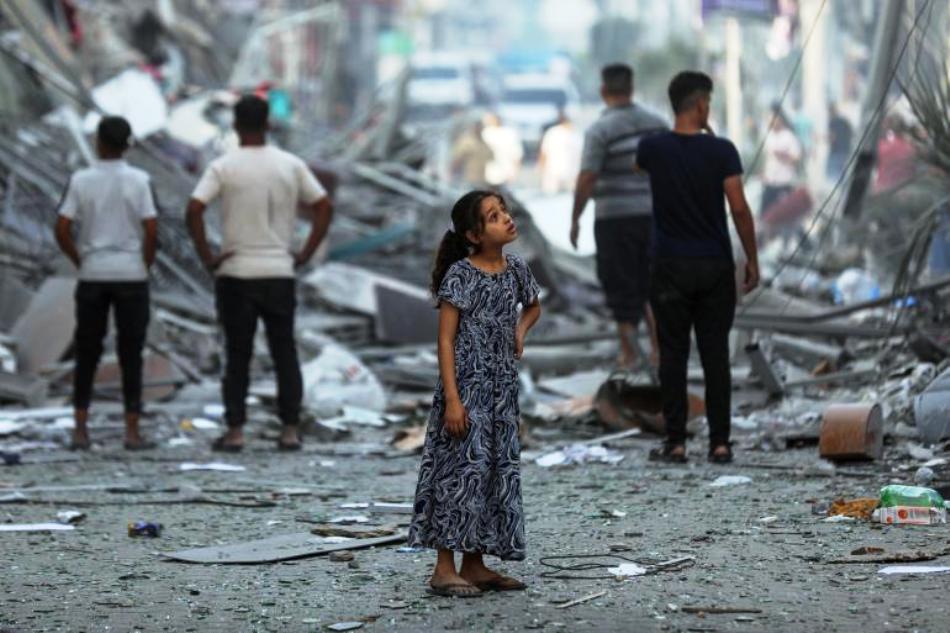
Meanwhile, humanitarian aid to northern Gaza continues to be blocked by the Israeli military, which has been carrying out a ground offensive since 6 October, with clashes reported with Palestinian armed groups.
Despite multiple attempts, UN aid missions to besieged areas such as Beit Lahiya, Beit Hanoun and Jabalia have been “largely denied for more than 10 weeks”, OCHA said.
Immediate action is needed to protect vulnerable populations during the winter, humanitarians insist, particularly for women and children in need of basic supplies such as warm clothing, nappies and baby formula.
In the last week, 273 Palestinians were killed and 853 were injured, according to the Palestinian authorities in Gaza. And since war erupted on 7 October 2023 after Hamas-led terror attacks in Israel, at least 45,059 Palestinians have been killed with 107,041 injured.
Citing the Israeli military, OCHA noted that between 7 October 2023 and 17 December 2024, more than 1,586 Israelis and foreign nationals have been killed, the majority on 7 October 2023 and its immediate aftermath. This number includes 386 soldiers killed in Gaza or along the border in Israel and 2,488 injured since the beginning of the ground operation.
It is estimated that 100 Israelis and foreign nationals remain hostage in Gaza, including those declared dead and whose bodies have not been released.