SRINAGAR: The Government of India on Tuesday issued an urgent advisory for Indian nationals in Iran, urging them to remain where they are, shelter in place, and avoid all non-essential movement amid a rapidly deteriorating security situation.

The advisory directs that any travel within Iran or towards border crossings be undertaken only after close coordination with the Indian Embassy in Tehran and strictly in accordance with its guidance. The Embassy has activated emergency support mechanisms and is accessible via multiple helplines and email, underscoring the seriousness of the unfolding crisis.
There are a few thousand Indian nationals, including students and pilgrims from Jammu and Kashmir, who are trapped in Iran, even though some of them reached home in the last month.
The advisory comes as Donald Trump issued an extraordinary warning that “a whole civilisation will die tonight” if Iran fails to meet a deadline to reopen the Strait of Hormuz and agree to US terms.
According to reports from Al Jazeera, Reuters, AFP and The Associated Press, the US president has threatened to destroy Iran’s civilian infrastructure, including bridges, power plants and transport networks, within hours if Tehran does not comply.
Trump set a deadline of 8 pm in Washington (early morning in Tehran), describing the moment as one of the most consequential in modern history. He has repeatedly warned that “every bridge” and “every power plant” in Iran could be targeted in a sweeping military campaign.
“A whole civilisation will die tonight, never to be brought back again,” if a deal is not reached, Trump said in a post on Tuesday morning, “I don’t want it to happen but it probably will.” He, however, kept open the possibility of an off-ramp, saying that “maybe something revolutionarily wonderful can happen.”
Hours later, the American Vice President, JD Vance, was quoted as saying: “Iran has to know we’ve got tools in our toolkit that we so far haven’t decided to use. Trump can decide to use them, and he will if the Iranians don’t change course.”
Even before the deadline, military action has escalated sharply. Reuters, AFP and AP report a wave of coordinated US and Israeli strikes targeting key infrastructure across Iran.

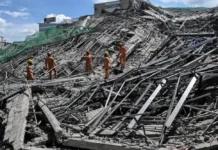
Strikes have hit railway lines, highway bridges and transport corridors in cities including Tehran, Karaj, Kashan and areas near Qom. According to AFP, at least two bridges and sections of railway infrastructure were damaged, while a key highway linking northern regions to the capital was rendered unusable.
Explosions were also reported at Kharg Island, Iran’s principal oil export terminal, as well as at petrochemical facilities linked to the South Pars gas field. Power outages were recorded in parts of Karaj and surrounding areas after transmission lines and substations were struck.
Israeli Prime Minister Benjamin Netanyahu confirmed that Israeli aircraft targeted bridges and railways, claiming they were being used for military logistics. Iranian media, however, report civilian casualties and disruption to essential services.
The conflict, which began on February 28 with US and Israeli strikes, has already caused widespread casualties across the Middle East. According to compiled data cited by Reuters and AFP, more than 4000 people have been killed across the Middle East, including 1400 in Lebanon, 23 in Israel, 13 US soldiers and two in Saudi Arabia. Al Jazeera’s lie tracker puts the death toll at 1497 in Lebanon, 4 in Palestine, 26 in Israel, 29 in Jordon, 7 in Kuwait, 109 in Iraq, 3 each in Oman and Bahrain, 16 in Qatar, 12 in the UAE, 2 in Saudi Arabia, and 2076 in Iran.
Airstrikes have hit residential neighbourhoods, schools and medical facilities, with Iranian state media reporting dozens killed in individual strikes, including an attack in Alborz province that left at least 18 dead.
Beyond Iran, casualties have been reported in Lebanon, Israel, Iraq and Gulf states, reflecting the widening geographic scope of the conflict.
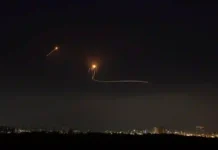
Iran has responded with missile and drone attacks across the region. Reuters reports that Iranian forces struck Saudi Arabia’s industrial hub in Jubail, targeting petrochemical facilities linked to global energy firms.
The Islamic Revolutionary Guard Corps stated that such strikes were in retaliation for attacks on Iran’s energy infrastructure and warned that further escalation could deprive the region of oil and gas supplies for years.
Iran has also targeted shipping and effectively blocked the Strait of Hormuz, a critical global energy chokepoint, causing oil prices to surge sharply in international markets.
Iranian officials have warned that any US escalation would be met with broader attacks across the Gulf, including on infrastructure in allied states. Iran has responded with missile and drone strikes across the region, targeting US assets and allied infrastructure. According to Reuters, Iranian strikes have hit Saudi Arabia’s petrochemical facilities, signalling a widening conflict footprint.
The Islamic Revolutionary Guard Corps has warned that further escalation could disrupt oil and gas supplies across the region for years.
Trump’s explicit threats to target civilian infrastructure have triggered strong international reactions. Legal experts cited by Reuters and Al Jazeera warn that such actions could constitute war crimes under international humanitarian law.
António Guterres has cautioned that attacks on civilian infrastructure are prohibited under international law, while European leaders have warned that such escalation risks pushing the region into a wider war.
Within the United States, opposition leaders have condemned the rhetoric. Senate Minority Leader Chuck Schumer and House Minority Leader Hakeem Jeffries have called for urgent Congressional intervention, while Congresswoman Rashida Tlaib has advocated invoking constitutional provisions to remove the president from office.
Despite the escalating conflict, diplomatic efforts continue. Reuters reports that Pakistan has been acting as a key intermediary, with backchannel communications ongoing between Washington and Tehran.
However, Iran has rejected proposals for a temporary ceasefire, insisting on a permanent end to hostilities, lifting of sanctions, and compensation for damage caused by strikes.
Mediators from multiple countries are attempting to broker a last-minute agreement, but officials describe the situation as being at a “critical, sensitive stage,” with little sign of immediate compromise.
The crisis has already sent shockwaves through global markets. The closure of the Strait of Hormuz, through which roughly one-fifth of global oil supply passes, has driven oil prices sharply higher and raised fears of prolonged disruption to energy supplies.
Analysts warn that further escalation, particularly targeting energy infrastructure across the Gulf, could trigger a sustained global economic shock.
Against this backdrop, India’s advisory highlights growing concern over the safety of its citizens in Iran. With military operations intensifying, infrastructure under attack, and rhetoric reaching unprecedented levels, the situation remains volatile and unpredictable.