SRINAGAR: Despite decades of advocacy and progress, women’s political leadership is not only stagnating but sliding backwards, according to a new report from UN Women, released on June 12. The Women Political Leaders 2025 publication reveals a troubling global regression in gender representation in executive political positions — a retreat from the fragile gains of recent years, according to UN Women.
As of mid-2025, only 27 countries are led by a woman as Head of State or Government. While that marks a slight increase from 21 countries five years ago, a stark reality remains: 103 countries worldwide have never seen a woman reach their highest executive office. The global proportion of women in ministerial leadership has also fallen, with women now holding just 22.9 per cent of cabinet-level ministerial posts, down from 23.3 per cent in 2024, representing the first recorded decline.
“The world is witnessing the erosion of women’s political leadership at the very moment we need inclusive decision-making the most,” said Sima Bahous, Executive Director of UN Women. “When women are excluded from the highest levels of leadership, we all lose.”
Another worrying trend is the shrinking number of governments with gender-balanced cabinets. In 2024, 15 countries had parity cabinets (with at least 50 per cent female ministers); in 2025, only nine remained. Meanwhile, the number of countries with no women ministers at all has risen to nine.
Regional disparities also reveal the extent of the imbalance. Europe and Northern America (31.4 per cent) and Latin America and the Caribbean (30.4 per cent) have relatively higher representation, while Central and Southern Asia lags significantly, with women accounting for just 9 per cent of ministerial positions.
The report underscores how deep-rooted gender norms continue to shape the kinds of portfolios women are assigned. Men still dominate the most influential ministries — 87 per cent hold defence, 84 per cent oversee finance, and 82 per cent lead foreign affairs. Women, by contrast, are overwhelmingly concentrated in ministries focused on gender equality (87 per cent) and family or children’s affairs (71 per cent).
Compounding this trend is a drop in the number of gender equality ministries globally. From 80 in 2020, the number has declined to 74 in 2025.
UN Women’s analysis also highlights a broader climate of backlash against women’s rights. Political violence — online and offline — continues to act as a powerful deterrent for women aspiring to leadership roles. Female politicians increasingly face threats, harassment and targeted abuse, eroding the safety and dignity of women in public office and pushing many out of political life entirely.
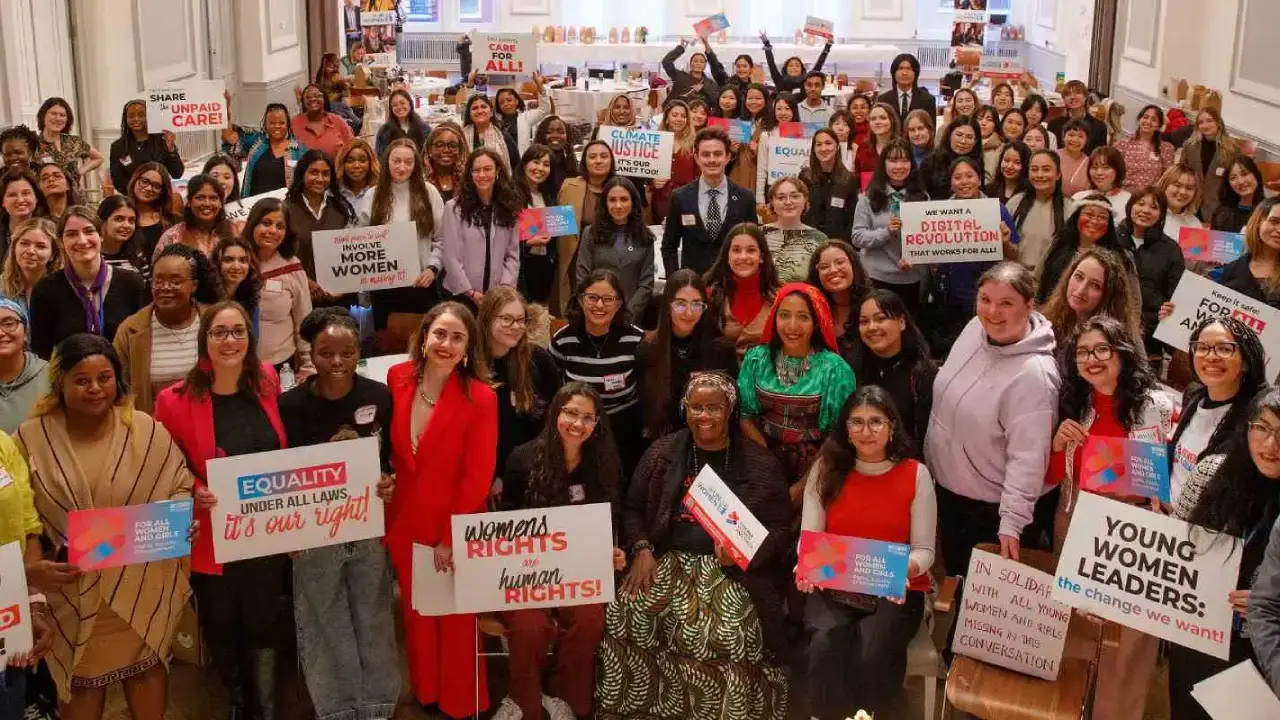
UN Women is urging governments to recommit to gender equality in leadership by using affirmative measures like executive appointments, political quotas and robust protections against violence.
“Women’s full, equal, and meaningful participation in decision-making is not only a matter of justice – it is essential to fulfilling the promises of the Beijing Platform for Action and the Sustainable Development Goals,” Bahous said. “It is time to turn commitments into concrete action.”
The report concludes that without decisive intervention, the setbacks of 2025 could threaten a generation of hard-won progress in women’s political participation.