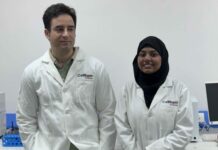
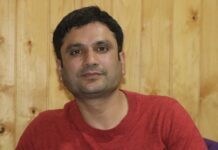
Apart from demonstrating the evidence of how a diseased lung cell seeks help physically by developing tunnelling nano-tubes from a healthier one, Dr Tanveer Ahmad has experimented with various facets of genetics in the last decade. Now heading a laboratory at the Jamia Millia Delhi, he has spearheaded the process of creating a saliva-based biomarker that can detect a series of diseases including influenza, Covid19, TB, cancer and many other things. The project he is working on seems to be a sci-fi plot. He is working on a tool that can use light to erase the memory or create a false one and this procedure can be of great help to manage PTSD, and various other mental issues, the Kashmir scientist tells Masood Hussain
KASHMIR LIFE (KL): What was the tool that you devised for self-examination for Covid19?
DR TANVEER AHMAD (DTA): At the peak of Covid19, the way people were tested included nasopharyngeal and oropharyngeal swabs. This is generally a slightly invasive procedure. When I started my laboratory at Jamia Millia Islamia in 2017, the research for saliva-based biomarkers had already started for oral cancer, lung diseases and many others. In Covid19, the causative agent SARS-CoV-2 is a respiratory virus and is most prevalent in the mouth and nasal passage, and thus can also be detected in saliva and sputum.
We took samples from Safdarjung hospital, Delhi in collaboration with Dr Rohit. We used a new method other than the conventional RT-PCR. This method was first used by Dr Feng Zhang at the Massachusetts Institute of Technology (MIT) in 2017. We further modified this CRISPR-Cas13 genome editing tool and utilizing that and we were able to detect SARS-CoV-2 in saliva with high sensitivity and specificity with our in-house RNA extraction-free approach. The test results showed much better sensitivity than any other conventional method.
While devising this biomarker, we made some innovative modifications to Feng Zhang’s method.
KL: What was the response of the market to this tool?
DTA: We got a very good response to our testing system. We were also able to extend it to certain companies, who showed interest in our technology. Considering that we can detect other respiratory viruses including influenza and apply it to detect other diseases like early detection of cancer, we are working in these domains before transferring the technology.
Our laboratory is also working on the detection of multi-drug resistant tuberculosis strains and we have good outcomes. Soon, we can detect it in saliva using the same technology.
I am very hopeful in this regard. The United States and Singapore have already approved it. India is also revising it through ICMR and in good time they will surely approve the saliva-based testing not just for Covid19 but simultaneously for other diseases as well.
KL: How was your learning curve and your journey from Kashmir to Jamia Millia?
DTA: It was just a commoner’s journey. My parents wanted me to become a doctor, and others expected me to be an engineer. But I was scared of blood. So, I realized that maybe it is not my field to work in. Since my school days, I was always interested in innovations and used to make new things to help us in common day-to-day work which could amaze my friends.
So it all started, when I first did my BSc from Amar Singh College, Srinagar. Then I completed my MSc in Biochemistry from the University of Kashmir, and qualified CSIR (Council of Scientific and Industrial Research) NET exam and subsequently was awarded Junior Research Fellowship at TATA Trust. Based on this, I was selected for my PhD at CSIR-IGIB (Institute of Genomics and Integrative Biology). My mentor, Dr Anurag Agrawal, is an exemplary scientist with a background in medicine and research, and a strong work ethic. It was really a privilege working with him.
Completing my PhD in four years, I moved to Rochester Medical Centre, New York, for my postdoctoral research and spent approximately one and a half years there. I did my second post-doctorate at the NIH (National Institute of Health), Washington DC for four more years. While working as a postdoc, I got an employment offer from Jamia Millia and joined as an assistant professor.
My PhD was a happy journey for me with a steep learning curve. It was really a privilege being in a great lab, having the right people to guide me, and having a good working environment. The main focus of my PhD was on respiratory diseases only – asthma or COPD (Chronic Obstructive Pulmonary Disease). But my research inclination developed towards genome engineering and genetic editing during this time.
I published several articles relating to it in my PhD. One of the most prominent among them showed effective treatment of lung diseases using genetically engineered mesenchymal stem cells. We isolated these stem cells from bone marrow and then processed them by gene editing. We made these cells more efficient to fight the disease through the editing procedure and then introduced them into in-vitro cell culture and in animals also. These engineered mesenchymal cells showed a lot of promising therapeutic effects for the treatment of respiratory diseases particularly inflammation in the lungs.
The most interesting observation in this was our use of a co-culture system, wherein the modulated and thus-energized mesenchymal stem cells are cultured together with the diseased cell obtained from lung diseases. We found that the diseased cell generated a very thin tube that is visible only under the microscope (scientifically known as a tunnelling nanotube) to connect to the healthy energized cell to reach out for aid. Essential elements known as the mitochondria are transferred from the modified and energized stem cells to the diseased cell through these tubes, which in turn, help to regenerate the diseased cells.
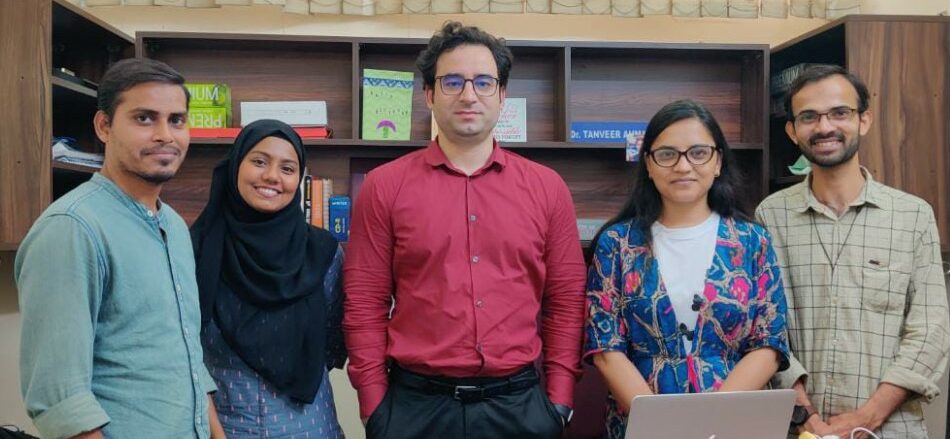
KL: Was the tunnelling nanotube seen for the first time?
DTA: Yes, this was the first one ever in medical sciences where we showed the molecular basis of how diseased lung cells can receive healthy mitochondria from energized and robust stem cells in order to get energy and eventually get better in respiratory regard. This was so far the most important innovation in my scientific career, along with the help of my guide and mentor Dr Anurag Agarwal.
KL: What was your postdoc all about?
DTA: During my postdoc in Rochester, more or less I continued to work on genetic engineering and lung biology. When I moved to NIH, I developed a keen interest in the use of neurobiological tools to diagnose and treat neurodegenerative and neuropsychiatric diseases. There, we developed an optogenetic tool to track how a particular protein involved in neurodegenerative diseases behaves inside the cell. This work was completed in my lab at Jamia Millia after I left the US. My major focus was on using genetic engineering methods in order to diagnose and treat neurodegenerative diseases.
KL: Enlighten us about your most recent study.
DTA: The most recent study is where we developed an optogenetic reporter molecule, together with my postdoctoral lab at the NIH, USA. Optogenetic methods refer to modulating genes through the form of optic light. Using this tool, we observed the protein NRG-3 (neuregulin), which is often found to be mutated in patients suffering from schizophrenia, bipolar disorder, Alzheimer’s disease and dementia.
When I was working at NIH, I published a study in the Journal of Neuroscience along with one of my colleagues, Detlef Vullhorst who is a staff scientist. Here, we elaborated on the mutation and changes in the Neuregulin molecule that can lead to behavioural changes. After that, when we introduced the optogenetic tool, the motive was to check this at the level of a single molecule and identify the region of the brain that gets affected. Once one is able to know these two things, then the therapy and diagnosis become easier.
So, basically, our rational effort to make this tool was to precisely track a particular molecule and see what types of changes occur in brain cells and how it may affect the behaviour of those affected with neurodegenerative or neuropsychiatric diseases. Without the optogenetic technique, it was almost impossible to figure out such things and study the brain so acutely.
MRI or other scanning methods are used for the interrogation of brain maladies but still, it cannot be used to interpret brain ailments such as depression or schizophrenia in-depth at the molecular level without an optogenetic method.
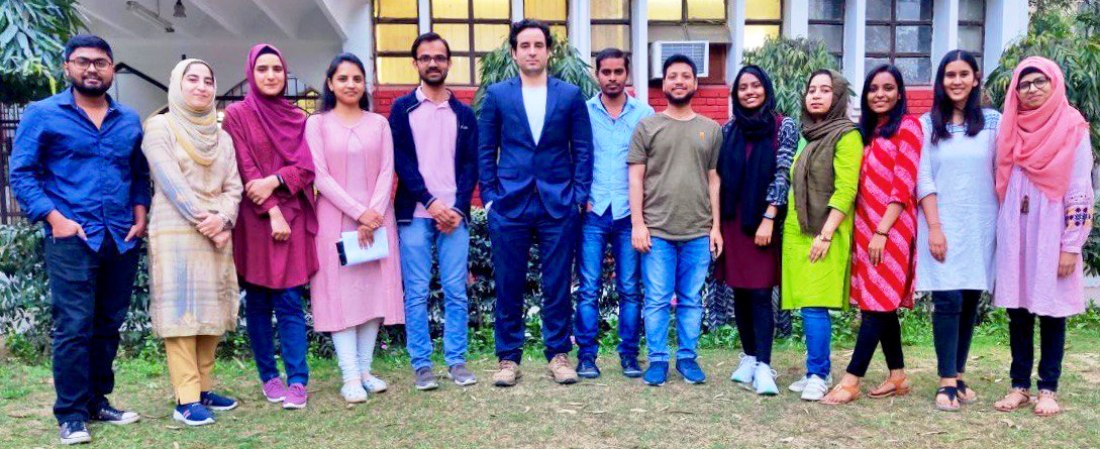
KL: How do you secure the molecular trail?
DTA: Molecular modification or engineering has not yet been used or practised on humans. This model, as such, has been tried on animals only, so far.
KL: How much time are you expecting the tool will take in standardizing?
DTA: The study took almost six years but meanwhile we were also keeping other experiments in sync and trying to conjugate the molecule with adeno-associated viruses (AAV) and lipid nanoparticles (LNP) to develop treatments for brain disorders. So, we are expecting that the tool should see the day of light in another two years.
KL: Keeping in view of the variants of Covid19, what are the other alternatives if the vaccine fails in offering some sort of immunity?
DTA: While I was working with some of my collaborators in Jamia Millia Islamia on Covid19, this thought did cross our minds. My core expertise was genetic engineering but I also have a lot of experience in molecular immunology. So, when we were making the diagnostic kit, we were also working on the therapeutic aspect of Covid19. There are reports that vaccines designed for wild variants may not be equally efficient for other variants. There are also chances of a more potent virus emerging wherein the available vaccines may fail to offer any proton.
Usually, the design and manufacture of new vaccines, especially for novel viruses take a lot of time. So, we wanted to design a treatment for viral diseases using mesenchymal stem cells. So, my team at Jamia genetically edited the mesenchymal stem cells through IMAT (Intercellular mitochondrial transfer stem cells). These IMAT-MSCs are basically a universal stem cell-based treatment and can be used for respiratory as well as other diseases. We found these stem cells to work and fight against any Covid19 variant.
These mesenchymal stem cells have the unique property of moderating and reducing the cytokine release syndrome, which triggers death in Covid19. We also observed that these engineered MSCs reduce inflammation and help the diseased cells overcome the infection irrespective of a particular variant.
MSCs are available all around the world for clinical trials apart from our engineered ones. Also, FDA (Food and Drug Administration), USA has approved the mesenchymal stem cell treatment for Covid19 and other diseases, which is very good news for us as it means that MSCs have been tested for their safety profile in humans, and found to be compatible for human administration. Similarly, there are companies in India that are developing MSC-based therapies for diseases such as arthritis.
KL: So stem cell transplant is all right in Covid19 patients?
DTA: In medical terms, there are two types of stem cell transplant, called autologous and allogeneic stem cell transplantation. Autologous refers to transplant when cells are taken from the patient and modulated, then re-administered back into the patient. This therapy is most successful for blood cancer. In the allogeneic approach, the stem cells from another individual can be used for modification and administered to the patient. They are not rejected by the patient’s immune system, so they work well in their body. So, this is the reason that these mesenchymal stem cells can be used for universal stem cell-based treatment.
KL: What are you up to right now?
DTA: I am working on some interesting projects like memory formation using the optogenetic tool. My current focus is to study the mechanism of memory formation. So, utilizing the optogenetic tool, we have found in a model organism that we can rewrite memory or create a false memory. Or if there are any depressive memories in model organisms, we can eliminate them with the help of an optogenetic tool, which may aid in the treatment of post-traumatic stress disorder (PTSD).
It works differently in humans. Deep brain stimulation is given to people to overcome depressive thoughts and trauma and get relief. But as far as our strategy is concerned, it is an advanced version of the stimulation. We can precisely identify the spot and neurons or cells that have connections, which triggers depression or other mental disorders. Then we can activate the light on these neurons to delete or eliminate the memory. This concept has also been featured in some science fiction movies, but it has now become a reality. To be completely implemented in humans, it may take a decade or more. So, along with memory formation, we are also focusing on psychotic and neuro-psychotic disorders and how we can treat them with the optogenetic tool.
KL: Do not you think this technology that will fiddle with memory might trigger ethical issues?
DTA: It has always been an interesting debate in the scientific community. As far as Crispr babies or designer babies are concerned, we have a second project on Crispr diagnostic and therapeutic. In 2018, a Chinese scientist did this experiment where he performed in vitro fertilization and edited a gene CR5, which is known to be involved in HIV. So, people who do not have this gene present in their body and do not have this mutation, cannot contract HIV naturally. The gene was edited by a revolutionary technique called Crispr-Cas, for which Jennifer Doudna and Emily Sharpe won a Nobel Prize in 2020. This technique was discovered in 2012 by them.
In the case of the Chinese experiment, the ‘designer’ baby (now known as Crispr baby) was born without any problems but since proper ethical permission for the procedure wasn’t taken, the scientist was put behind bars in China. That is why ethical clearances should be taken responsibly and seriously, whether experimenting on animals, organisms, or cells.
The whole scientific community is aware of ethical practices and that all scientific discoveries are meant to abate the level of suffering and not go against nature. As far as optogenetics is concerned, the tool will only be handed over to those with regulatory approvals.
Talking about genetically modified foods that we consume and for cancer treatment, people use gene-edited cells, which also have ethical clearances for the purpose to diminish the problems. The whole idea and the purpose of the optogenetic tool in our study is to remove the depressive memories from the people and the trauma they have, which can’t be cured effectively using medicines. That’s why we are hopeful that such approaches using optogenetics for the treatment of neuro-psychic disorders will get regulatory approvals eventually.
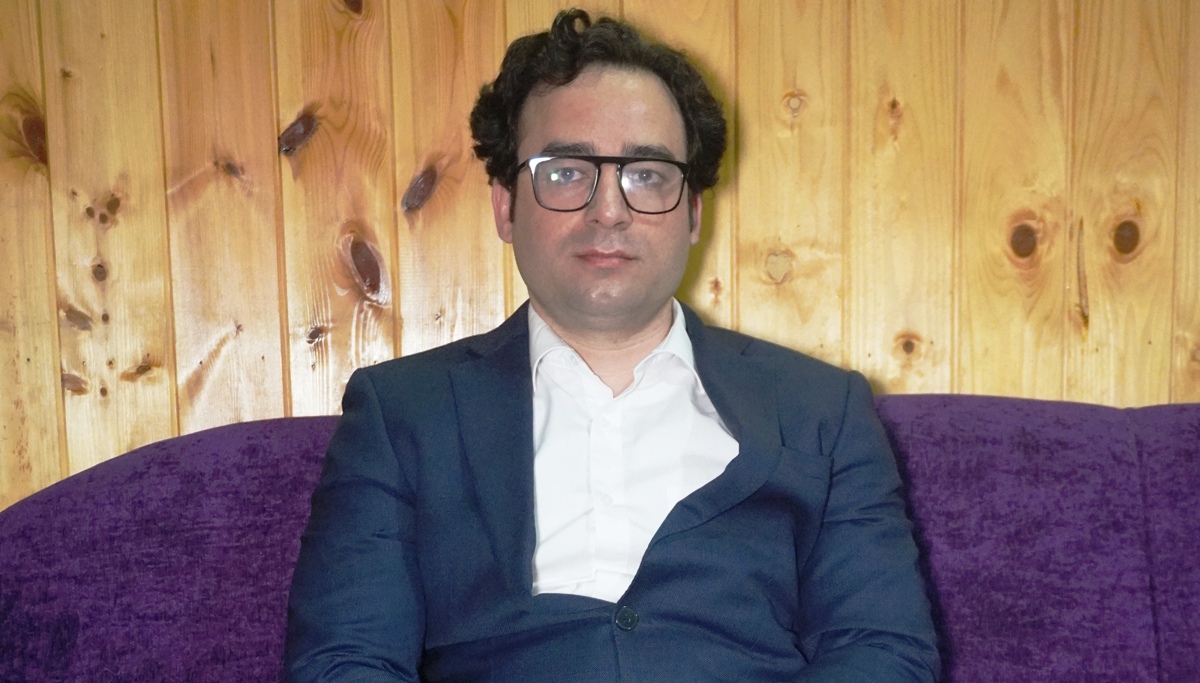
KL: Do you have any regrets now as far as your career choice goes?
DTA: Not at all. Instead, I feel privileged. I was the happiest person to not qualify for my first entrance as I had no interest in being a doctor and would have never been a good one. One thing that I learned from my PhD mentor Dr Anurag Agarwal, who was the MBBS topper from AIIMS, Delhi, was that he had also suffered from nervousness and tremors when he carried the surgical instruments in his hands. So, it felt good that I didn’t opt for medicine as I would have not been successful in that field in which I was not comfortable in. There may be expectations from others but I guess when one is passionate about something, one should strive for excellence in that field.
Sometimes, it is difficult for some students to decide on their own but people who understand their thoughts, eventually make a difference in the end. Particularly what is lacking in Kashmir is that parents often force their kids to adapt to what they dislike. Kids should get a bit of exposure, let them explore their interests, so they may understand their world vision, follow their passion and make the choices best suited to them.
Umaima Reshi processed this interview