A boy from a landless shepherd community in a Banihal mountain village, where only four of 53 classmates passed Class 10, is now reshaping how the world understands Himalayan disaster risk, reports Humaira Nabi
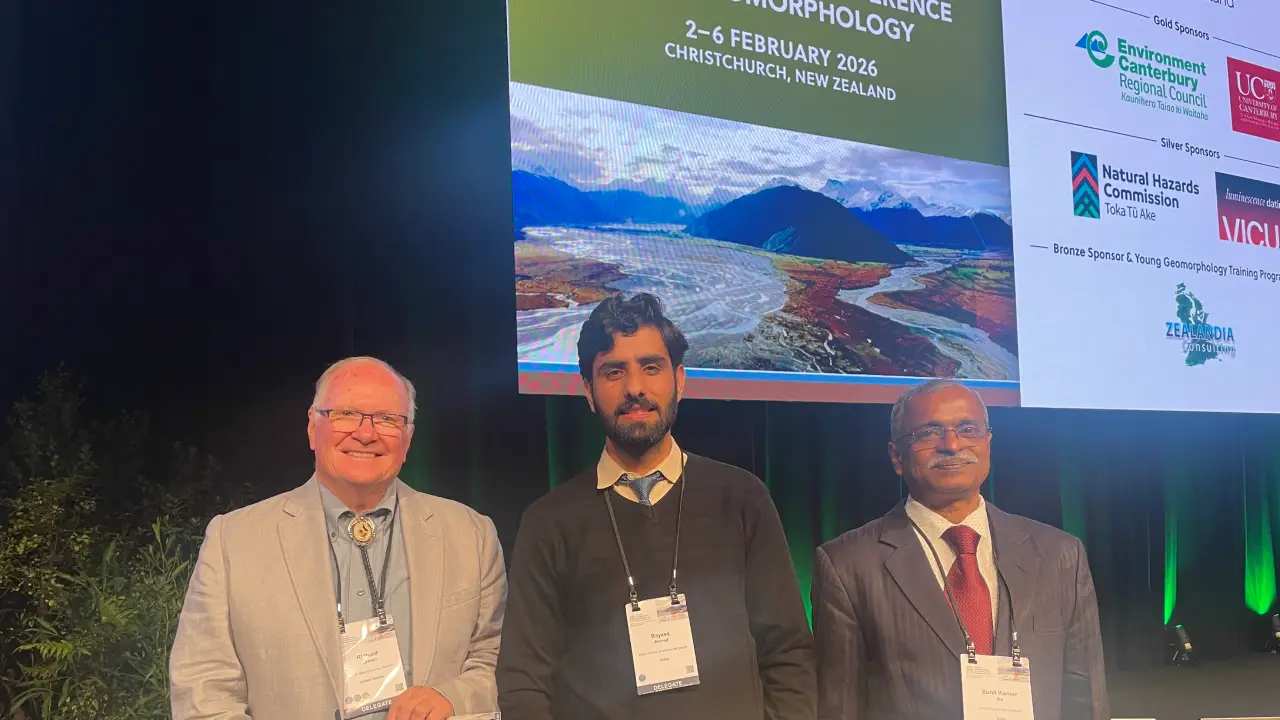
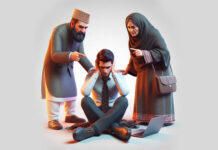
The silence was the punishment. When Rayees Ahmed dropped out of school after Class 12 and came home with his first earnings as a labourer, his mother did not shout. She had never attended school. She did not plead. She simply stopped speaking to him.
In Navgam, a mountain village in Banihal where the road to education runs uphill against geography and poverty both, this was not a small thing. The Ahmed household fell quiet in a way that pressed down on everything. There were no arguments, no negotiations, no appeals to ambition. Just a mother’s wordless refusal to accept her son’s surrender.
Finally, he broke first. He went back to school. He appeared for his Class 12 examination without preparation. He was among the few who passed that year.
That act of silence, a mother’s grammar of resistance, set in motion a journey that would eventually carry Rayees from a government school with no books and no infrastructure to the editorial boards of journals like Springer Nature and Frontiers in Water. With fellowships in the United Kingdom and Japan, he is now holding a postdoctoral position at the University of Bonn under Germany’s prestigious Alexander von Humboldt Foundation.
He is thirty-something, a glaciologist. He studies the very terrain that once stood between his village and the world. When he talks about climate change, natural hazards and disaster risk, he knows what it means.
A Community the Land Forgot
To understand what Rayees Ahmed’s trajectory means, it helps to understand where he comes from, not just geographically, but socially.
The Chopans have been a semi-nomadic pastoral community, traditionally landless, who grazed the flocks that other families owned. They moved with the seasons, following their herds across mountain pastures, owning little, accumulating less. In the hierarchies of rural Kashmir, they occupied a position close to the bottom. Education was not something the community had historically accessed. Stability was not something it had historically possessed.
With people too busy with apple orchards and other cash crops, they have done away with herding sheep. This has pushed the community to find alternatives outside the meadows.
Rayees’s father worked as a daily wage labourer in Jammu and Kashmir Government’s forest department, physically demanding, unstable work that rarely guaranteed a steady income. There were days the family could not afford books or a school uniform. In such circumstances, education was less an aspiration than a gamble against immediate survival, and the odds were rarely favourable.
Of the 53 students in Rayees’s Class 10 cohort in Navgam, only four passed. His own scores were modest, 248 out of 500 in Class 10, 300 in Class 12. He does not present these numbers with embarrassment or as a contrast to what came later. He presents them as facts, the way a scientist might present baseline data before describing what changed.
“I always tried to improve,” he said on a long-distance phone call, with a deliberate understatement that runs through his account of those years. “I have lived in utter poverty, where I had no uniform, no books.”
The City That Rewired Him
The turning point arrived not as a scholarship or a prize, but as a shift in environment. When Rayees left Kashmir for Jamia Millia Islamia in Delhi to pursue a master’s degree in Geography, something recalibrated.
He had entered a space where futures were debated rather than doubted. The contrast was sharp enough to clarify his own direction. In his third semester, he cleared both the National Eligibility Test and the State Eligibility Test, the twin competitive national-level examinations that opened the pathway into research. Until then, he had been weighing the civil services, the familiar aspiration of families seeking stability, respectability, and the assurance of a government salary. His family encouraged it.
But exposure to academic life in Delhi, combined with his first fieldwork in glaciology and climate-related hazards, quietly redirected him. And for someone from the Chopan community, a group whose traditional life of seasonal migration was already being disrupted by changing weather patterns, shrinking water sources, and intensifying disasters, the shift was not abstract. It was personal.
“When I started working in the field,” he recalled, “I realised this work has direct implications for the people I have grown up with. I knew that this is what I am going to work on for the rest of my life.”
Five Years on the Glacier
Rayees returned to Kashmir to pursue a PhD at the University of Kashmir, funded by the Maulana Azad National Fellowship from the University Grants Commission, an award given in recognition of academic merit. For five years, under the guidance of Professor Parvez Ahmed and with co-supervision from the National Institute of Hydrology, he immersed himself in the glacial systems of the Himalayan region.
The work took him far beyond his home university. He trained and collaborated with some of India’s most prestigious institutions: IIT Roorkee, IIT Delhi, the Indian Institute of Science. He built an international network that reached across Europe and the United Kingdom.
“I met researchers whose work I had only read and cited,” he admitted. “That was a big moment.”
He speaks candidly, without bitterness, about the infrastructure limitations of his home university. But he found that mentorship could bridge gaps that funding could not. His supervisor supported him, as he put it, “academically, financially, emotionally.” It is a debt he carries not as a burden but as an obligation to the next researcher from a village that does not expect much.
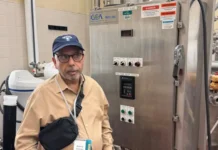
Dr Rayees Ahmed is today a leading researcher in Climate Change, Natural Hazards, and Disaster Risk. He is a Visiting Research Fellow at the University of Leeds under the International Strategy Fund. He has published over 45 articles and serves on the editorial boards of Springer and Frontiers in Water. He is currently moving to the University of Bonn to continue his work on glacier systems under the Alexander von Humboldt Fellowship, one of the most competitive research fellowships globally.
When a Glacier Falls
His most recent research, published in Communications Earth and Environment, examines a risk that is growing faster than the systems designed to manage it.
Rising temperatures are destabilising glaciers and Steep Mountain slopes across the Himalaya, increasing the likelihood of ice-rock avalanches that can trigger catastrophic flooding into river valleys below. In February 2021, a glacier collapse in Chamoli sent ice and debris surging down the Rishiganga and Dhauliganga rivers, destroying two Uttarakhand hydropower projects and killing more than 200 people. The disaster unfolded in minutes. There was no warning system. There was no time.
Rayees and his co-authors draw a deliberate contrast with a 2025 event in Blatten, where a comparable risk was identified in advance. Monitoring systems detected slope instability. Authorities ordered evacuations. The hazard occurred, but fatalities were minimal. The science underpinning both events was similar. The difference lies in preparedness: monitoring infrastructure, early warning protocols, and coordination between researchers, authorities, and local communities that allows risk assessments to translate into action before catastrophe, not after.
The conclusion he draws is not that such disasters are inevitable. He argues that they are preventable, and that decisions around investment in monitoring and response systems are political choices as much as technical ones. Communities most exposed to glacial hazards in the Himalaya are often precisely those communities excluded from the decision-making processes that shape these systems. His own community, the Chopans, whose seasonal movements have tracked these glaciers for generations, are among them.
The Fellowships
Rayees was awarded the Alexander von Humboldt Fellowship. His proposal for the Marie Curie Fellowship was not funded due to budget constraints, but scored highly in evaluation, a fact that speaks to the quality of his work within a brutally competitive field. He also received a research fellowship in Japan.
He describes these developments without emphasis on personal triumph. Instead, he returns, again and again, to the question of access, what becomes possible when opportunity is available, and what is quietly lost when it is not.
“I never imagined I would reach this level,” he said, asserting on every single word. “At one point, I did not think I would be able to pursue higher education. All this seems like a dream sometimes.”
The mother who once went silent until her son came back to school has lived to see him become a glaciologist published by Springer Nature, awarded by the Alexander von Humboldt Foundation, studying the mountains above the valley where he grew up.
She never attended a single day of school herself. She understood, in a way that required no classroom, that surrender was not an option.
“At the end of the day,” Rayees said, “the purpose of research is to contribute to society. That is what drives me.”
In Navgam, where only four of 53 children once passed their Class 10 exams, a boy who started as a labourer is now telling the world how mountains fall, and how, with enough warning, we might get out of the way in time.