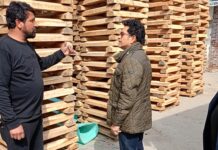
From a Kashmiri village, Dr Shakeel-ur-Rehman travelled to Gujarat, Ireland and then to a leading American university. When Texas cattle farmers sought his help to modernise their dairy sector, he offered them patented technologies and helped build a company now nearing a turnover of US$5 billion. Today, the Kashmiri scientist is the Chief Scientist of this Coca-Cola enterprise. Umaima Reshi met the man whose work has transformed the science behind one of nature’s most remarkable beverages.
On a still winter morning, when the cold breeze stung the tip of his nose, a young boy in Sopore’s Hardushiva village watches his grandmother lower a wooden churn into a clay pot. The steady rhythm of swirling milk, the rise of warm steam, and the nutty aroma of freshly churned butter shaped the earliest sensory world of Dr Shakeel-ur-Rehman, the village boy who would one day help redefine how America consumes milk.
More than half a century later, Shakeel, now 58, stands among the most influential figures in global food science. As the Chief Science Officer and co-founder of Fairlife LLC, a Coca–Cola–owned powerhouse, he has helped the company grow into America’s top-selling milk brand, with revenues approaching a billion dollars. His name, now synonymous with innovation in modern dairy science, reflects not just a remarkable professional journey but a profound personal transformation, from a Kashmiri village boy to a key architect of modern dairy innovation in the United States.
Dr Shakeel is perhaps the first Kashmiri scientist whose patents exceed 100. All his technologies patented within and outside the USA are about and to milk.
A Life Sketch
Born in 1964, Shakeel’s initial experience of life was a picturesque Kashmir countryside still dependent on the cycles of cattle, free-ranging goats, cows in wooden sheds, and quiet pasturages supplying both human and animal needs. Milk was not a product but a common right. The villagers seldom sold it.
“We practised a barter system,” Shakeel remembers. “We gave milk to neighbours, and the neighbours gave us something else in return.”
His grandmother, like other Kashmiri ladies, would churn butter during winters, bringing warmth of the buttermilk and the earthy smell of tradition to the household. Those were the days when cows and milk were an enormous source of economic prosperity at the family level. “Roub Ka Shurk Ada Kar Bhai,” a poem in the primary school text would go, “Jis Nay Hamari Gai Baniyee.” (Thank God, bro, who created our cow). Written by Ismail Merathi (1844-1917), the poem dwelt was the poetic narrative of the importance of the cow in the family that was a source of butter, milk and many other things besides giving families the oxen that would help in ploughing the rice fields.
It was much later, when he was pursuing his academic career, that he became aware of the nutritional worth of the home-made butter made during the winter months. “I came to know that the very buttermilk which I grew up on was rich in protein that is very good for brain development,” he said. That realisation, he claims, was the starting point of his lifelong fascination with the science of dairy.
His years of schooling were shaped by the same conditions in those times. He recalled that he had to walk for miles along the Jhelum River to get to school because there was no better transport, and if there was, it was not affordable for people. There were quite a few buses, and the horse-driven tonga was the most popular transport system. Then, most schools at that time did not have proper buildings. “When I tell these things in the US, people have a hard time believing me,” he said.
Nonetheless, he managed to get through the examinations brilliantly, passing Class 12 with good grades. His parents, like most of the Kashmiri parents of that time, wished him to be a medical doctor. However, destiny had different plans.
Eventful Redirection
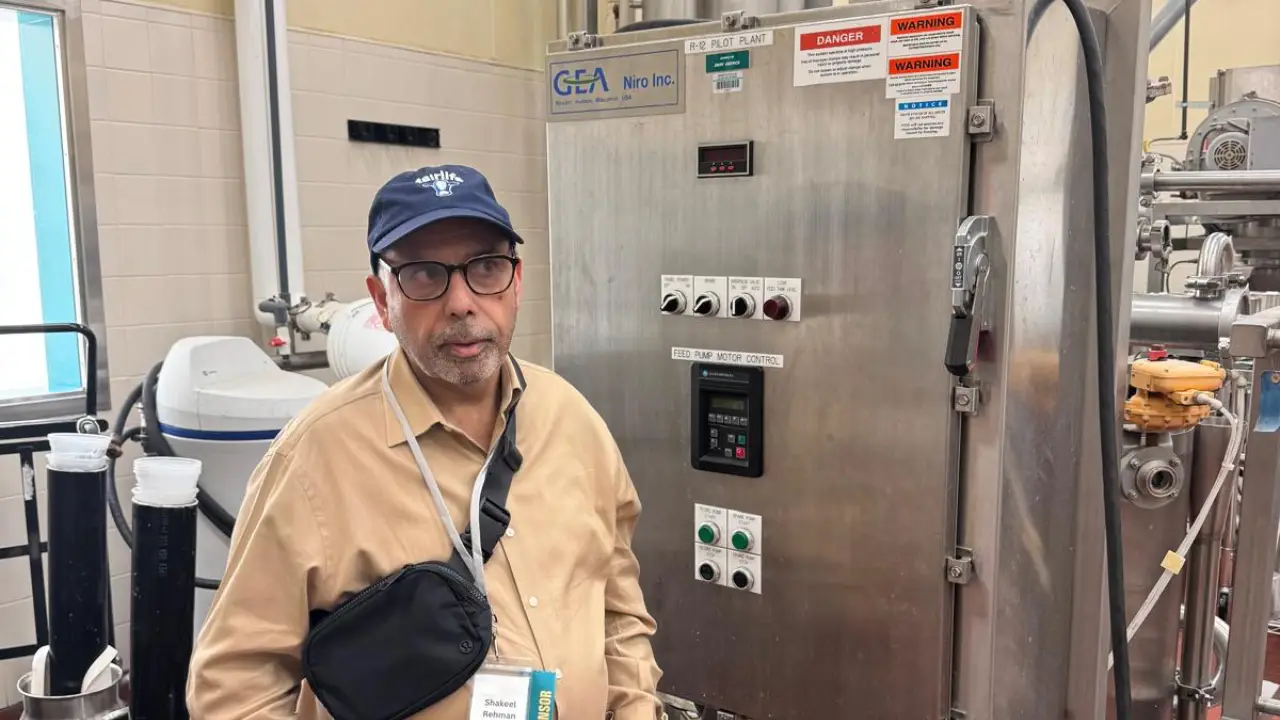
Not being able to land in a medical school was a disappointment, but not a loss. He enrolled in Pharmacy at the University of Kashmir, yet quickly realised he needed a more structured and competitive academic environment. So, when a government nomination arrived for a professional course in Gujarat, he accepted it without hesitation. It was a decision that changed the course of his life.
Shakeel moved into dairy and food processing, a field that was almost unheard of in Kashmir at the time. Back home, milk was milk and not an industry. The most important was the milk-seller, Doudh-e-Gour, who would get his supplies from the farmers and sell them. The college he was enrolled in was affiliated with Amul, the major dairy brand in India. It was the first time he came to know about industrial-scale dairy processing, its scientific aspect, its possibilities, and its power to change the world.
“Gujarat was an eye-opener for me. I found myself in Anand, the Milk Capital of India. The achievements of Anand Milk Union Limited (Amul) in dairy processing made me realise how well-organised the system could be in the case of dairy processing.”
With his undergraduate degree in hand, Shakeel secured a position with Kashmir’s milk supply scheme and soon after entered government service. His academic momentum continued when he cleared what he describes as “one of the most difficult examinations” of his life, earning a prestigious fellowship from the Indian Council of Agricultural Research (ICAR).
Working with Kurien
That achievement opened the door to a role at the National Cooperative Dairy Federation of India, where he had the rare opportunity to work closely with Dr Verghese Kurien, the architect of India’s White Revolution. Considered to be the father of dairy in India, Kurien created a model in Gujarat that is now being copied elsewhere, Jammu and Kashmir not excluded.
“He shaped the way I thought,” Shakeel recalls. “But I soon realised I needed to learn much more.”
Still, Shakeel has Kurien’s fond memories. “I first interacted with him during my undergraduate degree in dairy technology in Anand, Gujarat, when he was the Vice Chancellor of Gujarat Agricultural University,” Shakeel remembers, asserting his speeches were “deeply inspirational,” and he himself was a model of “simplicity, dedication and integrity.”
After completing his Master’s in Dairy Technology, Shakeel joined the National Cooperative Dairy Federation of India, where Kurien served as chairman. His leadership was extraordinary, and I still remember his wise reminders about “punctuality” and “dedication”, he said. He saw how profoundly his work had touched Indians, “from distant villages to urban centres” by improving public health through accessible milk and dairy products. His love for dairy farmers was unmistakable. He transformed their lives by organising Amul-pattern dairy cooperatives across the country, enabling farmers to receive remunerative prices for their produce. Shakeel remembers Kurien often emphasising that “true development is not the development of the cow, but of the human,” and that the real measure of success in any enterprise is “not money, but the purpose of its existence.”
In Pursuit of Knowledge
His passion for dairy science continued to deepen, and it eventually led him to Ireland, where he pursued a PhD in Food Science and Technology, a move that thrust him into the world of cutting-edge research.
His PhD focused on the biochemistry of Cheddar cheese ripening, a process central to producing one of the world’s major commodity cheeses. Cheddar is typically matured for anywhere between six months and four years under carefully controlled humidity and temperature conditions to achieve its characteristic flavour and texture. However, holding cheese for such long periods is costly and poses sustainability challenges, so reducing ripening time can significantly cut both expense and energy use.
“My work involved analysing the biochemical transformations during ripening and developing methods to shorten this period without compromising quality,” Shakeel said. “I published ten research papers in leading dairy science journals, and, on the strength of this research, I was offered a position at California Polytechnic State University to assist Californian farmers in producing Cheddar with flavour profiles comparable to those traditionally made in New York and Vermont.”
Post-doctorate, his next step was California State University, where he took up a position as a research faculty. Though he had landed in a tenured academic career, life threw another opening at him.
A group of American farmers, owners of huge dairy farms with tens of thousands of cows, approached him with an unusual problem. They said the dairy industry in their area had not experienced any significant technological progress since the 1880s, when the cream separator was invented.
The cream separator, developed in the late 1870s and early 1880s, may be recalled here, had transformed dairy processing by replacing the slow and often unhygienic gravity method of extracting cream. Earlier, milk had to rest in shallow pans for nearly a full day so the lighter cream could rise and be skimmed off by hand, a system that was time-consuming, wasteful, and prone to spoilage. Many small fat globules remained in the skimmed milk, reducing yield, while the long-standing period increased the risk of souring and contamination.
Inventors such as Gustaf de Laval, who patented a continuous separator in 1878, and Edwin Houston and Elihu Thomson, who patented their version in 1881, introduced centrifugal machines that enabled instant, efficient, and far more hygienic separation. This mechanisation revolutionised the dairy industry, allowing farmers to produce more cream and butter, improve product purity, and significantly increase their income.
The farmers said they were looking to make the next generation of functional milks. The initial meeting took place in November 2002, and it focused on innovations in milk.
It pricked Shakeel’s curiosity. Milk has always remained a wonderful creation of nature. It comprises fat, proteins, lactose, minerals, vitamins, and water. By using very advanced filtration methods, Shakeel knew these components could be separated and recombined as per the requirements, and that could make extraordinarily high-nutrition milk products. He made a promise to the farmers, and quickly, he started working on the ideas.
“I immediately agreed to help them as this was matching my vision,” Shakeel said. “On March 16, 2003, I started research on the process and manufacturing of functional milks. Within six months, we were ready to commercialise the process and manufacture the products.”
Soon, they started building a factory based on his research in Dexter, New Mexico and the first commercial high-protein low sugar milk was sold under the trade name Mootoopia in Texas in September 2004.
In California, he was able to create groundbreaking methods using membrane filtration and heat-cooling technologies that allowed for the retention of the nutrition while changing the composition of the milk.
This was the fundamental research, which laid the foundation for the value-added milk that would later become Fairlife’s trademark.
Honey Milk and Mootopia
The first product the team introduced under the brand Mootopia, a low-sugar, high-protein milk, was in Texas in 2004. The product remarkably captured almost 7.5 per cent of the state’s supermarket share, which is a more than impressive accomplishment for a new dairy product.
Athlete’s Honey Milk came next in 2008, which was primarily targeting sports professionals who demanded high-protein, low-sugar recovery drinks. Some athletes and even Olympians used to endorse it without charging any fees, as it helped them hurt less and perform more.
A new company in Chicago was founded by the original owners in 2011. Their marketing genius, a former Coca-Cola executive, gave the drink a new name, called Core Power, and it soon became very popular all over the US. The demand began to overtake production at a rapid rate.
Fairlife Is Born
In 2013, the company decided to call Mootopia Fairlife LLC. At that point, their revenue was estimated at a very promising US$50 million. However, in the subsequent ten years, Fairlife’s revenue touched US$3 Bn, with forecasts of adding a billion more in 2025, thus becoming one of the fastest-growing beverage companies in contemporary American history.
Shakeel said the guiding principle that led to this rapid rise of their company and the product was very simple: “Taste, nutrition, and uncompromised quality. Trust is built by these three phenomena.”
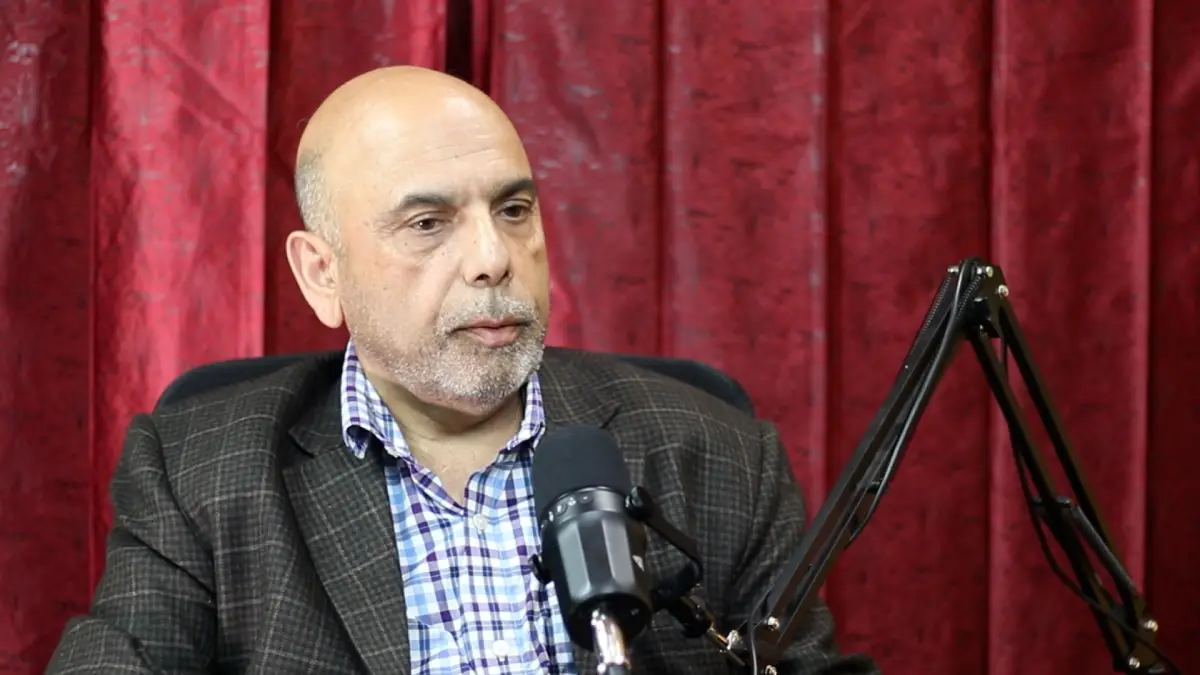
Fairlife’s ultra-filtered milk products were marketed as having 50 per cent more protein, a significant reduction in sugar, longer shelf life (up to 110 days), high retention of minerals and vitamins, and, in general, more convenience for athletes and families. Thus, one cup of Fairlife milk was capable of offering the same amount of nutrition as two regular servings, an innovation which attracted mothers, fitness enthusiasts, patients, and professionals.
The collaboration with The Coca-Cola Company in 2012 catapulted Fairlife to the largest retail chains in the USA, taking full advantage of Coca-Cola’s unmatched marketing and distribution. “Coca-Cola knew consumers better than anyone else,” remembers Shakeel. “They had the reach; we had the science and the farms.”
Fairlife is now a brand, but it is also a movement, a movement that promotes healthier and value-added milk consumption. Eventually, the farmers and Shakeel moved out of the company ownership as Coca-Cola took it over completely. He continues to be the company’s Chief Scientific Officer (CSO).
A Humble Human
Despite the scale of his achievements and the commercial success surrounding him, Shakeel remains remarkably humble. He is reluctant to describe himself as ‘successful’, preferring instead to speak about nourishment and the importance of helping people lead healthier lives. “Food is your medicine,” he says. “And medicine should be your food.”
Among the many reviews he recalls, there are letters from cancer patients who have thanked Fairlife for its products, and from mothers of diabetic children who have relied exclusively on Fairlife milk for years. “When customers tell us that our products are life-changing for them, that is the real victory for us,” he asserted.
Building a Legacy
While Fairlife continues its rapid expansion across new regions, Shakeel remains the quiet force shaping the company’s scientific vision. As of 2024, an extraordinary 33 per cent of US households purchase a Fairlife product, an achievement that cements the brand’s dominance in both value‑added dairy and the fiercely competitive ready‑to‑drink sports nutrition market.
That same year, Fairlife’s impact reached global recognition: Time Magazine named it among the World’s Best Brands of 2024, and Newsweek listed it as one of America’s most trusted brands.
The brand stretches well beyond commercial metrics, emerging as a reshaping force in America’s nutritional landscape. In 2024, the company said it removed an estimated 100 million pounds of sugar from the American diet and replaced it with 120 million pounds of added protein across its product lineup, an industry-defining shift that helped propel Fairlife past US$3 billion in retail sales for the year. The surge cemented its position as the second fastest-growing non-alcoholic beverage brand in the United States, momentum that accelerated further, making it the country’s fastest-growing beverage trademark by early 2025.
Too Many Patents
While working with milk and various technologies, Shakeel has patented a chain of technologies required in the high-end product creation, having milk as the base. He must be the first Kashmiri scientist who has so many patents to his credit for his innovations. Patents help innovators and companies.
Companies file patents to secure their freedom to operate within specific jurisdictions, using them as a shield to protect their innovations and to prevent competitors from entering the same space. A patent generally remains valid for 20 years from the date of filing.
“Our company’s portfolio centres on milk processing technologies, including advanced methods for separating milk components and compositions, along with heat-processing techniques that safeguard both the safety and nutritional quality of beverage milk,” Shakeel said. “These patents are recognised across countries that are part of the patent treaty, and we have also obtained protection in markets with strong commercial potential and well-established respect for patent law. The strength of our patent portfolio has been fundamental to our growth, and it continues to present a substantial barrier to competitors, particularly in the US market.”
The Sopore Milk
An established Kashmiri American, Shakeel, is settled better. But home is something that would never leave him alone. The long route from Srinagar to Sopore and the maze of apple orchards and rice fields are certain indelible images that Texan high life cannot replace.
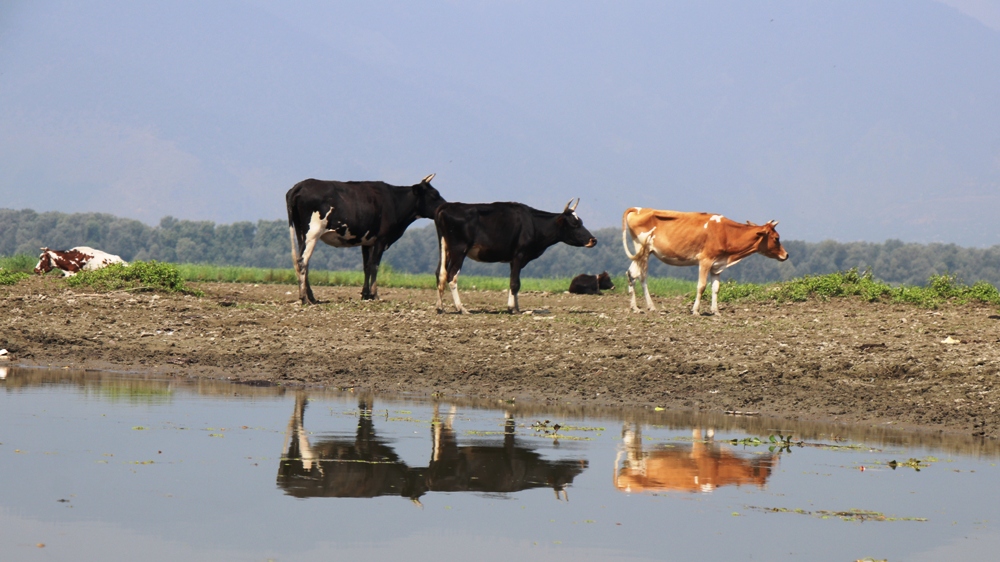
Kashmir, despite being far from him for three decades, remains his emotional anchor. He takes trips often, and this fall was the first time he was almost a month at home. This has helped him examine the highs and lows of Kashmir’s diary sector, understand the positives it has and the negatives with which it survives. He has not forgotten the milk that he used to feed on, and which lacked any separation of sugar from the proteins.
Jammu and Kashmir produces about 28.75 lakh metric tonnes of milk each year, generating an annual turnover of nearly Rs 11,500 crore. The daily per capita availability stands at 577 grams, significantly higher than the national average of 471 grams and the world average of 322 grams.
Yet, despite this strong production base, only 4 to 5 per cent of Jammu and Kashmir’s milk is processed in the organised sector, roughly 4 lakh litres a day, far below the national average of 25 per cent. JKMPCL remains the largest and only cooperative, handling about 2.25 lakh litres daily and directly linking more than 75,000 farmers, while private dairies process around 1.75 lakh litres with the involvement of 29,000 farmers through intermediaries. In contrast, cooperative systems in Gujarat process nearly 80 per cent of all milk produced, highlighting the vast untapped potential within Jammu and Kashmir’s dairy sector.
Under the Holistic Agriculture Development Programme (HADP), Jammu and Kashmir is chasing an ambitious target of reaching a production of 50.74 million tonnes by 2031-32. Two milk clusters are in the pipeline, one each in Jammu and Pulwama. It is offering Rs 4 lakh and Rs 2 lakh of working capital with a huge grant in aid to create 550 Milk SHG (Self Help Groups), Farmer Producer Organisations (FPO) and Cooperatives for establishing Automatic Milk Collection Units (AMCU).
Under the scheme, it is also offering up to Rs 20 lakh for establishing 100 Milk Value Addition startups and almost the same amount, with half as a subsidy for establishing 400 Heifer Rearing Units. Given the massive crisis in infrastructure, the government is investing massively to create 850000 LLPD (Lakh Litres Per Day) of milk collection and chilling capacity.
Officials claim that though the scheme is still underway and has barely started, the production has increased from 26 Lakh MTs to 39 Lakh MTs.
Shakeel is aware of all this. The recent visit helped him understand things better and from a very close angle. “Production of milk is very scattered in the region,” he said, “There is very little presence of modern farms. Dairy cooperatives are very few, and the infrastructure and promotion need to be uplifted.”
Though the models are around, he regrets that these have not been looked at very seriously. He believes Kashmir could see a major transformation if planners, agricultural institutions and farmer unions backed the creation of cooperative societies. “If Kashmir builds its own Amul‑type cooperatives, the impact on farmers will be nothing short of transformative,” Shakeel, who has earlier worked with Amul, said.
At the same time, he pointed out, an urgent need for long shelf‑life dairy products to reduce the heavy losses caused by winter transport disruptions. Equally important, he notes, are modern packaging systems, value‑addition to boost profitability, and using cow dung for organic fertiliser and local energy generation, essential steps toward a sustainable dairy ecosystem.
“Bringing all these factors together will turn the dairy sector of Kashmir into the national model,” he said.
A thorough gentleman, Shakeel’s achievements are often described as a precise fusion of scientific rigour and unshakeable determination. Yet, he traces the origins of his journey back to his childhood in Kashmir, his “first classroom,” as he likes to call it. He returns in memory to the valley that shaped him: the family’s livestock that sustained their livelihood, the meadows cradled by mountains, and the aroma of freshly churned butter wafting through his grandmother’s kitchen.
“When I dream, I am always in Kashmir. I might have moved to America, but in my head, I never left home,” he said.