SRINAGAR: India on Tuesday firmly rejected renewed mediation offers by United States President Donald Trump on the Kashmir dispute, reiterating its long-held position that any outstanding issues with Pakistan, including the status of Jammu and Kashmir, must be resolved bilaterally.
Addressing the media in a regular briefing, External Affairs Ministry spokesperson Randhir Jaiswal said, “We have a longstanding national position that any issues about Jammu and Kashmir have to be addressed by India and Pakistan bilaterally. That stated policy has not changed.”
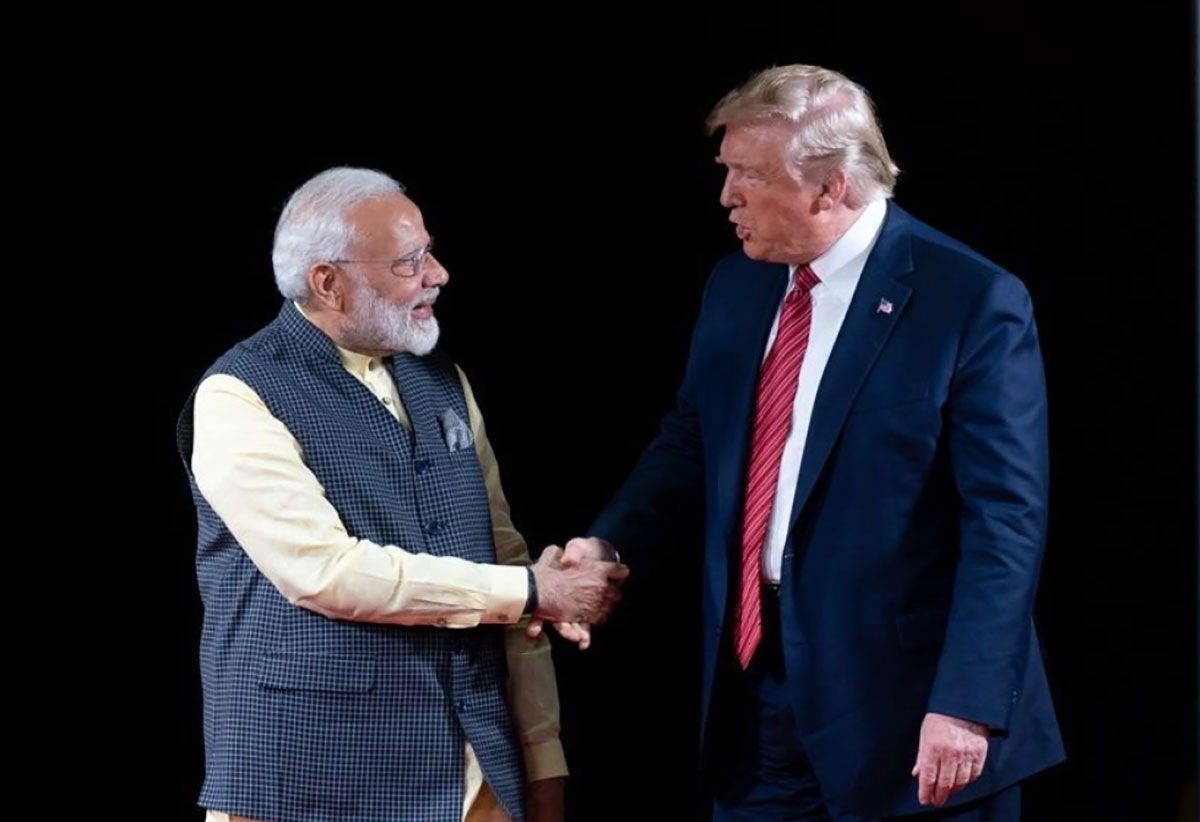
The strong rebuttal came after President Trump, in a characteristically dramatic social media post, said he was ready to “work with both” India and Pakistan to resolve what he described as a “thousand-year” problem.
Jaiswal was categorical in his dismissal. “As you are aware,” he said, “the outstanding matter is the vacation of illegally occupied Indian territory by Pakistan.”
The US President’s statement drew a predictable response in Pakistan, where it was welcomed. However, India was swift to rebuff the proposal, just as it did in 2019, when Trump claimed Prime Minister Narendra Modi had privately requested his mediation. Then, too, India flatly denied the claim and the US administration was forced to clarify that Kashmir is a bilateral issue.
Jaiswal also addressed Trump’s recent references to the possibility of nuclear escalation. “There were some reports that Pakistan’s National Command Authority would meet on May 10, but this was later denied by them. Even their Foreign Minister has publicly denied any nuclear angle,” he said, adding that India’s military action in response to the Pahalgam massacre remained “entirely in the conventional domain.”
India, he added, “will not give in to nuclear blackmail or allow cross-border terrorism to be conducted invoking it.”
In light of Pakistan’s continued support for terrorism, India has also placed the Indus Waters Treaty in abeyance. “The treaty will remain suspended until Pakistan credibly and irrevocably abjures cross-border terrorism,” Jaiswal said, condemning Islamabad for having nurtured terrorism “on an industrial scale.”
The comments follow Prime Minister Narendra Modi’s address to the nation on Monday night in which he declared that there could be no talks with Pakistan unless they pertain to Pakistan-occupied Kashmir and the dismantling of terror infrastructure.
“Terror and talks can’t go together… terror and trade can’t happen together… terror and water can’t flow together,” the Prime Minister had said, linking Islamabad’s call to revive the Indus Waters Treaty with attempts to force a ceasefire.
In his remarks today, Jaiswal praised the Indian Armed Forces for what he described as a decisive and disciplined response during “Operation Sindoor,” India’s recent military retaliation to the Pahalgam attack that left 26 people dead. “They might compel Pakistan to stop attacking,” he said.
He also confirmed that Pakistan had initiated the backchannel understanding that led to the current de-escalation, even as India remains on high alert.