SRINAGAR: Jammu and Kashmir has witnessed a steady fall in student enrolment in government schools over the past three years, echoing a nationwide trend that the Centre has now officially acknowledged. According to figures tabled in the Lok Sabha on Monday by the Ministry of Education, the total number of students enrolled in government schools across India fell from 143.24 crore in 2021–22 to 127.49 crore in 2023–24, marking a drop of nearly 15.75 crore students within just two years.
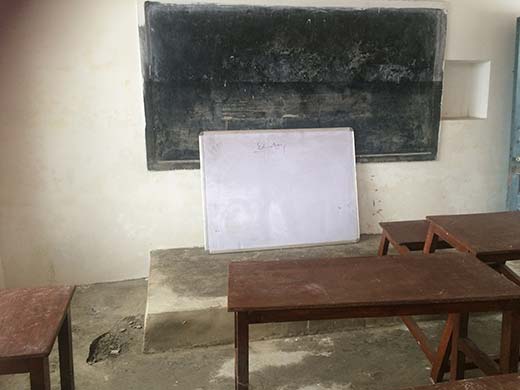
In absolute terms, government school enrolment in Jammu and Kashmir stood at 12,71,045 in 2019–20, increased to 13,24,301 in 2020–21, and then reached a high of 14,73,368 in 2021–22. Since then, the number has fallen to 14,54,668 in 2022–23 and 14,21,643 in 2023–24. While this represents a net gain of about 1.5 lakh students over five years, the downward slope in the last two academic years is unmistakable.
The figures were released in response to a starred question raised by MPs Prof. Sougata Ray and Shri Kishori Lal, who had flagged a “massive drop” in enrolments in public schools. The central government acknowledged the trend but clarified that since education is a subject in the Concurrent List of the Constitution, the majority of operational responsibility lies with respective states and Union Territories.
To address the declining enrolment, the government highlighted various measures being implemented through the centrally sponsored Samagra Shiksha Abhiyan and the PM POSHAN scheme, which covers midday meals from Balvatika to Class 8. Central assistance to states and UTs under Samagra Shiksha for the financial year 2024–25 amounts to Rs 34,458 crore.
Among the initiatives cited are the setting up and strengthening of schools up to the senior secondary level, upgrading Kasturba Gandhi Balika Vidyalayas to Class 12, residential hostels under the PM-JANMAN and DAJGUA schemes, transport allowances, seasonal hostels, vocational training, and provision of ICT tools. States and UTs are also supported in providing free textbooks, uniforms, and special needs education.
The Ministry noted that a major data transition occurred in 2022–23 with the adoption of a student-level data collection system through UDISE+ under the National Education Policy 2020. The change, while improving granularity and transparency, means the recent data cannot be directly compared with aggregate enrolment figures from earlier years.
However, the trend of declining student numbers in government schools remains a point of concern for Jammu and Kashmir, where public schooling remains the bedrock of rural and lower-income education. The enrolment drop signals the growing challenges for the public education system, especially in a region already grappling with infrastructure gaps and socio-political disruptions.