by Mir Rameez Raja
SRINAGAR: Jammu and Kashmir has lost nearly half of its lakes over the past six decades, with 315 out of 697 water bodies disappearing since 1967, the Comptroller and Auditor General (CAG) of India has reported, warning of deepening ecological stress and systemic governance failures.
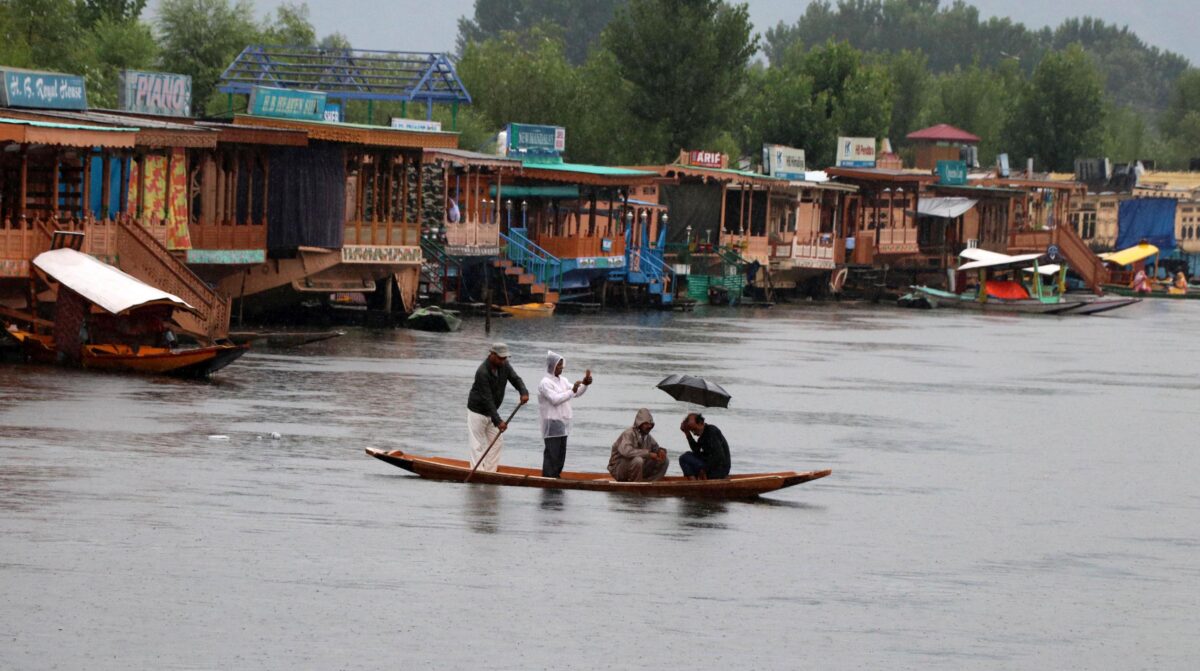
PHOTO BY BILAL BAHADUR
The findings, contained in CAG Report No. 4 of 2025 tabled in the Jammu and Kashmir Legislative Assembly last week, trace a steady decline in the Union Territory’s lake ecosystems, once considered critical for environmental stability and socio-economic sustenance.
From an original count of 697 lakes, 367 in the Jammu region and 330 in the Kashmir Valley, at least 315 have vanished, including 259 in Jammu and 56 in Kashmir, together accounting for a loss of more than 1,537 hectares of water area. The decline has not been limited to outright disappearance. Another 203 lakes have shrunk over time, their combined area reducing from 8,566.55 hectares in 1967 to 7,252.36 hectares in 2020, indicating a further loss of over 1,314 hectares. Within this, 63 lakes have already lost more than half their original expanse, placing them on the brink of extinction.
The audit points out that these changes have affected 518 lakes, nearly three-fourths of the total, resulting in degradation of ecosystems, loss of biodiversity, and disruption of water, nutrient and carbon cycles. The report also links the shrinking and disappearance of lakes to increased climate vulnerability, noting that altered land use and reduced water retention contributed to the scale of flooding witnessed in September 2014.
Despite the scale of the problem, the institutional response has remained fragmented. Although the Forest Department was assigned the responsibility of managing all lakes in 1989, control today is split among multiple departments, including Revenue, Agriculture, Housing and Urban Development, and Tourism. Six major lakes – Dal, Wular, Anchar, Gilsar, Khushal Sar and Manasbal—were placed under different development authorities over time, but the audit found that these bodies lacked clearly defined conservation mandates.
The absence of a centralised authority or a dedicated legal framework for lake conservation has led to diffused responsibilities, weak monitoring and poor coordination across sectors. Even basic scientific groundwork has remained incomplete, with no comprehensive survey undertaken to assess the physical, chemical and biological characteristics of lakes due to shortage of technical manpower.
An analysis based on remote sensing data for 63 sampled lakes between 2014 and 2020 showed a steady decline in open water areas, alongside expansion of built-up zones, agriculture and other land uses. In several cases, lakes have nearly disappeared from the landscape. Seven of the sampled lakes were found to be either no longer visible or almost dried up, while others such as Khushal Sar and Anchar showed clear signs of degradation and shrinkage.
The audit further highlights that conservation efforts were largely confined to just six lakes – Dal, Wular, Hokersar, Manasbal, Surinsar and Mansar, leaving the remaining 691 without any structured intervention. Even within this limited focus, funding remained modest, with only about one per cent of the Union Territory’s capital expenditure budget between 2017 and 2022, amounting to Rs 560.65 crore, allocated for these lakes.
Detailed scrutiny of the major lakes revealed persistent implementation gaps. Dal Lake continues to face encroachment pressures, malfunctioning sewage treatment infrastructure and ineffective de-weeding operations, preventing restoration of its open water area. At Wular, the absence of functional monitoring bodies and a comprehensive management plan hindered access to central assistance and contributed to increased siltation. Hokersar has seen large-scale encroachment due to lack of proper demarcation, while Surinsar and Mansar remain exposed to untreated sewage inflows and ecological imbalance caused by introduction of non-native species. At Manasbal, the absence of a finalised master plan has allowed unregulated construction and encroachment to continue, with pollution sources still not fully identified.
Across the sampled lakes, essential conservation measures—ranging from assessment of water carrying capacity and biodiversity to identification of pollution sources and scientific dredging—were either not undertaken or implemented inadequately. The report also notes the absence of public awareness initiatives and capacity-building programmes, further weakening conservation efforts.
The CAG has recommended the establishment of a centralised and specialised authority with legal backing to ensure coordinated lake management, along with increased budgetary allocation and deployment of technical experts. It has also stressed the need for comprehensive lake-specific management plans, strict enforcement of Wetlands Rules for demarcation and protection, and urgent measures to control pollution, remove encroachments and regulate construction activities.
The report underscores that without sustained and coordinated intervention, the continued degradation of lakes in Jammu and Kashmir could have far-reaching consequences for water security, biodiversity and climate resilience in the region.