SRINAGAR: The Union Ministry of Home Affairs has presented detailed data on drug abuse, enforcement, and rehabilitation measures in Jammu and Kashmir, highlighting the scale of substance use and ongoing anti-narcotics efforts in the Union Territory.
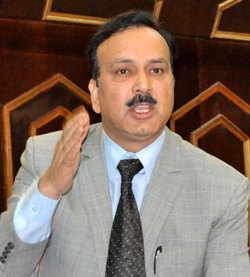
Responding to an unstarred question by Sajjad Ahmad Kichloo in the Rajya Sabha, Minister of State for Home Affairs Nityanand Rai said that, according to a 2018 national survey conducted by the Ministry of Social Justice and Empowerment through AIIMS, opioids are the most commonly abused substance in JK, with an estimated 5.4 lakh users. The survey also reported 1.7 lakh sedative users and 1.4 lakh cannabis users, while cocaine, amphetamines, and hallucinogens account for relatively smaller numbers.
Data shared by the government shows that large quantities of narcotics have been seized under the NDPS Act between 2019 and 2023. Seizures stood at over 26,517 kg in 2019 and 27,361 kg in 2020, followed by a decline to 22,082 kg in 2021, 17,192 kg in 2022, and 11,358 kg in 2023.
Apart from bulk seizures, enforcement agencies also recovered substantial quantities of pharmaceutical drugs, including lakhs of tablets and capsules, as well as large volumes of cough syrups and other medicinal preparations often misused.
The Ministry stated that district-wise data on NDPS cases, arrests, and convictions for the period 2019–2023 has been compiled by the National Crime Records Bureau. Srinagar and Jammu districts remain major hotspots, alongside high incidence in North Kashmir areas.
To address rehabilitation, the government is implementing the National Action Plan for Drug Demand Reduction (NAPDDR). Under the scheme, Jammu and Kashmir currently has one Integrated Rehabilitation Centre for Addicts, two community-based intervention centres, three outreach and drop-in centres, six district de-addiction centres, and 21 addiction treatment facilities, supported by trained medical and counselling staff.
The national de-addiction helpline (14446) has received more than 4.69 lakh calls, including 11,111 calls from JK. Additionally, a drug treatment clinic at the Institute of Mental Health and Neurosciences in Kashmir has recorded over 11,000 patient visits till February 2026.
On enforcement, the government said a four-tier Narco-Coordination Centre (NCORD) mechanism has been put in place to improve coordination among agencies. In 2025, 199 district-level and four state-level meetings were held in JK.
An Anti-Narcotics Task Force (ANTF) has also been established, while the Narcotics Control Bureau has taken over key cases to target drug networks. A new NCB zonal unit has been set up in Srinagar to strengthen monitoring along critical routes.
Over the past five years, authorities have destroyed 1,143 acres of illicit opium poppy cultivation and 3,540 acres of cannabis crops as part of sustained anti-drug operations.
The government said coordinated action, enhanced enforcement, and expanded rehabilitation measures are being pursued to tackle drug trafficking and substance abuse in Jammu and Kashmir.