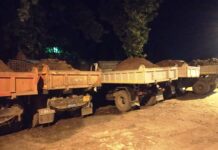
SRINAGAR: The Jammu-Srinagar National Highway (NH-44) remained closed to traffic on Saturday morning as restoration work continued in the Ladha-Samroli stretch of Udhampur district following heavy rainfall, disrupting civilian movement and halting the Shri Amarnath Yatra convoy, officials said.
According to the Traffic Police’s 4:00 a.m. update, the road surface in the affected stretch has become highly slushy, muddy and extremely slippery, rendering it unsafe for vehicular movement. Personnel of the National Highways Authority of India (NHAI), assisted by Traffic Police teams and machinery, are carrying out restoration work to reopen the highway.
Authorities have advised commuters not to travel on NH-44 until the road is restored and officially declared safe.
With the highway remaining closed, no civilian traffic or Shri Amarnath Yatra convoy was permitted to ply on the route on Saturday morning.
Meanwhile, light to moderate rainfall continued across Ramban and Udhampur districts, including the Chenani-Nashri tunnel area, slowing restoration efforts.
As a precaution, the District Administration Ramban ordered the closure of all government and private schools in the district for the day. The Chief Education Officer, Ramban, directed educational institutions to conduct classes online to ensure academic activities continue uninterrupted.
The Chief Education Officer, Doda, also announced the closure of all government and private schools in the district on August 1 due to adverse weather conditions, directing institutions to continue classes through online mode.
In a separate weather-related incident, a cloudburst struck the Chatroo area of Kishtwar district at around 2.30 a.m., triggering flash floods that reportedly washed away several vehicles and damaged property. Officials said no casualties or injuries had been reported, while the extent of the damage was still being assessed.
The Chatroo–Kishtwar National Highway has also been closed to vehicular traffic following the cloudburst.
Authorities have urged people to avoid unnecessary travel in vulnerable areas until weather conditions improve and restoration work is completed.