SRINAGAR: After a growing debate in Jammu and Kashmir over demands for a ban on alcohol, neighbouring Ladakh is now witnessing mounting opposition to the Union Territory administration’s newly introduced excise policy, with religious organisations, civil society groups and political leaders warning of protests against the move.
The Jamiat Ul Ulama Isna Asharia Kargil (JUIAK), one of the most influential religious organisations in Kargil district, has strongly opposed the policy and warned of democratic and peaceful protests if it is not withdrawn.
Addressing a press conference in Kargil, JUIAK General Secretary Sheikh Ibrahim Khalili and Political In-charge Sajjad Kargili said the organisation, along with the public, would be compelled to launch protests if the sale and open consumption of liquor were allowed in Kargil.
The leaders said alcohol had no place in Ladakhi society and warned that the policy could adversely affect the younger generation and the larger social fabric of the region.
The organisation said it would meet Ladakh Lieutenant Governor Vinai Kumar Saxena to submit a formal memorandum seeking withdrawal of the policy and demanding a complete ban on liquor in the region.
JUIAK also appealed to religious scholars, community leaders and social organisations to create awareness about the harmful effects of alcohol and substance abuse.
The controversy follows the introduction of a liberalised excise policy by the Lieutenant Governor-led administration under which the number of liquor vends in Ladakh would increase from two to 20. The policy also permits the sale of hard liquor, including foreign liquor and Indian Made Foreign Liquor (IMFL), through retail outlets across the Union Territory.
Defending the policy, the Ladakh administration recently stated that it aimed to curb the growing dependence on narcotics and drugs while offering people “a wider choice of low alcoholic content liquor” in the region.
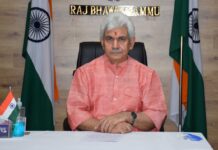
Lieutenant Governor Vinai Kumar Saxena described the policy as a “significant reform” introducing a liberalised, transparent and technology-enabled regulatory framework aimed at balancing public convenience, tourism promotion, revenue optimisation and efficient regulation of the liquor trade.
The move, however, has triggered criticism from several social, religious and political groups across Ladakh.
The All-Ladakh Gonpa Association said participants at a recent meeting chaired by the Lieutenant Governor on rising drug abuse had expressed resentment over the expansion of liquor sales and opening of new liquor vends in Ladakh.
“We are in favour of declaring Ladakh a dry state such as Gujarat and Bihar. The logic of the administration to overcome the growing menace of drug abuse with liquor is beyond our understanding,” the organisation said in a statement.
The women’s wing of the Ladakh Buddhist Association has also opposed the proposed policy, describing it as a move that could have far-reaching social consequences for the region.
Political leaders too have voiced concern over the policy. Sajjad Kargili questioned the rationale behind promoting liquor sales in the name of combating drug abuse.
“Alcohol is itself an intoxicant and, in many cases, serves as a gateway to substance dependence rather than a solution to it. Addressing one addiction by promoting another is neither sound public policy nor a credible strategy for safeguarding society,” he said.
He said Ladakh, particularly Kargil, had long been guided by social values that discourage intoxicants.
“Alcohol has never been a part of our cultural ethos, nor is its consumption accepted by the overwhelming majority of our people. Any attempt to normalise or institutionalise alcohol under the pretext of revenue generation or tourism promotion runs contrary to the sentiments, traditions and aspirations of the local population,” he added.
The debate in Ladakh comes months after the Union Government repealed the decades-old prohibition law in the Muslim-majority Union Territory of Lakshadweep through the Lakshadweep Excise Regulation, 2026, ending a near-total liquor ban that had remained in force since 1979.
The new regulation in Lakshadweep permits licensed manufacture, sale and consumption of alcohol, with authorities citing tourism promotion and revenue generation as key objectives.