The Ladli Beti scheme has transformed attitudes toward daughters in Jammu and Kashmir, offering financial security despite procedural hurdles. In districts suffering from a low sex ratio, families increasingly enrol newborn girls, viewing the scheme as relief, investment and social reassurance, reports BabraWani
In a modest home just barely two kilometres from Budgam town, Bilal, a professional sumo driver, speaks with a careful blend of hope and caution as he recalls a decision he made almost a decade ago.
His daughter, now ten, was barely an infant when he enrolled her in the government’s Ladli Beti scheme, a programme he had heard about while passengers in his vehicle would talk about it. The scheme launch had triggered debates everywhere, some supportive of it and some opposing it for all the reasons they had discovered.
A Hope
“We are poor people, and we have daughters,” Bilal said, his voice steady yet edged with the hard arithmetic of survival. “When I heard about the scheme, I felt it was something good. It gives relief to families like mine.”
What followed was a plethora of documents and innumerable visits to the government offices before the account was finally opened in his daughter’s name. And then, it started functioning. He does not remember the exact amount, “maybe around Rs 1000” but he remembers the intention: a safety net for her future. The deposits do not come monthly but once or twice a year, slowly gathering into a promise he hopes will hold when she turns 15 or 18 years.
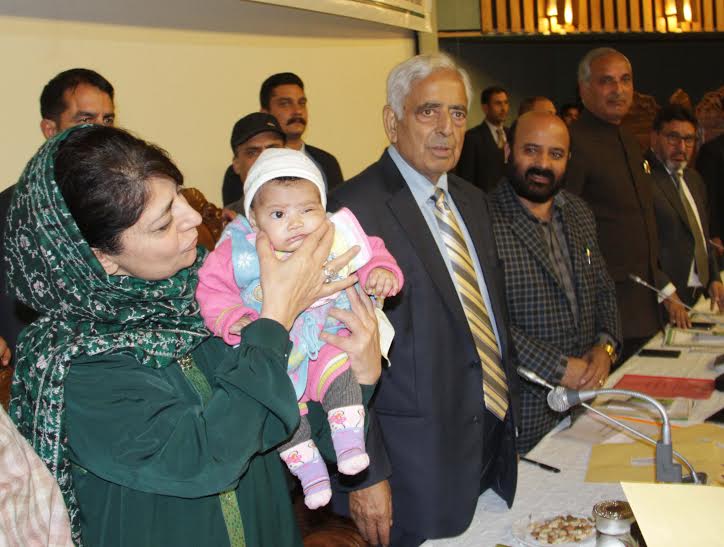
Bilal is a driver but earns his living by driving a vehicle someone else owns. That is perhaps why he knows the sole purpose of that eventual payout: his daughter’s wedding. “Everyone is not materialistic,” he said. “We have a daughter. When the time for her marriage comes, this money will be spent on her marriage. It is of no other use.”
He is happy with the scheme, but the happiness is far from complete.“When I can withdraw that money and spend it on her wedding, only then will I be the happiest.”
Aware of his modest earnings and the costs that Kashmir’s insanely fat and ostentatious weddings entail, he believes marriages are gradually becoming challenging if not entirely impossible. “I will spend whatever I can through my own pocket for my daughter’s education, but this amount is to lessen my burden on her marriage.”
Bilal acknowledged that the scheme has been a good initiative. “It is like giving financial security to girls as soon as they are born,” he said. “Almost every family here in our village has taken the scheme.”

The Scheme
The Ladli Beti was launched by the Jammu and Kashmir Government in April 2015 as a social assistance programme for newborn girls. A special purpose scheme, it was a response to the declining sex ratio in certain areas of Jammu and Kashmir. Policymakers believed that people in certain areas were using ultrasonography for sex determination and eventually aborting the girl child. Of the many initiatives launched to interrupt the trend, the government launched a massive crackdown against sonography clinics.
At the same time, the government decided to incentivise the girl child right from the day she is born. “I propose to contribute Rs 1000 per month on behalf of every newborn girl child (born after 1st April) for the next 14 years, and on reaching 21 years she would receive around (Rs) 6.5 Lakh,” the state finance minister, Dr Haseen A Drabu, while presenting the Budget 2015-16, had announced. “To begin with, we can do a pilot in six districts with the most adverse child sex ratio.”
The announcement framed the idea as a long-term investment in girls’ futures and marked one of the earliest high-profile, budget-level interventions targeted explicitly at reversing gender bias at birth. It was rolled out almost immediately, and the Social Welfare Department was asked to thrash out basic details with the Jammu and Kashmir Bank.
Initially, the scheme was launched for districts having a low sex ratio, including Budgam, Kathua, Pulwama, Samba, Anantnag and Jammu. Late, Kishtwar and Srinagar were added to the list.
Instantly Popular
The first thing that Ghulam Nabi, a resident of a remote Anantnag village, did after he became a proud father of a daughter was to register her under the scheme. Born in 2017, Nabi’s daughter is now eight years old, and her father believes that the amount will help in her career.
“I think that whatever amount my daughter withdraws upon the maturing of her scheme, she will spend in her career line,” Ghulam Nabi said.
“It is a good scheme. It became a ray of hope for people like us who belong to the lower economic groups of society, where sometimes the birth of a daughter is often seen as a burden. Such schemes save a lot of people like us from despair.”
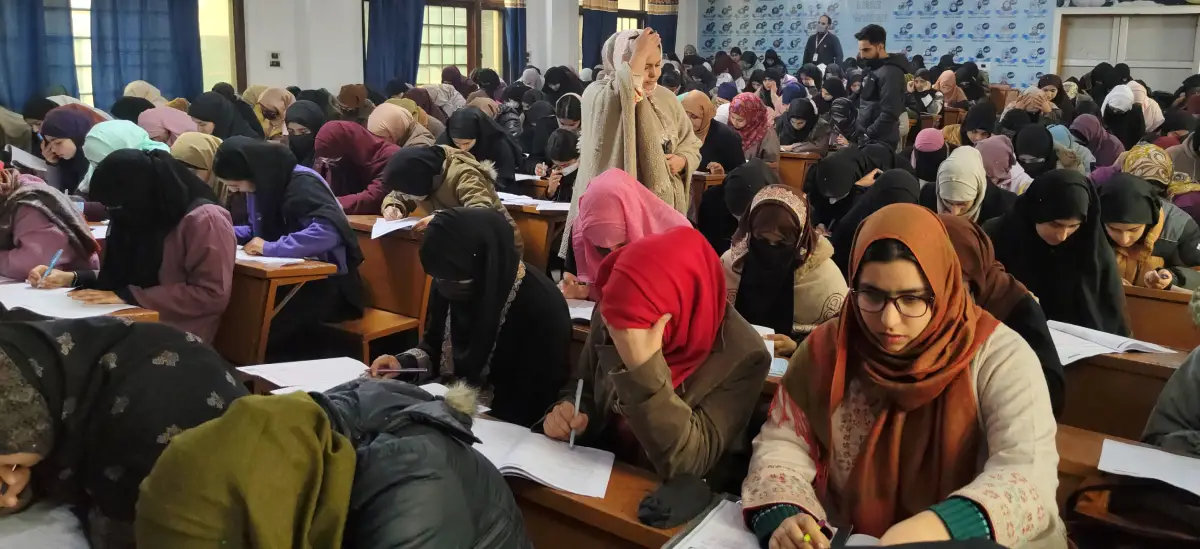
There is no difference between the responses of men and women as far as the scheme goes. A woman from Pulwama said that the scheme was giving financial security and respect to the girls. “I have two daughters, and both of them are enrolled under the scheme as this is solidifying their positions in society,” she said. “Earlier, having more than one daughter was seen as some unfortunate event, but this scheme came as a blessing for us.”
What will happen to the payout once the funds mature? The Pulwama lady said she and her husband have already decided to let their daughters take the call once mature enough about the amount.
The Numbers
Despite being launched in specific districts, the scheme is a huge hit. The up-to-date data available up to October 31, 2025, show that Ladli Beti has been a huge success.
In September 2025, the cumulative beneficiary count stood at 190396, but by the end of October, it had risen to 192291, indicating another round of enrolments added during that month.
The year-wise additions offer an idea about the pace at which families have been adopting the scheme. In fiscal 2022-23, as many as 38,842 newborn girls were registered, followed by 18,548 in 2023-24. The count rises sharply to 35,041 in 2024-25, indicating a phase in which the programme became more visible and easier to access. In the ongoing 2025-26 cycle, 16165 beneficiaries have already been added by October 31.
Every district shows this upward movement between September and October 2025. Kishtwar showed a growth from 7,883 to 8,338; Samba from 9,875 to 10,338; Budgam from 16,705 to 16,805; Pulwama from 10,697 to 10,992; Srinagar from 18,023 to 18,431; Anantnag from 14,023 to 14,158; Jammu from 20,907 to 20,699, and Kathua from 8,588 to 8,835.
A much clearer picture emerges when looking at the number of beneficiaries in proportion to district populations. The September data reflects only the performance of the most recent four years, which is why the ratios appear modest: 34 per 10000 people in Kishtwar, 31 in Samba, 22 in Budgam, 19 in Pulwama, 15 in Srinagar, 13 in Anantnag, and 14 each in Jammu and Kathua. However, since the scheme’s launch in April 2015, once calculated across the full ten-year span, the penetration looks vastly different, rising to 361 per 10,000 people in Kishtwar, 324 in Samba, 223 in Budgam, 196 in Pulwama, 149 in Srinagar, 135 in Anantnag, 140 in Jammu and 143 in Kathua.
The scheme was launched with an initial financial outlay of Rs 24 crore, but officials said it fluctuates.
The Other Policy
Interestingly, Ladli Beti was launched the same year that the Prime Minister rolled out the Beti Bachao Beti Padhao scheme. Although both initiatives were aimed at improving the lives of girls, both of them are fundamentally different. Unlike the Jammu and Kashmir scheme, the central initiative is aimed at an awareness campaign and lacks any fiscal benefits to the girl child. Both schemes were launched to interrupt the declining sex ratio.
The Ladli Beti is geographically limited to Jammu and Kashmir, unlike Beti Bachao Beti Padha, which operates nationally and is implemented across selected districts in India depending on demographic indicators such as the child sex ratio.
Their funding patterns are different. Ladli Beti is entirely financed by the Jammu and Kashmir government, with allocations made through the Social Welfare Department. Under this programme, the government deposits money directly into the girl’s designated account and carries the entire financial responsibility for these deposits.
A centrally sponsored initiative, BBBP is funded by the Government of India through the Ministry of Women and Child Development and passed on to districts for activities like awareness campaigns, monitoring and training programmes.
The two schemes also differ like their beneficiaries. Ladli Beti supports an individual child who meets specific eligibility criteria. Each eligible girl receives structured financial benefits in her own account. BBBP targets communities, households and institutions, aiming to influence social norms and improve gender-related indicators.
While Ladli Beti aims to ease the perceived financial burden of raising daughters and prevent female foeticide, BBBP targets deeper structural issues, including declining sex ratios, gender discrimination, violence and barriers to education. Their monitoring systems reflect this difference: Ladli Beti is tracked by the Jammu Kashmir Social Welfare Department through enrolments, financial transfers and maturity pay-outs, whereas BBBP is monitored nationally by the Ministry of Women and Child Development using indicators like sex ratio at birth, school enrolment, dropout rates, nutrition levels and district-wide outreach activities.
Earlier this year, the Jammu and Kashmir administration submitted a welfare scheme proposal worth Rs 6.20 crore for the Beti Bachao Beti Padhao scheme.
The Challenges
People in the designated districts said the paperwork for enrolment under the scheme is rigorous. A resident of Srinagar, who is a labourer by profession, recalled how, in 2018, when he tried enrolling for the Ladli Beti scheme for his daughter, they were unable to.
“Even though we had our documents prepared and we still encountered a problem and could not enrol on it,” the labourer said. “I feel it is a great initiative. It was bad luck for us that we could not enrol in it. We tried multiple times and even prepared fresh documents, yet there was no luck. ”
Pertinently, the scheme is only for households where the annual family income is not more than Rs 75,000, a year. The applicants need to provide an income certificate them to claim the benefits of the scheme. The whole process is online.
It is important to note that the scheme does not provide any nomination facility. If a beneficiary passes away, her account is closed immediately, and the balance, including the interest accrued, is returned to the government. Officials explain that if a beneficiary dies before turning 21, her recurring or term-deposit account is closed at once, and the accumulated amount is released without any pre-maturity penalty.
The scheme operates with strict conditions and leaves little room for deviation. The scheme supports only the two girl children. The beneficiary must also remain enrolled in school, as dropping out results in immediate disqualification.
An Impact Assessment Report by the JK Policy Institute, published in 2021, identifies several structural weaknesses in the Ladli Beti Scheme. The report notes that, despite its well-intentioned design, implementation has been hampered by slow and confusing procedures, excessive documentation, and thousands of applications stalled during verification. It also highlights weak coordination between the government and banks; in the initial years, banks even declined the proposed payout structure due to insufficient consultation.
The report further flags inconsistent fund availability at the district level, uneven regional coverage, and the exclusion of entire districts where the sex ratio remains equally alarming. Crucially, the assessment argues that limiting eligibility to economically weaker families overlooks the reality that sex-selective practices are also prevalent among affluent groups, intervening misaligned with the underlying social drivers it seeks to confront.
The Enrolment
A Child Development Project Officer (CDPO) asserted that claims about enrolment being rigorous and challenging are not factual. The application is very simple, and one can upload it at any CSC centre or even at the ICDS office, she said. “The only delays happen when the name on Aadhaar does not match the bank account. PFMS takes time to verify those details, and until parents update the Aadhaar or correct the bank name, the application remains held up.”
“When someone applies, we ask for the income certificate for that year. Once the sanction comes, even if their income increases later, we trust the goodwill of the people to withdraw themselves,” she said. “If we get a complaint, we verify it and then call them. If it is true, we ask them to cancel the benefit.”
The officer admitted knowing many cases in which beneficiaries were cancelled. In one case, a government employee had put his wife’s name forward and declared an income of only Rs 75,000, while it was otherwise. “During the verification process, we found out he was a government employee, so we sent the case for cancellation.”
Role Shifts
A senior official from the Department of Social Welfare explained that the Ladli Beti scheme is no longer handled directly by the department. “Initially, when ICDS functioned under a single directorate, the scheme fell within its purview. However, after the restructuring, the administrative control shifted.” The scheme is now overseen by the Director of Mission Poshan Abhiyan (ICDS).
Earlier in the Social Welfare Department, the scheme was managed by a deputy director-level office. Since 2015, it has been overseen by a CDPO-level officer.
A New Identity
Critique apart, the scheme has succeeded. The scheme is shifting the perceptions through which the birth of a girl child was seen. People are not that sad now when a girl child is born. “The government’s incentives, especially Ladli Beti and the scheme for the second girl child, have made a big difference in how families feel,” the CDPO, who talked to Kashmir Life on the scheme, said.
Another officer from the department said the government incentives have made a visible difference. “Now people are not as upset as they were when a girl child is born,” the officer said. “Schemes like PMMVY, where we give cash incentives for the second girl child, have also strengthened the impact.” PMMVY (Pradhan Mantri Matru Vandana Yojana) is a federally funded scheme which provides financial aid up to Rs 5,000 to pregnant women and lactating mothers for their first living child and sometimes for the second girl child too.
An Anganwadi worker from Anantnag said that the scheme has given a new identity to the girls. “The way people view the birth of a girl has changed because of this scheme. Families no longer regard their daughters as a burden,” the worker said. “We have seen a real shift. People are genuinely happier now. We also make it a point to spread more awareness about the scheme, because information in the villages is often limited, and that responsibility falls on us. People come to us regularly to seek assistance.”