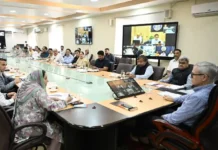
Constituted within months after the erstwhile Jammu and Kashmir State adopted its constitution in 1957, the legislative council became history when the Lok Sabha ordered reorganisation and pulled the curtain down on it in October 2019. Masood Hussain details the dismantling of the legislative body in the last five years
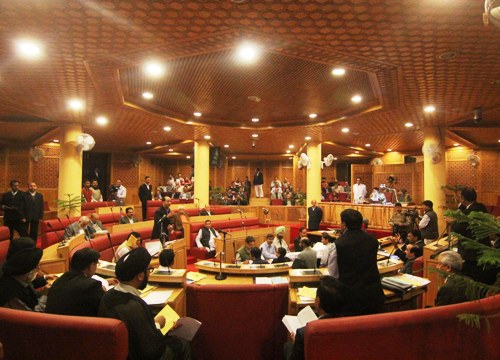
After the assembly question hour, reporters who used to rush to the Legislative Council, the erstwhile upper house of the Jammu and Kashmir legislature, to ensure they were adequately seated for a fresh question hour, were disappointed in 2025. Resuming the legislative reportage for the first time after 2018, they felt something was missing in their routines.
The Council leapt into history after the Jammu and Kashmir Reorganisation Act 2019, did away with the bicameral legislative structure and retained the assembly only. The Council had been in operation almost a year after the Jammu and Kashmir Constituent Assembly adopted the erstwhile state’s constitution on November 17, 1956. The Council was governed by Articles 46 and 50 of the former State Constitution that was binned in 2019. Until 2018, it used to be a vibrant house which offered representation to the sections of the society which lacked enough electorate to have a seat in the legislative assembly.
With 36 members, the Council served as a revising chamber where indirectly elected and nominated members would review the legislation passed by the assembly. Of the two houses, it provided space and scope for protracted discussions on subjects vital. Its members served for 6 years and held the same rights and privileges as the assembly members. Jammu and Kashmir would send 11 members each from Kashmir and Jammu provinces, a member from municipal bodies, two from Panchayati Raj Institutions, and eight were nominated by the governor on the recommendations of the government and would include people from weaker and neglected sections and women.
While the Council could discuss anything, it was barred from moving any kind of money bill. All legislation required its passage in the Council before moving to the Raj Bhawan for approval. For the government, the Council was a major lever to prevent legislation from becoming law, if it wished so after the assembly passed it. The last major bill that was buried even after being passed by the assembly pertained to the state subject laws during The PDP-Congress coalition when the House decided to send the bill to the House Committee, where it lapsed forever.
It was also used to pave the way for politicians to get into cabinet. In recent years, at least two Chief Ministers took the Council route to get to the throne and then seek a mandate.
A Dumping Yard
While the BJP-dominated Lok Sabha closed the House as part of the reorganisation, the bureaucracy in Jammu and Kashmir ensured this historic institution was erased while getting enough of humiliation.
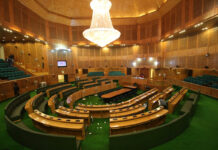
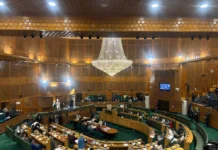
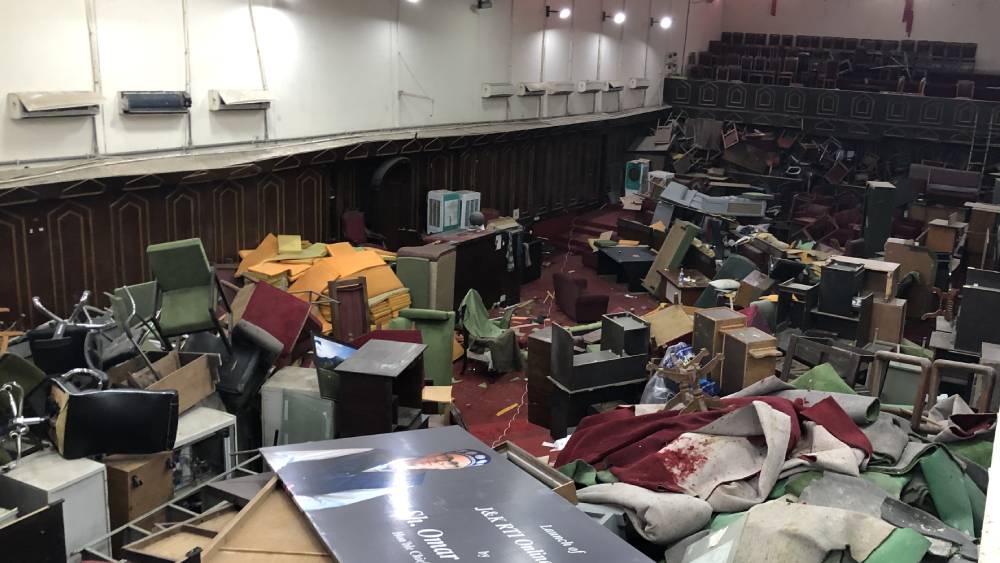
It was shocking to see the main Council Hall where lawmakers discussed the state issues for over half a century, converted into a dumping space for unused material.
The hall chairs are buried under tons of useless furniture, signboards, stools and benches and it gives the looks of a haunted space. The chair that used to be the most respectable, given the protocol, is carrying the load of some machine now.
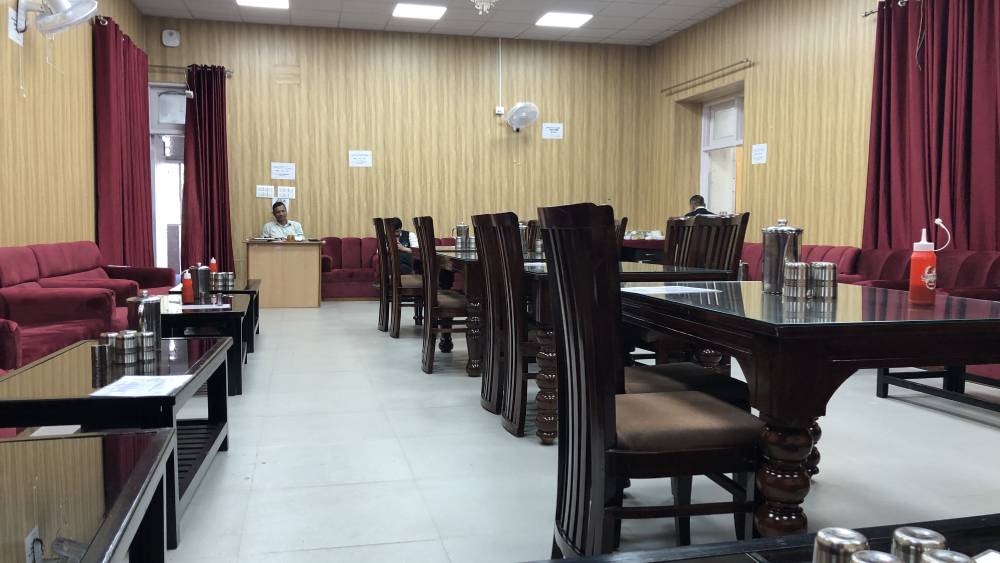
The impressive office of the Chairman has been converted into a canteen where the lawmakers sip tea and talk politics. A canteen kitchen operates in the corner, that was once the Chairman’s private room.
Painful Dispersal
While the Council staff knew on August 5, that they were in the last leg of an institution they served for their lifetime, the real crisis began on October 16, 2019, when GAD issued a 6-page order formally abolishing the Council under Section 57 of the Jammu and Kashmir Reorganization Act, 2019. The staff was advised to report to the GAD by October 22. The council’s vehicles were directed to the Director State Motor Garages and the Secretary of the Council was asked to hand over the building to the furniture and electronic gadgets to the Director Estates. As for the records of the Council, it was supposed to be taken over by the Department of Law, Justice and Parliamentary Affairs.
“We were 116 employees on staff on that day,” one of the senior staffers of the erstwhile Council said. “We knew that our services would outlive the Council but getting disintegrated was so painful.”
“The officer summoned all of us and asked that the first thing that they must secure is the service book. The second priority was to manage the basic documents for the 22 lawmakers who were members as of date. By the end of the day, the Council was no more.” The building was handed over to the Director Estates; all vehicles were driven to Director Garages. The process was completed by October 31, 2019.
“The staff that was sent to GAD felt a lot of humiliation and had no work and no space to operate from,” another employee, who retired later, said. “They would come, mark their attendance move out and sit in the secretariat lawns the whole day.”
In the following days, another staffer said that after reconciling with the reality that the Council is gone, we requested the GAD to permit the creation of a small section that will take care of the things that are still left in the Council like the library and records. Files moved many tables and eventually, a Cell comprising 3-4 officials was set up.
“There was bungling in decision-making from the very first day,” one retired officer said. “Ideally, the dissolution of the Council should have led to its infrastructure being taken over by the assembly, as it was an identical house. That was not done because a top officer in the government was running the show with a compromised mindset. Then the cell was constituted and it was operated under GAD and not the law department, and it still exists.”
The fact of the matter is that even assembly was looked down by the bureaucracy. Its staff was shifted out and scattered across Jammu and Kashmir. At one point in time, the bureaucracy permitted a Web Series director to shoot in the assembly, creating a precedent in India when a film was shot in the house. “That was humiliation but that is history,” the official added.
“Barring a few officials who were retained in the Cell, all others were dispersed across Jammu and Kashmir,” an official informed. “By now, a number of them have retired and barely 80 or 86 are still serving. In anticipation of the constitution of the assembly, a single order was issued getting all assembly staffers back but that was not the case with the Council staff because Council does not exist.”
Destruction
Within days after the Council was undone officially and the assets were distributed among various departments, the erstwhile staff members said they were informed of a truck taking away the valuables. “The huge LCDs, the archival photographs, the up-market furniture and flooring, all went away,” one erstwhile staffer alleged. “Nobody knows if it was Estates department or not but these valuables are not around.” The official alleged that the huge air conditioners which look all right from the outside are “hollow” inside as the valuables have been taken away.
This all happened between the formal closure of the Council and the arrival of the Durbar Move in 2019.
“Very recently, there was a rumour that some thieves have taken huge wires in such a way that they took away the copper and left the plastic,” another former official said. “The thieves had enough time to segregate the metal from its enclosure.”
The erstwhile staffers said the abolition should not have meant erasure of the institution. It could have been retained as part of the heritage. The Council’s situation forced Omar Abdullah to order the officials for its restoration. He has been talking about it restoration as and when the state status to Jammu and Kashmir is restored. During the last five years, the main hall of the council has been given out to a private agency for scanning the official documents as part of the digitisation of the records. “Part of those documents are still under the carpet and anybody can go and see,” another official revealed.
New Resident
After the budget session started, the government gave part of the Council to BJP lawmaker, Sunil Sharma, the leader of the opposition as his office. He retains a major hall as his office and a restroom. Right now, work is going on to refurbish a room so that his OSD operates at ease.
This is seen as a good decision as part of the Council is occupied and it prevents any damage to the property.