A 12-year-old girl left for religious class in Budgam and never returned. Her body was found the next morning, and her neighbour was arrested for the murder, reports Babra Wani
Zikra was twelve years old. Every day at 4:30 pm, she walked to the local Darsgah for Quranic lessons. Two girls usually accompanied her. On May 23, both stayed back. One had gone for Eid shopping. The other visited relatives. Zikra went alone.
Her family expected her home before evening Maghrib prayers. The cleric teacher always sent the children back before evening. She did not return.
Her mother grew worried. She walked to the Darsgah herself. The cleric told her something that stopped her cold. Zikra had never arrived that day.
Search Begins
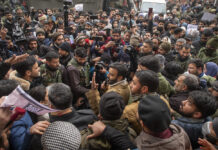
The family announced her disappearance through the local mosque. Residents gathered immediately. They began searching. A missing report was circulated on social media. An FIR was lodged at Budgam Police Station almost instantly.
Local youth fanned out across nearby villages. Then a call came in. Someone claimed Zikra had been seen in a neighbouring village. Residents and police rushed there. They found nothing.
Residents later alleged that the tip had been deliberately planted to divert attention from the real search area. The search continued through the night.
Body Recovered
At around 6 am on May 24, a resident made a grim discovery. Near bushes close to his house, he found a copy of the Holy Quran lying on the ground. Beside it were Zikra’s slippers. He informed the family immediately. Relatives rushed to the spot. They searched the area. They found the child’s body lying near the bushes, in the water.
Her clothes were torn. Her abaya was ripped. There were visible injury marks on her face.
“I saw her face was punched. There were injuries on her face,” a resident said.
Locals alleged she had been physically assaulted. There were also claims she may have been strangled.
Police and a medical team reached the scene shortly after. The body was taken for medical examination.
Her mother could not hold back. “Even though the child’s uncle told us not to touch the body,” a resident recalled, “her mother could not control her emotions. She grabbed the child and broke down.”
A family member described the last image of Zikra alive. “She was going to the madrasa. She held the Quran to her chest and left towards the Darsgah. Then we found her Quran on the ground on one side and her slippers on the other.”
Arrest Made
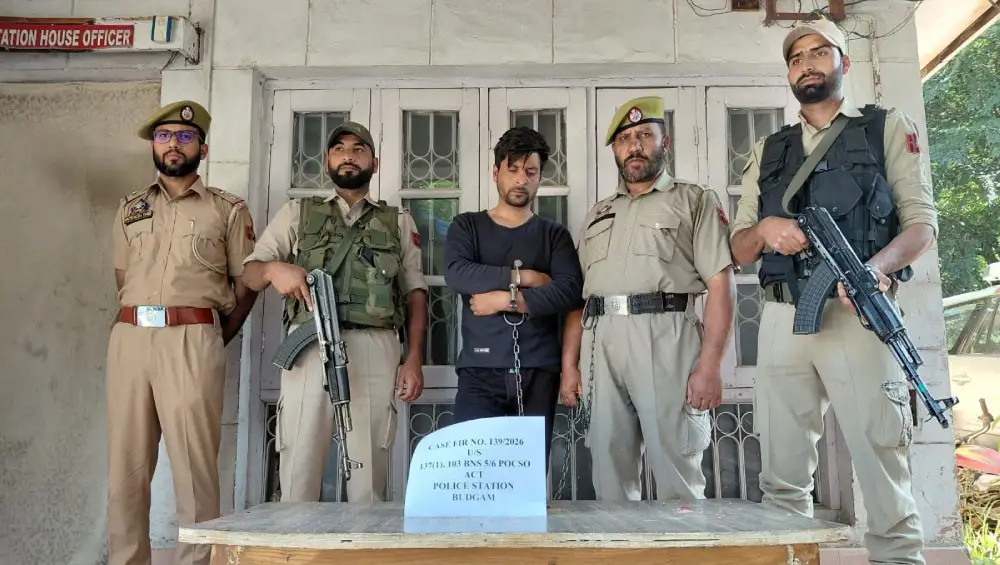
Police converted the already registered FIR (139/2026) from a case of kidnapping into a case of murder. In a quick follow-up, a Special Investigation Team (SIT) was constituted. It was headed by DySP Headquarters Budgam, Sajad Ahmad.
The SIT examined the crime scene. It collected biological and material evidence. Digital evidence was analysed. CCTV footage was reviewed. A resident has a CCTV installed. Human intelligence inputs were gathered.
Multiple suspects were rounded up and questioned. Evidence pointed to one man.
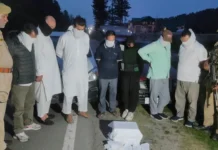
On May 25, police arrested Mudassir Ahmad Mir. He is a resident of Galwanpora. He is a professional auto-driver. He had been married for four years. The couple had no children. He is the youngest of four siblings. His sister passed away a few years ago.
Police said he confessed during sustained questioning. Further material evidence was recovered based on his disclosures.
How It Happened?
Residents, this reporter talked to, pieced together what likely occurred. The accused’s house stood on the route leading to the Darsgah. On May 23, he was standing outside when he saw Zikra walking alone.
He allegedly asked her for help with a small task. Zikra, described by residents as innocent and willing to help, agreed. He then allegedly took her inside his premises. The crime took place there.
After the incident, he returned home. He ate his meals with his family. He showed no signs of disturbance. When the community began searching for the missing child, he was absent. He had left his house early in the morning.
“He is not a human being,” a resident said. “Calling him an animal will be a humiliation to animals. He is worse than a beast. The child’s body was in the worst condition. Her body lay in a pool of water for one full night. She was punched in the face. If it can happen to our child, it can happen to anyone.”
Family’s Demand
The accused’s own family did not hold back. His father wept. His words were unsparing.
“We want him to be chopped into pieces for the heinous crime he has committed. Kill him in front of me. Slit his throat. I will not feel bad for him. But he has disgraced us.”
His mother stood beside him. “We will ourselves pick daggers to chop him in front of the victim’s house. We do not even want his body.”
His father said he had no idea. Mudassir had come home normally that day. He ate as usual. “I did not suspect him. I believed he could be the wrong person but not a beast. I was proven wrong. We are respectful people. My other children are good human beings. He should be hanged till death publicly.”
Neighbours described his father as a respected man in the community.
Political Response
The incident triggered widespread grief and anger across Kashmir. Political leaders responded swiftly.
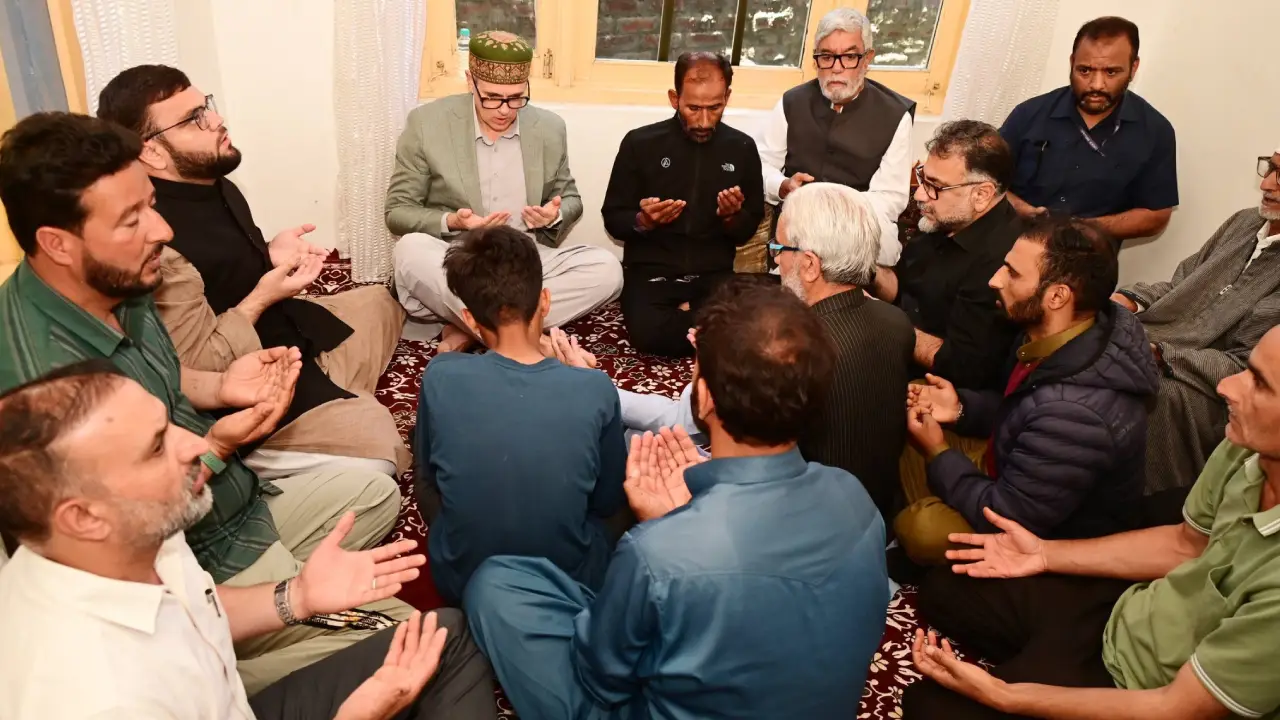
Chief Minister Omar Abdullah visited Zikra’s family on May 26. He expressed deep condolences, asserting the incident had shaken the conscience of society. He assured the family that the culprit would be dealt with strictly and that justice would come without delay.
Health and Education Minister Sakeena Itoo also visited the bereaved family. She called the incident “unfortunate and unacceptable.” She demanded exemplary punishment for the accused.
MLA Budgam, Aga Muntazir Mehdi, spoke about the community’s unified demand. “The demand of the people is justified. We will pursue this case completely so the accused receives exemplary punishment. It should serve as a lesson.”
He also called for action against anyone who may have helped the accused. “Whoever helped him, whether by attempting to destroy evidence or tamper with CCTV footage, should also be punished.”
Former Chief Minister and PDP president Mehbooba Mufti wrote on X. “Devastated to hear about the cold-blooded murder of a 12-year-old girl in Budgam. The allegations of rape just make it all the more shocking, disconcerting and unsettling. One shudders at the thought if our children are really safe.”
Legal Position
Many in the public expressed frustration. They regret that the law did not provide for the death penalty in such cases. Advocate Fizah Baba disagreed.
“It would be incorrect to suggest that Indian law does not provide for stringent punishment, including capital punishment, in cases involving rape of minors,” she said. “The legal framework governing such offences is already extremely stringent, particularly where the victim is a child.”
Such cases fall under the Protection of Children from Sexual Offences Act. The POCSO Act provides enhanced punishment for aggravated forms of sexual assault against children. In cases involving younger victims, the law prescribes exceptionally severe punishment. This can extend to imprisonment for the remainder of one’s natural life. In certain circumstances, the death penalty may also be imposed.
However, Fizah drew an important distinction. “The mere existence of a statutory provision permitting capital punishment does not imply that it becomes automatic upon conviction.”
The courts follow the “rarest of rare” doctrine. Capital punishment is reserved for exceptionally grave cases. The nature of the crime, the surrounding circumstances, and overall facts must justify the highest possible punishment.
Courts also distinguish between different categories of offence. These include rape alone, rape resulting in death, rape accompanied by murder, and aggravated penetrative sexual assault under POCSO. Each category attracts different provisions, different evidentiary considerations, and different sentencing outcomes.
“The legal question is not whether capital punishment exists within the framework, it unquestionably does in certain aggravated circumstances but rather whether the facts of a particular case satisfy the judicial threshold necessary for imposing such punishment,” Fizah said.
On the Budgam case specifically, she urged patience. “The trial process will take considerable time. Nothing definitive can be said at this point. Only after the chargesheet is submitted, the trial is completed, witnesses are examined, and evidence is presented, before the court can any conclusion be drawn.”
Family’s Plea
A grieving family member addressed the public directly. Her words carried both anguish and warning.
“I want a law or a bill to be introduced so that such criminals can be hanged. Today, it is our child. Tomorrow it could be someone else’s daughter.”
She said she had spoken to the local MLA. She urged authorities to complete the investigation swiftly. She called on the public to stand with the family.
“Justice in this case is not only about one family. It is about the safety of all children. If today you do not stand with us, tomorrow the same could happen to your innocent daughters.”
She alleged that attempts had been made to conceal the case. She urged strict action against anyone found involved in suppressing evidence or misleading the investigation.
She said the Chief Minister had sought some time. She expressed hope that the government would complete the legal process and ensure justice.
Zikra had been excited for Eid. Her family remembered that. She left home holding the Quran to her chest. She did not come back. Her family is devastated. Her village demands justice. So does Kashmir.
(Name changed to protect identity.)