The latest Sustainable Development Goals (SDG) report suggests Jammu and Kashmir’s Multidimensional Poverty Index (MPI) has improved from 12.56 to 4.80 per cent in five years. As almost half of the population is fed by free rations of the government, do the MPI scores tell a reality or hide it, asks Masood Hussain
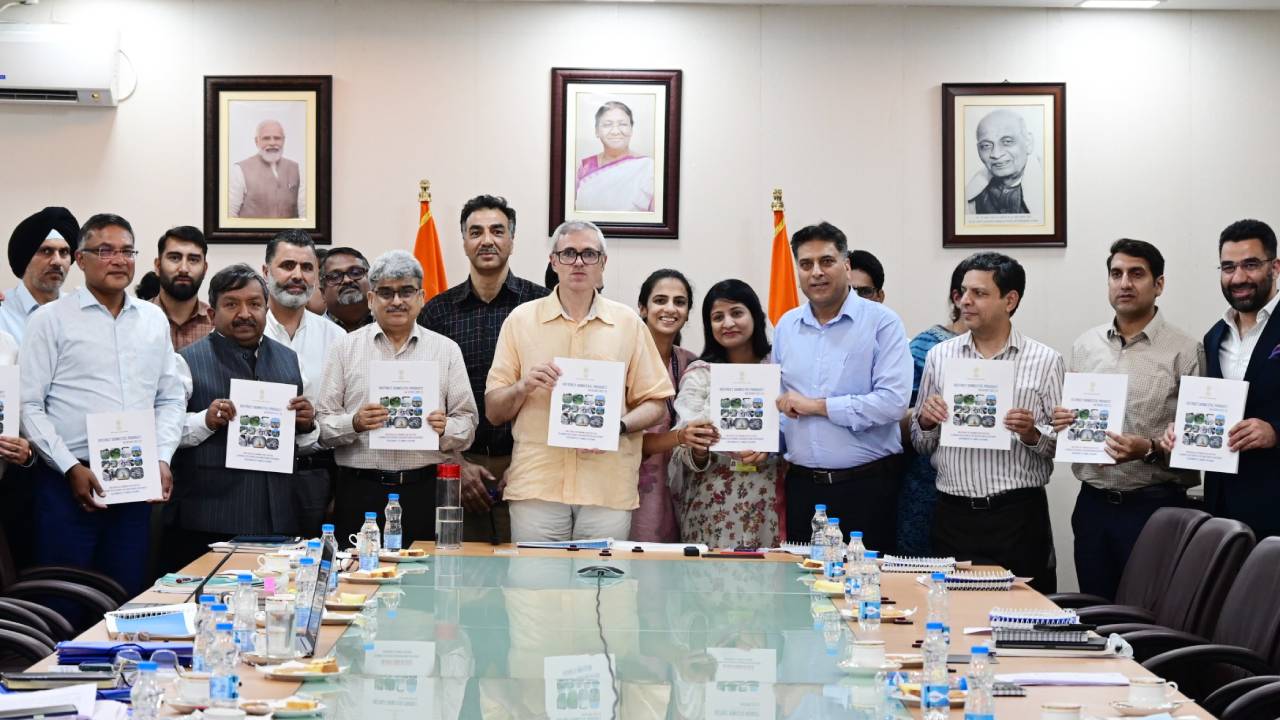
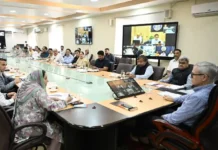
Last week, Omar Abdullah, the Jammu and Kashmir Chief Minister, released a comprehensive Sustainable Development Goals (SDG) report, projecting a remarkable story of social advancement. Among the many developmental parameters presented, the report made a striking revelation: the poverty headcount in the erstwhile state, as per the Multidimensional Poverty Index (MPI), has declined from 12.56 per cent in 2015-16 to a mere 4.80 per cent in fiscal 2019-21. This change suggests that around 10.44 lakh people escaped multidimensional poverty in five years.
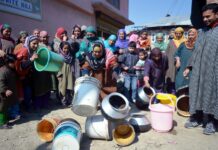
This revelation, on the face of it, deserves celebration. But it also invites scrutiny, especially when juxtaposed with a contrasting figure: over 66.92 lakh people in Jammu and Kashmir, roughly half the population, continue to receive free food grains every month under the National Food Security Act (NFSA), according to data placed on the table in the assembly in March 2025. In 2007, only 24.20 lakh people were getting subsidised rations in the erstwhile state. How can an area simultaneously escape poverty and continue to depend on state-subsidised food support on such a large scale?
To untangle this contradiction, it’s necessary to explore how poverty has been defined and measured over the years in Indian public policy, and why the parameters used by global and national agencies may not always capture the ground reality, particularly in complex regions like Jammu and Kashmir. Historically, especially in the last 30 years, Jammu and Kashmir has been numerically less than half poor in comparison to the national average.
The MPI Promise
The Multidimensional Poverty Index (MPI) emerged globally through the United Nations Development Programme (UNDP) in 2010 as an alternative to income-based poverty indicators. Developed by the Oxford Poverty and Human Development Initiative (OPHI), the MPI focuses on overlapping deprivations across three key sectors: health, education, and standard of living.
India’s national MPI, led by NITI Aayog, adapts this framework to local priorities. In addition to the global ten indicators, India’s MPI includes maternal health and financial inclusion (via bank accounts), creating a total of 12 deprivation indicators. The national MPI uses the dual-cutoff Alkire-Foster methodology, categorising people as poor if they are deprived in at least one-third of the weighted indicators.
The recent MPI Progress Review 2023 used NFHS-5 data (2019–21) and showed significant improvements across most states. In Jammu and Kashmir, the 7.76 per cent fall in the multidimensional poverty rate over five years outpaces the national improvement (from 24.85 per cent to 14.96 per cent), placing the area among the best performers.
The BPL Legacy
Before MPI, Indian policymaking relied on Below Poverty Line (BPL) data to identify the economically weakest sections of society. These lists, created through socio-economic surveys, were often used to determine eligibility for welfare schemes, including subsidised ration, rural employment, and housing.
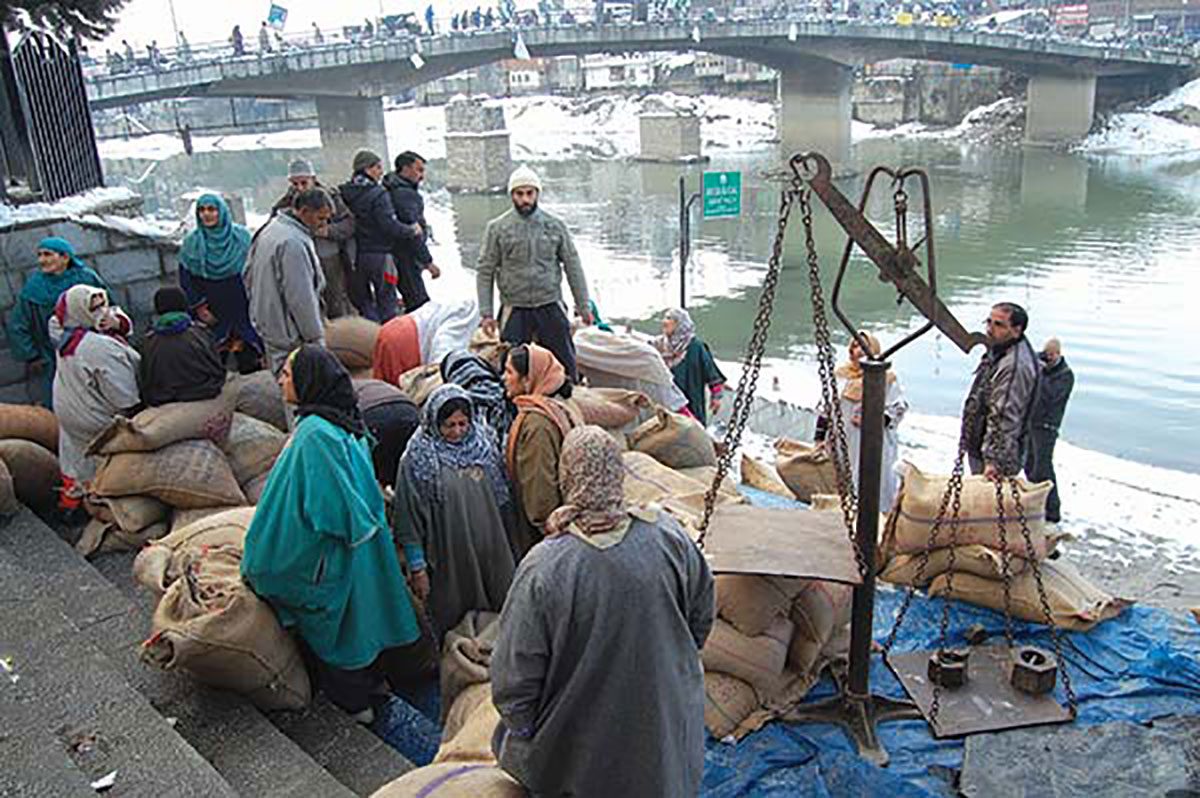
However, BPL identification has been fraught with controversy. Critics have long accused it of being arbitrary, inconsistent, and politically influenced. In many cases, deserving families were excluded while non-poor ones found their names on the list. The methodology behind BPL classification varied from state to state and was often based on limited income-centric indicators that failed to capture the multidimensional nature of deprivation.
For instance, a family without land ownership might be categorised as poor, even if it had steady income from a small business. Conversely, a family that owned land but lacked access to healthcare or clean drinking water might not be counted as poor.
Two Different Measures
The MPI and BPL lists stem from different philosophical and operational frameworks. While BPL relies on income or asset indicators and is primarily used to administer welfare entitlements, MPI is an analytical tool meant to evaluate and compare deprivations across domains. As a result, they often arrive at different conclusions.
In the case of Jammu and Kashmir, this divergence is pronounced. According to NITI Aayog’s 2018 SDG India Index, only 10.35 per cent of the population was considered BPL, which already suggested an improving trend. The MPI estimate further lowers this figure, suggesting that multidimensional poverty may no longer define the lives of over 95 per cent of the population.
But these optimistic readings come into conflict with the fact that 66.92 lakh residents, nearly half of Jammu and Kashmir’s estimated 1.35 crore population, continue to receive free food grains under NFSA. It raises an unsettling question: if people have escaped poverty, why are they unable to feed themselves?
Subsidy or Survival
Free food grains under the NFSA are not simply a policy leftover, they remain a lifeline for millions. Each Antyodaya Anna Yojana (AAY) household receives 35 kg of food grains, while other eligible families get their prescribed quotas. The Public Distribution System (PDS), through the Department of Food, Civil Supplies, and Consumer Affairs, ensures this disbursal month after month.
This vast network exists because the state still recognises economic vulnerability at scale. For many households, especially in rural Kashmir and remote parts of Jammu, the cost of food inflation, limited employment options, and fragile healthcare access mean they are just one crisis away from sliding back into destitution.
The continued reliance on PDS shows that while some indicators, schooling, bank accounts, and electricity, may have improved, these do not necessarily reflect income sufficiency. Nor do they ensure food sovereignty. Jammu and Kashmir has reported nearly 100 per cent financial inclusion.
Thus, one must ask whether the MPI, despite its strengths, is obscuring the essentials by placing equal or greater weight on broader quality-of-life factors while downplaying the centrality of income and food access.
The Politics of Measurement
One of the reasons why MPI estimates are favoured in global reports is that they align with the Sustainable Development Goals, particularly SDG target 1.2, which calls for reducing poverty “in all its dimensions.” Unlike income-centric measures, MPI offers a narrative of success that governments and international agencies can showcase. A reduced MPI figure, like the one celebrated in Jammu and Kashmir’s SDG report, makes for good press and international validation.
But there’s a danger here. In its eagerness to align with global standards, India and states like Jammu and Kashmir risk overlooking the ground truth. When half the population still requires free food, the claim that only 4.8 per cent live in poverty raises red flags. The real concern is not that the MPI is inaccurate, but that it may be insufficient to capture the economic fragility that underpins daily life for many.
Moreover, global poverty benchmarks often assume that material deprivations can be solved through systemic interventions like building toilets or opening bank accounts. But this ignores the political economy of regions like Kashmir, where conflict, climate volatility, and dependency on public employment create deeper vulnerabilities that standard MPI metrics cannot fully measure.
Consumption to Capability
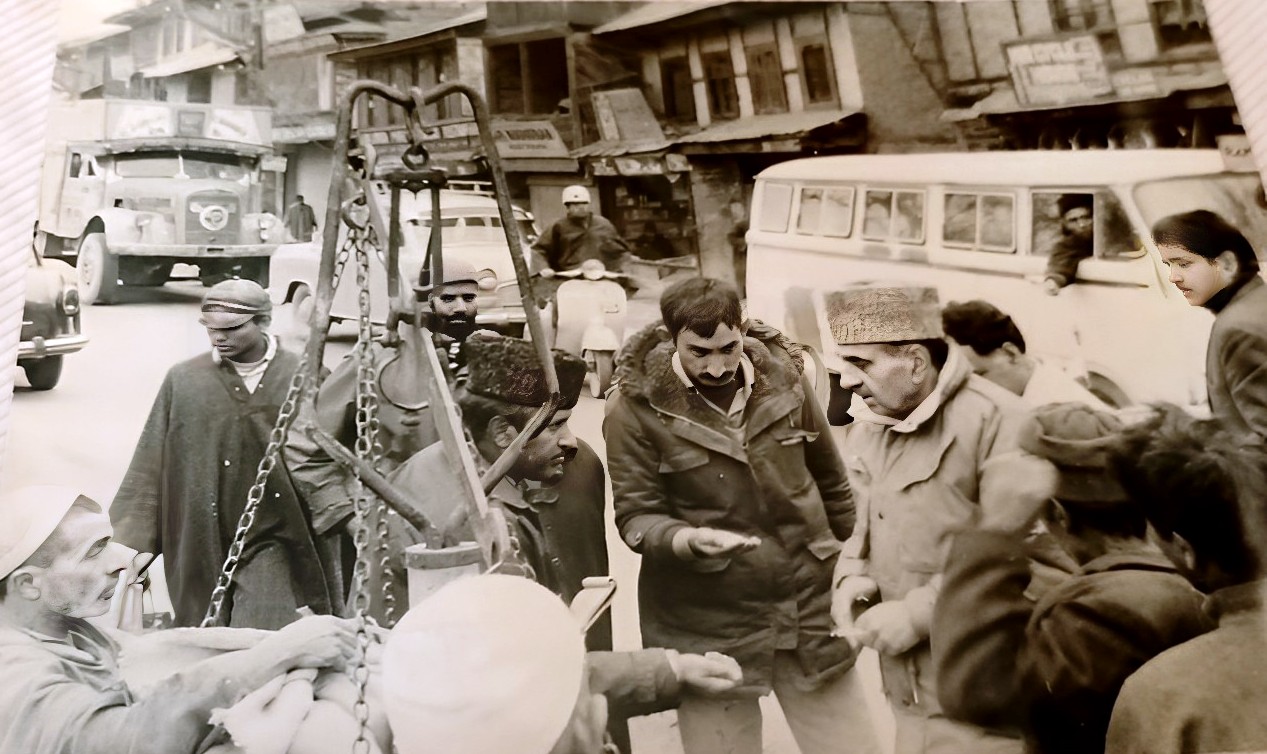
It is important to view this in the context of India’s evolving poverty metrics. Early measurements, like those by the Planning Commission, focused on calorie intake and minimum consumption. As the Commission used the calorific intake as the key factor, most of Jammu and Kashmir was declared a state with the least BPL population. It triggered a serious state-centre tension as the state planners asserted that people having one Wazwaan feast a year will fall out of BPL, so it requires a rework. In the 1970s, poverty was defined by the ability to purchase a fixed food basket. Over time, this shifted to expenditure-based surveys, and later to socio-economic caste data (SECC) in the 2010s.
Today’s shift to MPI represents a philosophical transformation: from assessing what people have to understanding what people are deprived of. Inspired by Amartya Sen’s capabilities approach, the MPI tries to assess well-being beyond material wealth. But in doing so, it risks under-emphasising basic income or job security, which is critical in conflict zones like Jammu and Kashmir.
Are We Counting Right?
The MPI’s biggest strength is its multi-pronged lens. But this is also its biggest limitation when applied simplistically. In regions like Jammu and Kashmir, where poverty is shaped by more than just material deprivation, where uncertainty, displacement, and climate-induced disruption are daily realities, a low MPI figure can be misleading.
The ongoing dependence on free food grains should provoke a policy rethink. If the government believes that only 4.8 per cent are poor, then what explains the ration numbers? Are these entitlements now functioning more as universal safety nets, or are they just residual proof that poverty, as commonly understood by the people, still looms large?
And more critically, are global indices like MPI serving the realities of developing nations or repackaging poverty to suit the optics of achievement?
Data and Dignity
Jammu and Kashmir’s SDG report is an important milestone, and the improvements it lists must be acknowledged. MPI has allowed for a richer understanding of deprivation, and it provides a valuable counterpoint to older, flawed systems like the BPL lists.
But development is not merely about escaping a statistic. The contradiction between a low MPI figure and widespread ration dependency reveals a disconnect between what is being measured and what is being lived.
As India inches toward 2030, it must ensure that poverty reduction is not just about ticking SDG boxes or presenting cleaner numbers to the world. It must confront the harder questions: Are people truly self-reliant? Do they have enough to eat without state aid? And above all, are we measuring what truly matters?