A 2025 study finds a weak link between export performance and employment; shawls and papier-mâché drive growth as carpet exports decline

SRINAGAR: Jammu and Kashmir’s handicraft exports fell by nearly 37 per cent in 2024-25 after touching a peak of Rs 1,162.29 crore a year earlier, even as the number of registered artisans continued to rise. This has exposed a widening disconnect between market performance and employment in the traditional industry, according to a new research paper published in March 2026.
The study, which found only a moderate positive correlation between exports and employment, suggests that government registration initiatives, rather than new jobs driven by market demand, have driven the increase in the recorded artisan workforce. It also identifies woollen and Pashmina shawls and papier-mâché as the sector’s main growth drivers, while carpet exports have declined over the long term.
Titled Evaluating the Economic Performance and Challenges of Jammu and Kashmir’s Handicraft Sector: An Overview of Post-2020 Handicraft Sector Dynamics, the paper is authored by Tahir Manawer, a research scholar in the Department of Geography at Aligarh Muslim University, Aligarh, and Nizamuddin Khan, a professor in the same department. It was published in the International Journal of Advanced Research (Volume 14, Issue 03) in March 2026.
Export Volatility
Drawing on official data from the Jammu and Kashmir Directorate of Handicrafts and other sources, the researchers examined export performance, employment trends and the relationship between the two during the post-pandemic period.
The sector’s total exports stood at Rs 635.52 crore in 2020-21 before declining to Rs 563.13 crore in 2021-22. They subsequently rebounded sharply, reaching Rs 1,116.37 crore in 2022-23 and peaking at Rs 1,162.29 crore in 2023-24. Exports then dropped to Rs 733.59 crore in 2024-25.
The paper attributes the contraction to global market instability, including disruptions associated with the Red Sea crisis and the Russia-Ukraine war, alongside weaker luxury spending in major markets such as Europe and the United States
The authors calculate an average annual export value of Rs 842.18 crore over the period and a compound annual growth rate of 3.65 per cent. The figures indicate that the sector recovered strongly from the pandemic-era downturn but remained vulnerable to external shocks.
The paper also reports a 243 per cent year-on-year increase in exports in the first quarter of 2025-26 compared with the corresponding period a year earlier. The authors interpret this early recovery as a possible indication of exports moving back towards the Rs 1,000-crore level, although the figures do not establish that the full-year target will be achieved.
Shawl Shift
The study identifies a structural change in the composition of handicraft exports, with woollen and Pashmina shawls overtaking carpets as the leading export category in 2022-23.
Woollen shawl exports rose from Rs 172.53 crore in 2020-21 to Rs 477.24 crore in 2023-24 before falling to Rs 306 crore in 2024-25. The category recorded a compound annual growth rate of 15.40 per cent, making it one of the sector’s principal engines of growth.
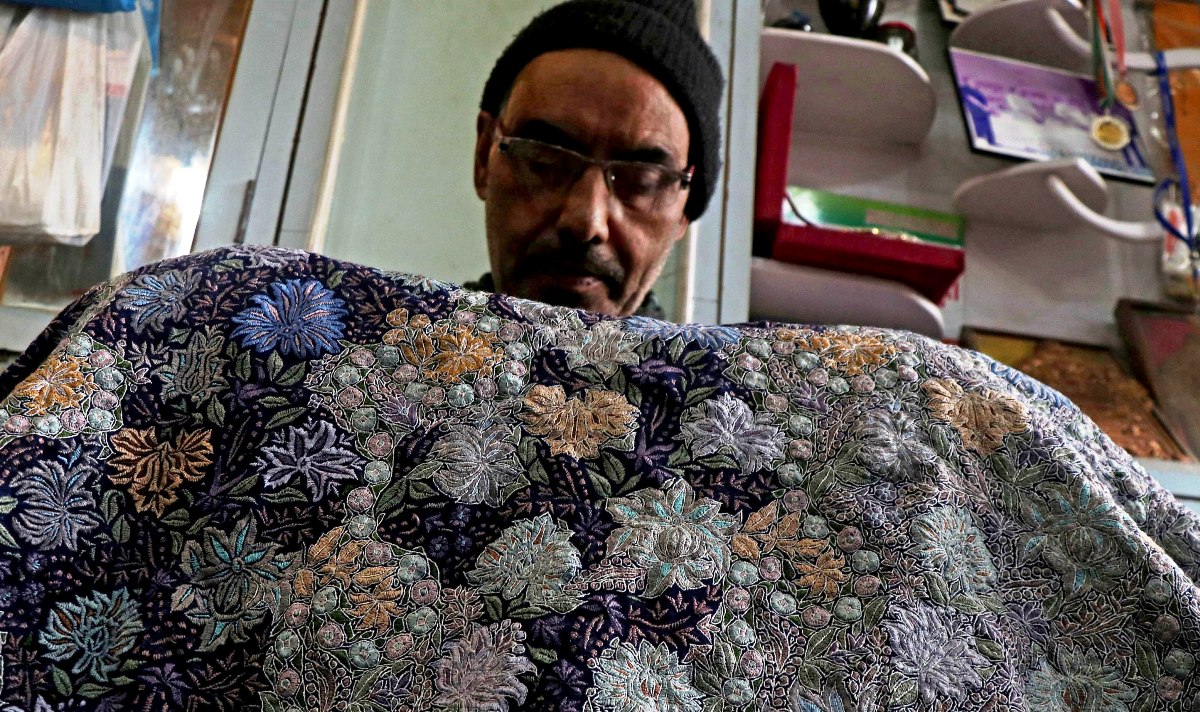
The authors link the performance of shawls to demand in luxury markets and support for authenticated products through Geographical Indication (GI) tagging. However, the sharp decline following the 2023-24 peak also illustrates the volatility associated with dependence on high-value export markets.
Papier-mâché recorded the highest compound annual growth rate among the crafts examined, at 20.10 per cent. Its exports increased from Rs 13.27 crore in 2020-21 to Rs 27.61 crore in 2024-25, despite considerable year-to-year fluctuations.
The paper records a particularly sharp increase in papier-mâché exports during 2023-24, when the value rose from Rs 8.5 crore to Rs 38.4 crore, before moderating in the following financial year. Its coefficient of variation of 61.61 per cent was the highest among the categories analysed, indicating substantial instability.
Carpets, meanwhile, continued to account for a significant share of exports but registered a negative compound annual growth rate of 3.48 per cent. Their export value declined from Rs 299.56 crore in 2020-21 to Rs 260 crore in 2024-25.
Despite this decline, carpets had the lowest coefficient of variation among the major categories, at 14.60 per cent, suggesting comparatively stable export performance.
Jobs Puzzle
The study estimates that the recorded handicraft workforce increased from 3.40 lakh artisans in 2020-21 to 4.22 lakh in 2023-24, with the data table recording a further rise to 4.30 lakh in 2024-25.
The authors caution that these figures should not be interpreted entirely as new employment. A substantial part of the increase, they argue, reflects the formal registration of artisans who had previously worked outside the official system.
Government initiatives, including the Artisan Credit Card scheme, encouraged artisans to register to access financial benefits. The paper also identifies the Karkhandar Scheme, launched in 2021, as an intervention intended to support traditional crafts and bring younger people into the sector.
The study says the Karkhandar Scheme provided a monthly stipend of Rs 2,000 to trainees and Rs 25,000 per batch to master craftsmen. It credits the initiative with helping revive declining crafts, including glazed pottery and silverware, and bringing more than 5,000 young artisans into the sector.
The researchers further report that stricter implementation of GI tags for carpets and Pashmina helped distinguish authentic Kashmiri products from machine-made imitations. Citing the paper, demand for certified products in markets such as Europe and the Gulf contributed to an estimated 20 to 30 per cent increase in artisans’ daily wages, from around Rs 350 to Rs 500 to 600.
However, the authors distinguish between the expansion of the registered workforce and actual employment creation, arguing that administrative formalisation has played a significant role in the rising figures.
Moderate Link
The central statistical finding is the correlation coefficient of 0.53 between total exports and employment. This indicates a moderate positive relationship, meaning that higher exports are generally associated with higher employment, but the two do not move in proportion to one another.
The authors describe employment as relatively “sticky”, explaining that artisans do not immediately leave the trade when exports decline, while the recruitment and training of new workers take time when demand rises.
Registration drives have also continued during periods of weak exports, increasing recorded employment independently of immediate market conditions.
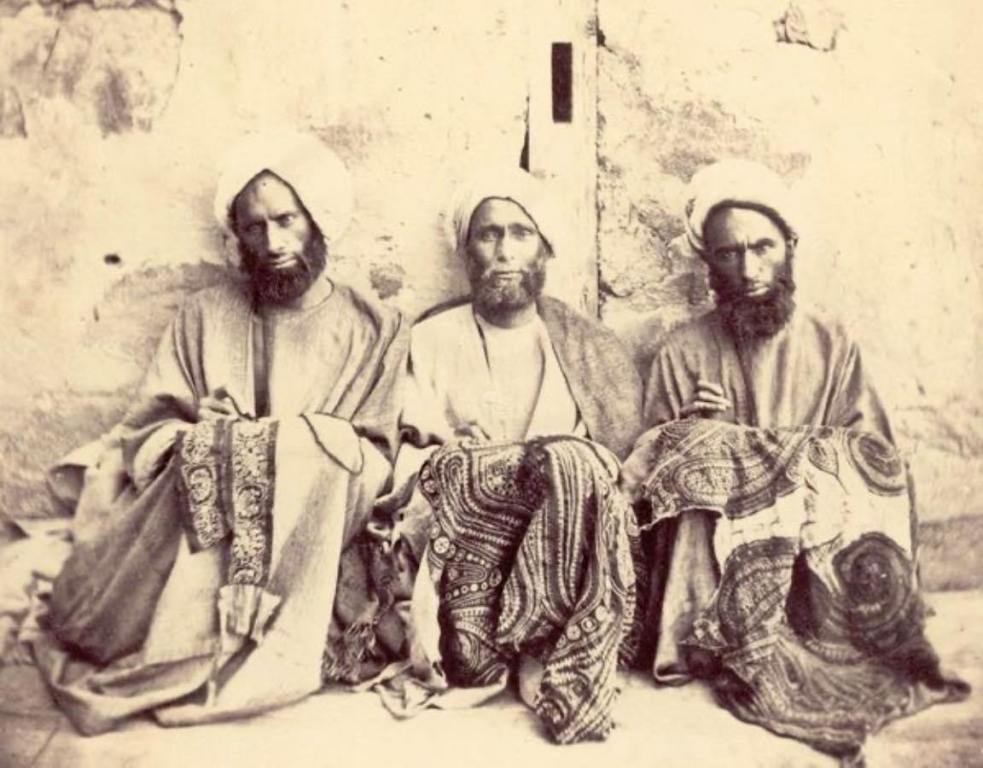
The difference is particularly evident in the carpet sector, where the researchers calculate a correlation coefficient of just 0.02 between exports and employment. This indicates virtually no statistical relationship between fluctuations in carpet exports and the recorded workforce over the period examined.
Papier-mâché, by contrast, recorded a strong positive correlation of 0.79 between exports and employment, while woollen shawls registered a coefficient of 0.71.
The findings suggest that employment trends vary substantially across crafts. In some segments, growing export demand appears more closely linked to workforce expansion, while in others, registration and the continued participation of existing artisans play a larger role.
The study also notes that a sharp increase in exports does not necessarily translate into a proportionate increase in employment. In 2022-23, exports rose by about 98 per cent, while recorded employment increased by approximately 7.5 per cent. The authors suggest that the existing workforce absorbed much of the additional demand through greater productivity and working hours rather than large-scale recruitment.
Craft Imbalance
The workforce distribution presented in the paper highlights the importance of activities beyond the principal export categories.
Sozni and crewel embroidery account for approximately 86,950 workers, or 21 per cent of the workforce in the study’s craft-wise distribution. Carpet weaving accounts for around 57,410 workers, or 14 per cent, while Pashmina and shawl-related work accounts for about 21,400, or 5 per cent.
Wood carving employs approximately 1,120 workers, representing less than one per cent of the workforce shown in the table. The remaining 60 per cent are grouped under “others”, a category that includes workers in allied and less formally organised activities, such as spinning and dyeing.
The distribution underlines the limitations of assessing the industry solely through export earnings. While a few product categories dominate overseas sales, a much larger network of artisans and allied workers sustains the wider handicraft economy.
The paper argues that declining exports in an individual craft do not automatically imply an equivalent decline in the number of people engaged in it, particularly where workers continue their traditional occupations or become newly registered under government schemes.
Digital Authentication
The study identifies GI certification and QR-code-based traceability as important measures for protecting the identity and commercial value of Kashmiri handicrafts.

It refers to the GI certification of 17 indigenous products and argues that authentication systems can help establish product provenance, combat counterfeiting, and strengthen buyer confidence in international markets.
The authors contend that these measures are particularly important for premium products such as Pashmina shawls and carpets, where machine-made imitations can undermine the reputation and market value of authentic handmade goods.
They nevertheless caution that certification alone cannot insulate the industry from geopolitical disruptions, changing consumer demand or logistical difficulties. The 2024-25 export contraction demonstrates that measures to protect authenticity must be accompanied by stronger market access and more resilient distribution systems.
Market Diversification
The authors recommend reducing dependence on traditional Western markets by expanding sales in the Middle East and Southeast Asia. They specifically identify the United Arab Emirates and Saudi Arabia as potential high-value markets and argue that India’s domestic luxury market remains underutilised.
For the carpet industry, the paper proposes establishing a design studio under the Indian Institute of Carpet Technology to combine traditional weaving skills with contemporary colour palettes and designs suited to modern interiors.
For papier-mâché, the authors recommend research and development into improved packaging and stronger material composition to reduce product damage and address logistical challenges during exports.
They also call for a shift in policy emphasis from registering more artisans to improving productivity, training, market integration and the utilisation of the existing workforce. The authors recommend performance audits of initiatives such as the Karkhandar Scheme to establish whether training and financial support translate into sustained production and export growth.
The paper further proposes blockchain-based digital provenance systems for high-value crafts, building on existing GI and QR-code authentication measures.
Policy Challenge
The study concludes that Jammu and Kashmir’s handicraft industry is undergoing a structural transition in which the expansion of the registered artisan base has not necessarily translated into equivalent growth in exports or new employment.

Its central policy message is that preserving traditional skills and registering workers must be accompanied by measures to strengthen productivity, diversify markets and improve the commercial competitiveness of individual crafts.
The authors describe the sector’s recent trajectory as a move towards “quality over quantity”, with premium products and a broader formal artisan base offering opportunities for growth. But the export decline in 2024-25, alongside the contrasting performance of shawls, papier-mâché and carpets, demonstrates the need for a differentiated strategy rather than a uniform approach to all crafts.
For policymakers, the findings raise a key question: whether the expansion of the registered artisan workforce can be converted into sustained improvements in production, earnings and export performance. The study suggests that the long-term resilience of Kashmir’s handicraft economy will depend not merely on how many artisans are counted, but on whether they can secure reliable markets and viable livelihoods.