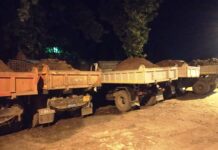
SRINAGAR: The Federation of Chambers of Industries Kashmir (FCIK) has strongly condemned the Jammu and Kashmir Pollution Control Committee (Jammu and Kashmir PCC) for issuing closure notices to stone crushing units and hot-mix macadam plants under the pretext of non-possession of licenses under SO 60. The FCIK asserts that the said licenses are not legally required, making the Jammu and Kashmir PCC’s unilateral action unjustified and harmful to the economy.
FCIK President Shahid Kamili criticised the Jammu and Kashmir PCC’s approach, pointing out that closure notices are being swiftly forwarded to the Kashmir Power Development Corporation Limited (KPDCL) for power disconnection and to the Directorate of Industries and Commerce for deregistration. He expressed concern that businesses, some of which have been operational for decades, are being denied a chance to address or clarify the issue.
Kamili warned that the forced closure of these units would severely impact infrastructure development across Jammu and Kashmir. Stone crushers provide critical aggregates like sand, gravel, and crushed stone, essential for roads, bridges, and building projects while shutting hot-mix plants would disrupt the macadamization of roads in the region.
The Jammu and Kashmir PCC has been particularly active in issuing closure notices in the Lasjan, Summerbugh, and Shalina areas of Budgam district, where around 300 stone crushing units and hot-mix plants are operational.
Nazir Ahmad Mir, President of the Stone Crusher Owners Association, stated that 1,000 stone-crushing units are currently operating across Jammu and Kashmir, with each unit representing an average investment of Rs 7 crore and providing employment to approximately 40 workers. Mir noted that these businesses are fully compliant with Jammu and Kashmir PCC regulations, having secured the legally required consent to establish and consent to operate.
He added that under environmental norms, stone crushing units fall under the “orange” category and are eligible for renewal of consent for 10 years as per the Central Pollution Control Board guidelines. However, Mir expressed regret that the Jammu and Kashmir PCC only issues renewals for two years, deviating from prescribed norms. Despite the Jammu and Kashmir PCC website indicating an eight-year renewal period, the shorter validity remains unexplained.
Rafiq Hussain Bhat, President of the Hot Mix Plant Association, echoed similar grievances. He clarified that the closure notices cite Notification S.O. 60 under the Mines and Minerals (Development and Regulation) Act, 1957. However, Bhat emphasised that this notification does not apply to stone crushers and hot-mix plants, as they operate under the Jammu and Kashmir Stone Crushers/Hot and Wet Mixing Plants Regulation Rules, 2021. These units, he added, procure minor minerals through authorised mining concessionaires, making the Jammu and Kashmir PCC’s reasoning legally untenable.
Bhat further revealed that affected units have been compelled to seek stay orders from courts to prevent arbitrary closures. He also raised concerns about delays in obtaining No Objection Certificates (NOCs) for title verification and land usage from the Deputy Commissioner of Budgam, a process that has stretched to nearly a year.
The FCIK criticised the repeated demand for basic formalities with each renewal, calling it a misinterpretation of regulations that creates unnecessary legal hurdles for legitimate businesses. Shahid Kamili argued that this situation needs immediate rectification to prevent further economic disruptions and job losses.
The FCIK has urged the Deputy Chief Minister and the Chairman of Jammu and Kashmir PCC to intervene and withdraw the closure notices. The Chamber emphasised the critical role that stone-crushing units and hot-mix plants play in the regional economy and infrastructure development. Arbitrary licensing requirements and unwarranted closures, it warned, could result in severe economic setbacks, loss of employment, and stalled infrastructure projects in Jammu and Kashmir.