Increased hygiene awareness and demand for chemical-free products encourage new women-led ventures, retail outlets and online sales, revitalising Kashmir’s small but growing soap industry, reports Tehreem Parviaz
For more than the last three decades, Haji Abdul Rashid, 63, has been running his shop, Modern Kashmiri Soap, from Shehr-e-Khaas near Khanqah. A dedicated, skilled man, he makes handmade soaps employing traditional methods to preserve the Kashmiri tradition. “I have been doing this since I was 12,” he said. “For about 35 years now, I have been single-handedly managing this shop.”
Initially, Haji was into washing carpets and Namda. Gradually, when the Namda tradition was overtaken by the synthetic and cheap floor material, he got into soap-making for consumers. Gradually, the specific soap making for routine laundry and hair soaps, which could cure dandruff and itching, became his core competence.
Till recently, Haji was the sole soap-maker in Srinagar. Though earlier, there were many, but with the takeover by the industrial soap-makers and personal hygiene by the corporate sector, the tradition got rusted, declined and faded away. With age not on his side and having a dedicated clientele, Haji retained the tradition and continued doing what he knew best.
A Gradual Shift
Now, he is not alone. A new breed of soap-makers is in the race, and they all say they are doing well. One of them is Sana Aftab.
During Covid19, there was a consumer shift as use of soaps became one of the key precautions to stay away from the deadly virus. Sana thought about organic soap-making and initiated the process as a hobby. Soon, she started using Instagram for her manufacture and it marked a humble beginning for her range of products, mostly around soaps initially.
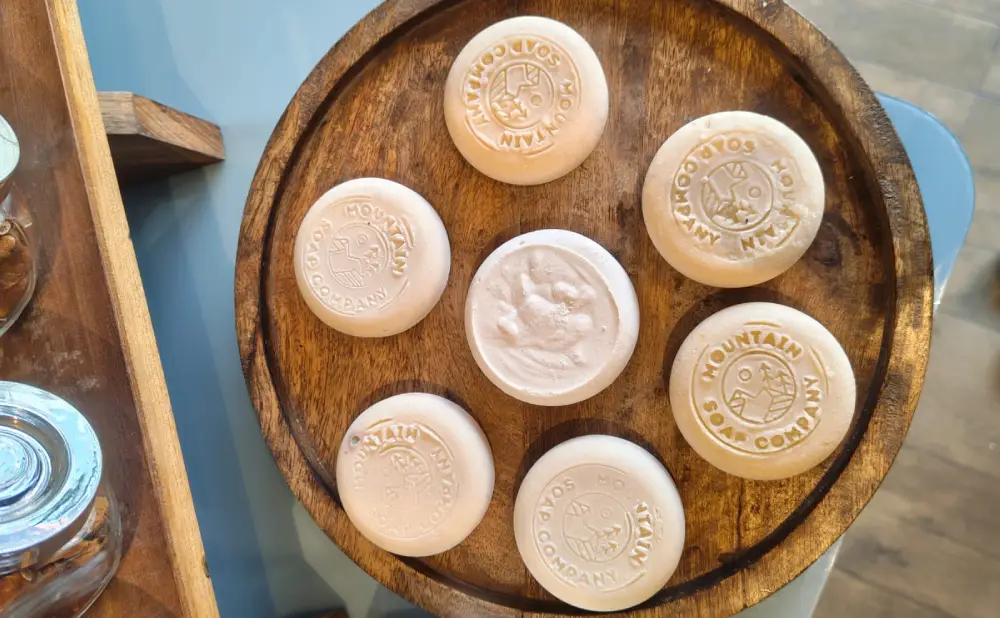
Now, as the Founder of Mountain Soap Company, Sana created a passion for business by innovating something which is clean, home-made, and non-toxic and chemical-free compared to other soaps available in markets and in vogue. She followed the systems and obtained a formal Certification after mandatory tests from the relevant authorities for her product before getting it into the market.
Consumers nowadays prefer plant and herbal-based products, Sana said. “Despite this business flourishing in Kashmir, we face many problems,” she pointed out, asserting that the organic soap makers like her try to get most of the ingredients locally. “The raw material is not locally available, and we have to import it. These include items like Yak Milk, Coffee, and Shea butter.” Even an electricity cut and inadequate infrastructure adds the crisis, she added.
Her company manufactures soaps in different shapes and designs, especially in silicone moulds, which helps them to make the soaps attractive. Soap costs are linked to weight, and the costs are decided per gram.
An Outlet
Aneesa Iqbal is from Pulwama. She founded Aurea and launched Srinagar’s first chemical-free personal care outlet in 2025.
“Organic soaps are trending in Kashmir because people are becoming more conscious about what they put on their skin,” Aneesa said. “With rising skin sensitivities and awareness about chemical damage, consumers are actively shifting towards natural, handmade products that are gentle, sustainable and rooted in traditional ingredients.”
Now, there are too many young women in the organic soap-making field. Rukhsana Parveen, 52, from Pattan, founded Mahi-Handmade-Organic and, interestingly, she too started her business during the 2021 pandemic. She first got the training and then started soap-making in her home kitchen.
Four years later, Rukhsana sells her products in exhibitions and on her Instagram business page. She uses natural ingredients like coconut oil, honey, Saffron, and herbs in her products because these are good for the skin.
“One of the common problems for both men and women is hair fall, and customers facing other problems like pigmentation or sensitive skin issues,” Rukhsana said. “My products help customers in managing most of these concerns.”
Rukhsana said she intends to teach young girls the organic soap-making process so that the legacy goes on.
Positive Market
As too many Kashmiri hands got into soap-making, the market got into helping them reach the consumers. Retailers like Pick n Choose have started selling organic soaps. The women soap-makers said that, though they sell through their individual Instagram pages, they are trying to sell their products online on shopping apps like Amazon and Flipkart to reach a wider range of customers, beyond natives.
Unlike Haji, all the soap-makers take their feedback very seriously. Haji has a dedicated clientele, which is the outcome of his lifetime work. This is the generation issue, and now the products work on the user reviews on almost all social media and online retail platforms. The traditional, however, survives on word of mouth and the satisfaction of the returning customer.
A Revival
Haji retained the tradition, and now the new generation is getting into it. Market insiders believe that the growing awareness about the use of organic soaps is expected to attract more women.
Self-care has long been central to the enduring pursuit of looking and feeling good. Even in earlier times, to maintain personal hygiene and beauty, long before modern cosmetics became commonplace, women relied on natural resources like pebbles and charcoal-based cleansers and would use walnut roots till the lipstick took the natural material out of their lips.
Now, with advancing technologies, greater awareness, and access to a wide range of raw materials, personal care has evolved into a thriving industry. In Kashmir, where natural ingredients are abundant, and the personal hygiene market is steadily expanding, this growing demand presents opportunities for many more women entrepreneurs to enter the sector and build livelihoods by turning skincare and wellness into a profession.