An engineering student squad from Kashmir are converting bicycles, load carts, and livelihoods, one battery at a time, reports Mehreen Firdous
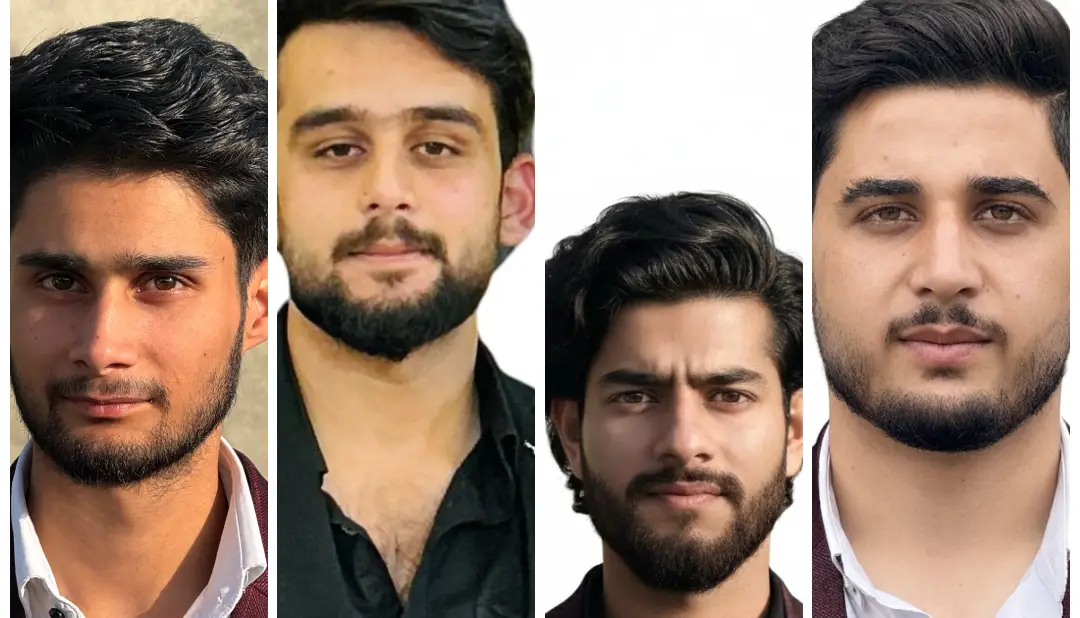
When Aqib Farooq Shah was a child growing up in Zakura, on the northern fringe of Srinagar, he nursed a peculiar ambition: he wanted to bolt an engine onto his bicycle. Most boys outgrow such fantasies. Now a BTech student of Electronics and Communication Engineering at the University of Kashmir’s IoT campus, Aqib turned this idea into a registered company and is working well.
The story of Switch Electric Private Limited begins not with electric vehicles but with hungers, specifically, the hunger of students living away from home in Srinagar, far from their mothers’ kitchens. In their first semester, Aqib and his friend Amir Riyaz launched a modest food delivery service, supplying homemade lunch and dinner to fellow students. It sold well enough. It also collapsed fast. “We started it during our first semester and shut it down during our second semester,” Aqib recalled, without visible regret. Failure, in this telling, is simply the raw material of the next attempt.
By his third semester, Aqib returned to that childhood fixation. He ordered an electric conversion kit from Delhi, installed it on his bicycle along with a battery pack, and began riding it through Srinagar’s streets. The response was immediate and instructive. Strangers stopped him. They wanted to know how he had done it. They asked if he could do the same to their cycles.
He called Amir and a third friend, Ruman Sajad, to his home and put the idea to them plainly: people didn’t need expensive new electric cycles starting at Rs 35 thousand; they needed their existing cycles upgraded. The three agreed. Danish Imtiyaz joined later to lead marketing. The four now form the core of Switch Electric: Aqib as CTO, Amir as CEO, Ruman as COO, and Danish as CMO, an unusually formal structure for a start-up that began in a bedroom in Zakura.
Classroom Spark
Their early method was scrappy by necessity. They promoted their work on Facebook, confirmed orders before purchasing raw materials, sourced components from Delhi, a week’s delivery away, and promised customers a 15 days turnaround. In the first month, with zero advertising, they received two or three orders. Gradually, that number climbed to roughly 20 a month. By the time this piece was written, the start-up had fulfilled over 50 conversion orders, modest in absolute terms, but notable in a market where electric mobility options had previously been limited to expensive imports or nothing at all.
The name of their company came from an unlikely classroom moment. Struggling to find a name that their chartered accountant, Akeel Mutto, would not reject for being too generic, Aqib and Amir were sitting in a coding class when their teacher wrote a “switch” conditional statement on the board. Amir leaned over and suggested it. Akeel predicted the name would be unavailable. He was wrong. Switch Electric Private Limited was registered without amendment.
The formal registration unlocked their first grant: Rs 4.20 lakh from New Gen IEDC at the University of Kashmir. With it, they purchased equipment for in-house manufacturing of lithium-ion battery packs, first for electric cycles, then for scooters, and eventually for drones. A subsequent application to the Jammu and Kashmir Entrepreneurship Development Institute (JKEDI) yielded a second grant of Rs 20 lakh, the first tranche of which has been released. The expansion from conversion to manufacturing shifted the company’s identity. They were no longer hobbyists with a Facebook page; they were battery makers.
Karim’s Cart
The contract that perhaps best illustrates how far they have travelled came from an Indian Army unit in Ladakh. Switch Electric supplied lithium-ion drone batteries and conducted training sessions on battery assembly, a remarkable commission for a four-person student start up still navigating their semesters.
But the project that reveals the company’s animating idea most clearly involves neither an army unit nor a grant committee. It involves a man named Karim, who earned his living hauling cardboard and other materials on a load cart, pedalling 30 kilometres a day between Ganderbal and Srinagar. Karim approached Switch Electric: could you electrify a load cart? They had no template for it. They took the job anyway, worked through the design problems, and eventually handed him back a vehicle he could drive rather than push. Karim now covers more ground with less effort. His income has improved. It is, in miniature, a precise demonstration of what affordable electric mobility can do when it is aimed at people who actually need it rather than people who can already afford it.
The four founders are candid about the support that has made this possible, specifically, the mentorship of Irfana and Irfan at New Gen IEDC, without whom, they say, much of this growth would not have happened.
Their long-term ambition is conversion at scale: affordable kits that can electrify two-wheelers, three-wheelers, and eventually four-wheelers, turning existing vehicles electric rather than replacing them. In a region where transportation costs bear heavily on ordinary budgets, and where the cold of Ladakh tests battery chemistry in ways that temperate markets never have to consider, the idea is neither frivolous nor far-fetched.
Aqib finally got his engine. It just turned out to be a battery.